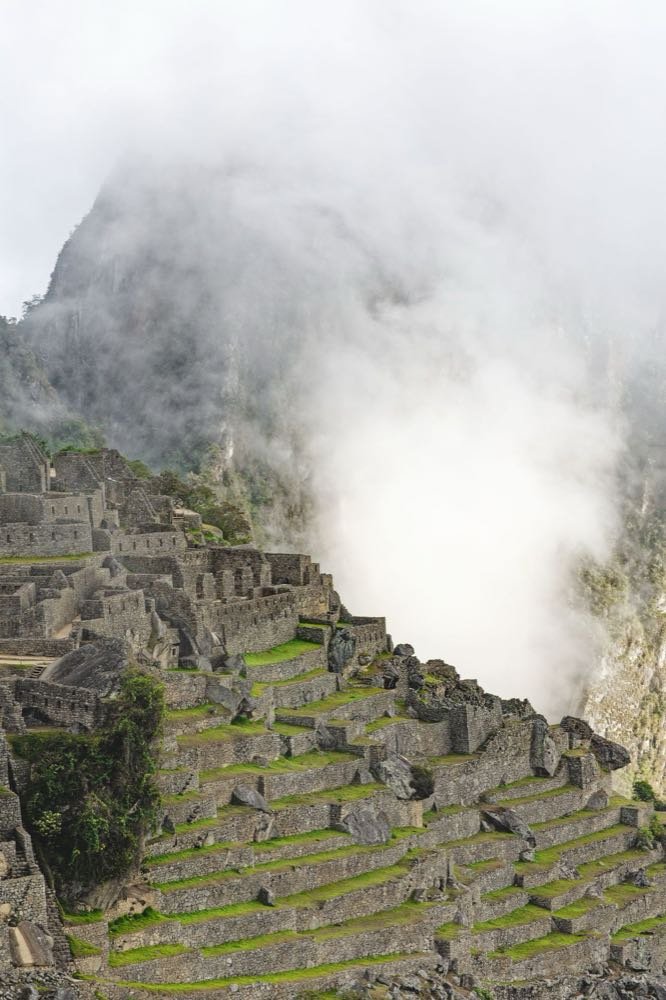
February is the most unusual month to visit Machu Picchu. The classic Inca Trail is shut, rain is at its heaviest and the Andes are wrapped in cloud, yet the citadel is open, uncrowded and unusually beautiful, with mist drifting through the terraces. For travellers who can accept wet weather, it is also the cheapest time to go. This page covers what is open, what to book and how to handle the weather in February 2027. For month-by-month context, see our Peru in February guide and our Peru rainy season guide.
February Closure of the Inca Trail
The regulated Inca Trail closes for all of February each year so the Peruvian authorities can carry out maintenance, repair stonework and clear vegetation. It covers both the classic 4-day route from Km 82 and the short 2-day route from Km 104. Permits are not issued for any February departure, and the trail typically reopens on 1 March. Our Inca Trail guide covers permits for the open months, which usually sell out several months ahead.
The closure does not apply to Machu Picchu itself. You can still visit the citadel in February by train.
Visiting the Citadel in February
Tickets. All entries are time-slotted and tied to a circuit. Peru introduced a circuit system in 2026 with daily caps, and tickets are bought through the official portal at tuboleto.cultura.pe or through a licensed operator. In February you will have far more choice than in July, but we still suggest booking at least 4-8 weeks ahead. Details are in our Machu Picchu tickets guide and the visitor caps news article. Ticket prices change, so check the official site for the 2027 rates.
Getting there. Trains run daily from Cusco (Poroy), Urubamba and Ollantaytambo to Aguas Calientes. Fares vary widely by operator and class, from roughly US$70-100 one way for the cheapest services to well above US$300 for premium trains, as of 2026. From Aguas Calientes, buses take about 25 minutes up the switchbacks to the gate. Our guide to getting to Machu Picchu and the PeruRail vs Inca Rail comparison help you choose.
Weather. Daytime highs are around 18-22°C at the site, and nights in Aguas Calientes are mild. Rain is possible at any hour, though mornings are often the best window. Fog can hide the citadel for a while, then lift suddenly. Allow time rather than rushing, and pick an early entry slot if one is available.
Crowds. February is one of the quietest months. Visitor numbers are well below the dry-season peak, and many of the ticketed slots are not sold out, which helps with photography.
What to Do Instead of the Inca Trail
| Option | Days | February conditions |
|---|---|---|
| Train to Aguas Calientes | 2 | Reliable, with occasional rain delays |
| Salkantay Trek | 4-5 | Open but wet, cold, muddy; experienced hikers only |
| Lares Trek | 3-4 | Open, with cultural villages, but rain is likely |
| Inca Jungle Trail | 3-4 | Open, mixes biking and walking, with wet sections |
| Choquequirao | 4-5 | Very demanding in the rain; see Choquequirao trek |
If you want the experience of trekking without the risk of the wet season, consider postponing the trail to March, or to November when the weather is drier. Our Inca Trail alternatives and Salkantay vs Inca Trail pages cover each route in depth.
For people who just want to see the site, a two-day trip works well: take an early train to Aguas Calientes, spend the afternoon in the town (hot springs are a sensible rainy-day activity), then enter the citadel the next morning. Browse Machu Picchu tours for packages including train, hotel and guide.
Climbing Huayna Picchu and Machu Picchu Mountain
Extra climbs have their own tickets and time slots. Wet steps on Huayna Picchu and Machu Picchu Mountain are slippery, and views are often hidden in cloud, so February is not the best time to pay extra for them. If you want to try, read Huayna Picchu and Machu Picchu Mountain first, and bring shoes with a good grip.
Where to Stay and What It Costs
February rates in Cusco and Aguas Calientes are among the lowest of the year. Mid-range hotels in Cusco often cost US$60-90 a night as of 2026, and discounts are common outside the carnival weekend. Read our Cusco guide and Aguas Calientes guide for areas and options. Book early for Carnival weekends in mid-February, when domestic travel increases.
Altitude and Health
Cusco sits at 3,400m, while Machu Picchu is lower at 2,430m. Spend a night or two in Cusco or the Sacred Valley (about 2,800m) before heading up to the citadel, and see our altitude sickness guide. Bring insect repellent, because sandflies are active near the site in the wet season.
Packing for February
- A waterproof jacket and rain poncho (umbrellas are not allowed inside the citadel)
- Quick-dry layers and a spare set of clothes in a dry bag
- Waterproof shoes with a good grip
- Sunscreen, because UV remains high between clouds
- Insect repellent
- Photocopies of your passport, since it must match your ticket
Risk Planning
Rail and road disruption is the main practical risk. Leave a buffer day before any international flight, buy travel insurance that covers delays, and keep your Machu Picchu date flexible if you can. If your slot is missed because of a closure, ask your operator about rebooking; tickets are generally non-refundable.
For the UNESCO background to the site, see the World Heritage listing.
Plan Your Trip
- Peru in February - Carnival, Puno’s Candelaria and weather.
- Machu Picchu tickets - official booking steps.
- Best time to visit Machu Picchu - compare every month.
- Machu Picchu - history and layout.
- Machu Picchu hub - hotels, tours and logistics.
Plan Your Trip
February suits flexible travellers who want fewer crowds and lower prices. Book your trains and tickets first, then build the rest of your trip around them.
✈️ Book your flights to Peru 🛡️ Get travel insurance 📱 Stay connected with an eSIM