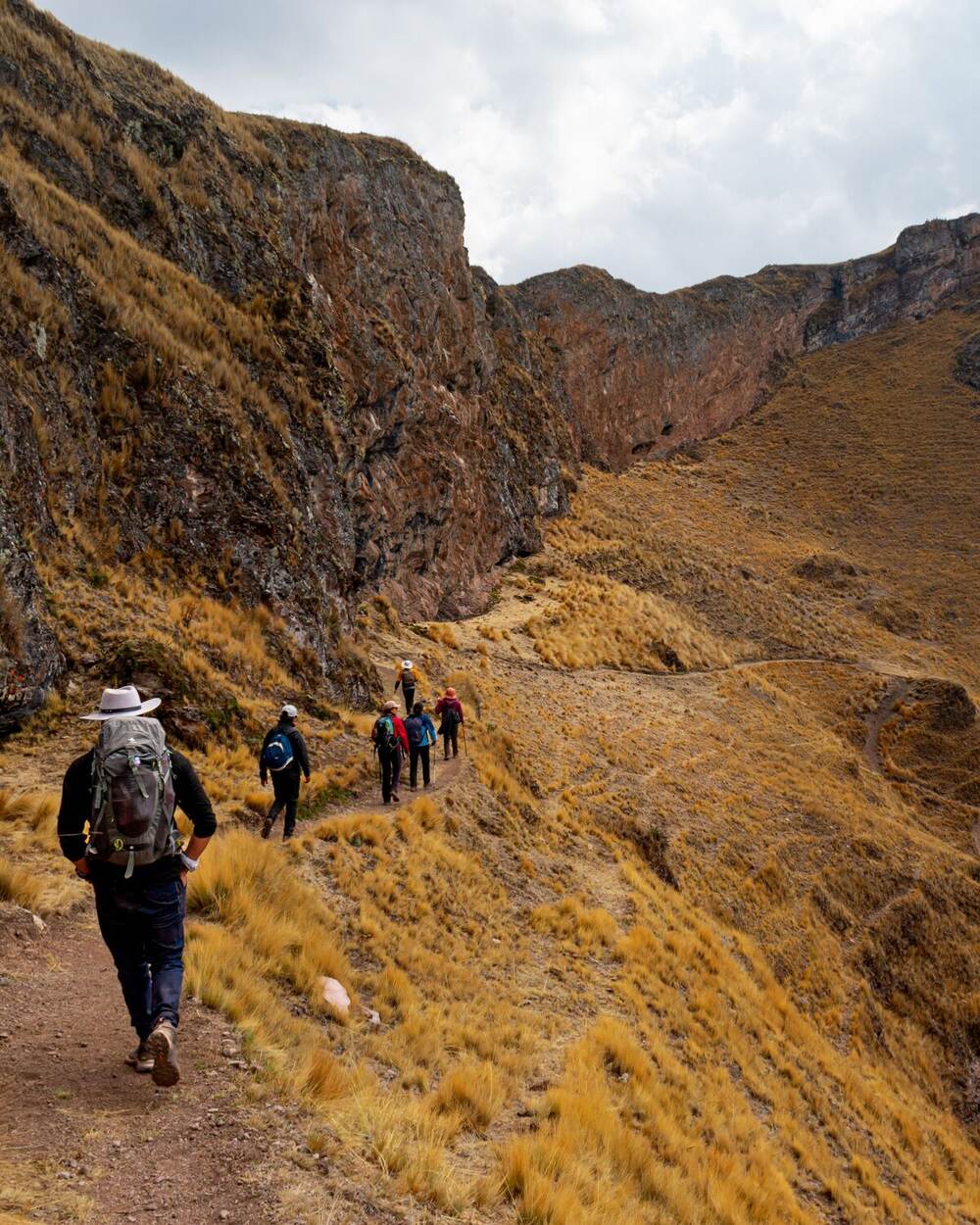
Both the Salkantay Trek and the Inca Trail end at Machu Picchu, but they are fundamentally different experiences. One is a permit-limited archaeological pilgrimage through cloud forest and Inca ruins; the other is a longer, wilder mountain route beneath a glaciated 6,271m peak. Choosing between them comes down to what you want from a multi-day trek.
Side-by-Side Comparison
| Factor | Salkantay Trek | Inca Trail |
|---|---|---|
| Duration | 5 days, 4 nights | 4 days, 3 nights |
| Distance | ~70km | ~43km |
| Maximum altitude | 4,638m (Salkantay Pass) | 4,215m (Dead Woman’s Pass) |
| Difficulty | Challenging | Moderate to challenging |
| Permit required | No | Yes (licensed operator only) |
| Availability | Book 2–4 weeks ahead | Book 3–6 months ahead (peak season) |
| Cost (group tour) | USD 350–USD 750 | USD 550–USD 1,200 |
| Inca ruins on route | Few | Many (Llactapata, Wiñay Wayna, Sun Gate) |
| Scenery type | Glacial + cloud forest | Cloud forest + Inca architecture |
| Crowd level | Moderate | Heavy in peak season |
| Open year-round | Yes | No (closed February) |
The Inca Trail: What Makes It the Classic
The 43km Inca Trail is the world’s most famous archaeological trek. You walk on original Inca paving stones, pass through six Inca ruin sites before reaching Machu Picchu itself, and arrive at sunrise through Intipunku (the Sun Gate) — one of the most iconic moments in trekking.
Choose the Inca Trail if:
- Inca archaeology is your primary interest
- You want the emotional weight of walking the original Inca pilgrimage route
- You can plan 4–6 months ahead (essential for peak months of May–August)
- You are happy with a 4-day commitment and moderate physical challenge
The main limitation is the permit system. The Peruvian government caps the trail at 500 people per day total (trekkers, guides, and porters combined), and all bookings must go through a licensed operator. For June, July, and August, permits routinely sell out within days of the new season opening in October of the prior year.
The other limitation is cost — the permit, licensed operator requirement, and regulated porter conditions mean there is a price floor of approximately USD 550 per person even on the most basic group tours. Browse available Inca Trail permits and operators.
The Salkantay Trek: More Mountain, Fewer Crowds
At 70km over 5 days with a pass at 4,638m, the Salkantay Trek is the bigger physical undertaking. But it has no government permit requirement, books up in weeks rather than months, and costs roughly 30–40% less than the Inca Trail on a like-for-like basis.
The scenery is different in character: on Day 2, you climb alongside the permanent snowfields of Apu Salkantay — one of the most sacred mountains in Andean religion — through bitterly cold, raw conditions to the windswept pass. The afternoon descent drops more than 1,700m through rapidly warming vegetation zones into cloud forest. By Day 3, you are walking through bamboo groves and past orchids with the temperature 20°C warmer than the pass.
Choose the Salkantay Trek if:
- You prefer wild mountain scenery over archaeology
- Permits have sold out for your dates on the Inca Trail
- You are trekking on a tighter budget
- You need flexibility — no lead time required
- You want a longer, more physically demanding route
- You are travelling in February (the Inca Trail is closed; Salkantay is open)
Browse Salkantay Trek operators and departure dates.
Difficulty: A Realistic Assessment
Inca Trail Day 2 is the hardest day: an 8–10 hour push from Wayllabamba (3,000m) over Dead Woman’s Pass (4,215m) and down to Pacaymayu (3,550m). The altitude and steep stone steps take a toll. Day 3 adds two more passes. Good fitness and 2+ days acclimatisation in Cusco are non-negotiable.
Salkantay Day 2 covers 22km with a 4,638m summit pass. The ascent starts at pre-dawn (most groups leave camp by 04:30) in near-freezing conditions. The descent from the pass to Chaullay drops 1,700m on rough trail — the knees take punishment. Most experienced trekkers rate Day 2 on the Salkantay as the harder of the two.
Both routes are manageable for trekkers with solid base fitness and proper preparation — neither requires technical mountaineering skills.
Cost Comparison
| Category | Salkantay | Inca Trail |
|---|---|---|
| Budget group tour | ~USD 350 | ~USD 550 |
| Mid-range group | ~USD 500 | ~USD 700 |
| Premium/small group | ~USD 750 | ~USD 1,000 |
| Luxury (lodge/dome) | ~USD 2,200+ | ~USD 1,200+ |
| Machu Picchu entry | ~USD 20–USD 45 | ~USD 20–USD 45 |
| Train back to Cusco | ~USD 30–USD 80 | Typically included |
Prices as of 2026. Inca Trail prices include the government permit; Salkantay prices do not require a permit.
Booking Lead Time
This is where the two treks diverge most sharply in practice. The Inca Trail requires booking 4–6 months ahead for May–August departures. Permits for these months routinely sell out in October of the prior year when they are released. For March, April, September, and October, 2–3 months is usually sufficient.
The Salkantay Trek requires no government permit and operators can typically confirm a place within 2–4 weeks of departure. Outside peak season, last-minute bookings of 1–2 weeks are often possible.
If you are reading this within a few months of your planned departure and want to trek to Machu Picchu overland, Salkantay is almost certainly the more achievable option.
The Verdict
Inca Trail wins for archaeology, historical atmosphere, and the sunrise Sun Gate moment. It is the more focused, shorter, and logistically simpler trip — but it demands early planning and carries a higher price tag.
Salkantay wins for scenery, flexibility, and value. It is the better choice for trekkers who prioritise raw mountain landscape over ruins, or who cannot book 6 months out. The Salkantay Pass at 4,638m is a genuinely formidable piece of terrain that the Inca Trail’s 4,215m high point does not match.
If you can only do one: choose the Inca Trail if you have the time to plan and want the archaeological experience above all else. Choose Salkantay if permits are gone, the budget is tight, or you want more mountain and fewer managed crowds.
Browse Inca Trail tours and permit availability — Browse Salkantay Trek operators
Related Guides
- Inca Trail to Machu Picchu: Complete Guide — permits, operators, day-by-day route, and preparation
- Salkantay Trek: Complete Guide — operators, day-by-day route, gear list, and best season
- Inca Trail Alternatives — full comparison including Lares Trek, Choquequirao, and the Jungle Trek
- Machu Picchu Tickets — both treks require a separate entry ticket for the final day
- Altitude Sickness in Peru — both treks exceed 4,000m; acclimatise in Cusco first
- Cusco Travel Guide — base city for both treks; acclimatisation, gear shops, and operators