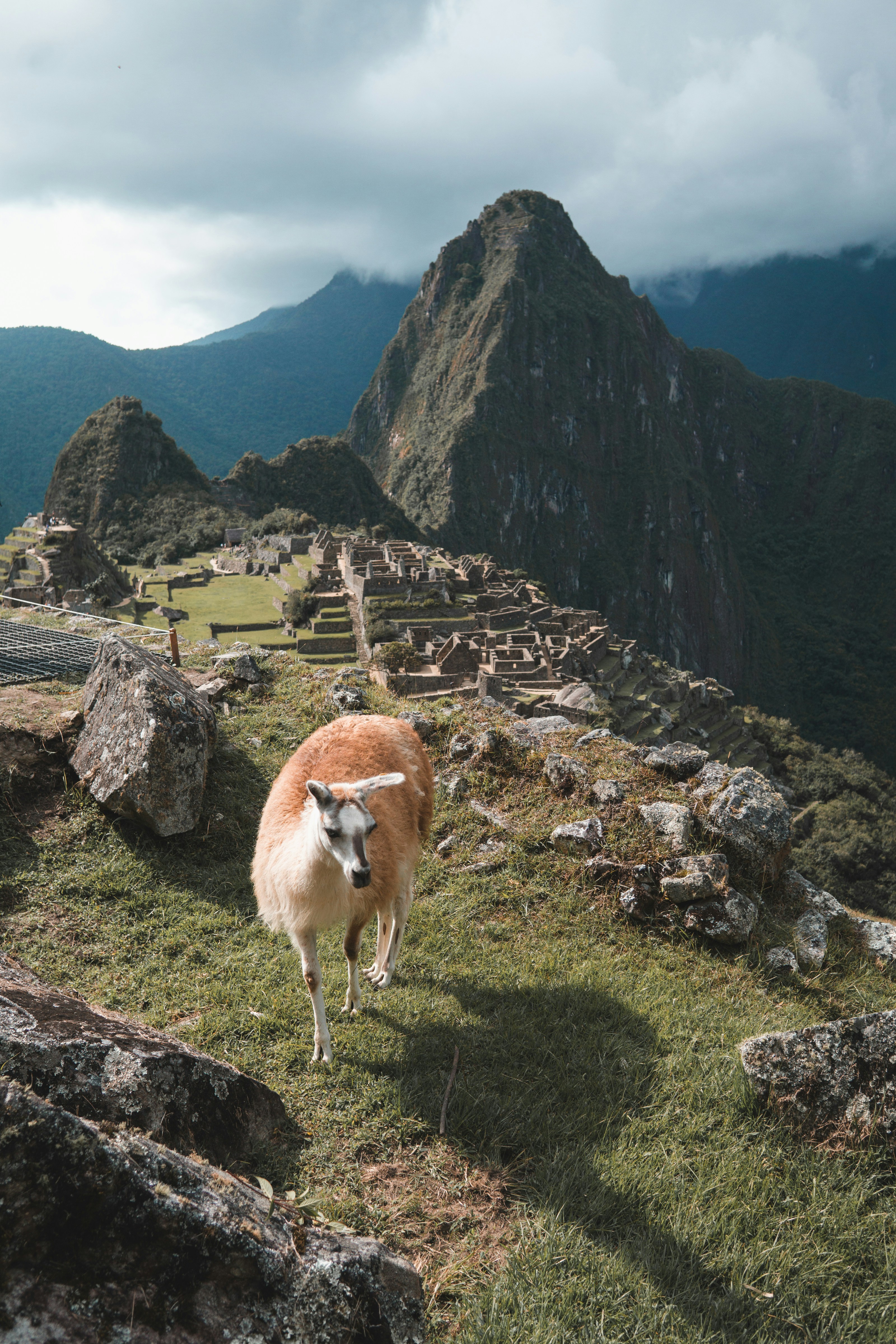
Huayna Picchu is the pointed peak visible in every iconic photograph of Machu Picchu - the dramatic stone spire rising from the cloud forest behind the ruins. Climbing it gives you the reverse perspective: Machu Picchu’s perfectly arranged temples and terraces spread out 360 metres below, with the Urubamba river valley curving around three sides. It is one of the most dramatic short hikes in South America, though the combination of steep stone stairs, exposed ridges, and limited daily permits makes advance booking essential.
The Route
Trailhead: Inside the Machu Picchu site, accessible after main entry at the guard house checkpoint at the north end of the ruins. Trekkers for the first entry group (07:00) can start immediately on entering; second group (10:00) waits at the checkpoint.
Distance: Approximately 2.5km round trip. Elevation gain: Approximately 360m. Duration: 1.5–2.5 hours round trip. Difficulty: Strenuous; exposed, steep, involves chains.
The ascent: The trail immediately steepens above the entrance checkpoint. Wide Inca stone steps transition to narrow carved-rock stairs with fixed metal chains as handholds at the steepest sections. At several points, the trail traverses exposed rock ledges above significant drops. This section will be uncomfortable for anyone with a significant fear of heights. The route passes several small Inca terraces and the Moon Temple (a cave structure with fine stonework, approximately 15 minutes below the summit).
The summit: A small platform at approximately 2,693m. On clear days, the 360-degree view is extraordinary - Machu Picchu’s grey stone walls perfectly arranged on its saddle directly below, the surrounding cloud forest ridges, and the Urubamba gorge far below. On partly cloudy days (common in wet season), clouds swirl through the ruins in a dramatic manner.
The descent: The same route; take more care than on the ascent. Wet stone steps on Huayna Picchu are slippery. Move deliberately and use the chains.
Permits and Booking
Daily limit: 400 visitors per day, split into two time slots:
- Group 1: Entry 07:00–08:00 (must start climbing by 08:00, exit by 10:00)
- Group 2: Entry 10:00–11:00 (must start by 11:00, exit by 13:00)
How to book: Through the official government portal at machupicchutickets.gob.pe. Select “Machu Picchu + Huayna Picchu” as your circuit/type at checkout. The combined ticket costs approximately USD 55–USD 80 as of 2026, depending on whether it is a foreign or resident price tier.
Booking timeline: In peak months (May–August), Huayna Picchu tickets sell out 2–4 months in advance. Book the moment you have confirmed travel dates. If sold out, Machu Picchu Mountain (separate tickets, higher altitude, 3,082m) is an alternative. Travellers who want to approach Machu Picchu on foot rather than by train should also look at the Inca Trail, which includes Huayna Picchu entry as part of some combined operator packages.
Day of visit: Carry your passport - it must match the name on the ticket exactly. Tickets are non-transferable.
Machu Picchu Mountain: The Alternative
For those who cannot get Huayna Picchu tickets, or who are uncomfortable with exposed heights, Machu Picchu Mountain (Montaña Machu Picchu) is a longer climb to a higher elevation (3,082m) with broader views of the surrounding landscape.
- Distance: Approximately 5km round trip
- Duration: 2.5–3.5 hours round trip
- Difficulty: Moderate to hard (long sustained climb, but no exposed ledges)
- Daily limit: 800 visitors per day
- Booking: Same portal, same advance-booking requirement
The views from Machu Picchu Mountain are wider and less vertically dramatic than Huayna Picchu - better for landscape photography; less for the iconic downward shot of the ruins.
Practical Advice
Arrive early at the Machu Picchu gate: If you have the 07:00 Huayna Picchu slot, you must be inside the Machu Picchu site by 07:00. Bus queues from Aguas Calientes start forming before 05:30 on busy days. The bus from Aguas Calientes takes approximately 20–25 minutes to reach the main gate; cost approximately USD 12–USD 16 round trip as of 2026. Alternatively, walk the Hiram Bingham Road (approximately 1.5 hours, steep).
Footwear: Waterproof hiking boots or trail runners with good grip. Flip-flops and sandals are not appropriate for Huayna Picchu - rangers at the checkpoint will turn you away.
What to carry: Water (at least 1 litre), snacks, sunscreen. Bags larger than a regular daypack are not permitted on Huayna Picchu - large packs must be left at the luggage storage near the main gate (approximately S/5–S/10 as of 2026).
Rain: The stone stairs become extremely slippery when wet. If climbing in wet season, adjust pace accordingly and use the chains at all exposed sections.
Combined Operators (if not booking independently)
Peru Hop - Overland bus network offering combined Cusco–Aguas Calientes packages with Machu Picchu and optional Huayna Picchu entry facilitated. From approximately USD 180–USD 280 per person as of 2026.
Inca Trail Reservations - Offers combined packages for Inca Trail + Machu Picchu + Huayna Picchu circuit tickets as part of their 4-day trek programme. Approximately USD 700–USD 900 per person as of 2026.
Browse Machu Picchu tours and combined packages for operators that include Huayna Picchu ticket facilitation.
Search hotels in Aguas Calientes on Booking.com
Plan Your Huayna Picchu and Machu Picchu Visit
- Machu Picchu Tickets Guide - Book your Machu Picchu entry and Huayna Picchu add-on simultaneously; the combined ticket quota fills weeks ahead.
- Aguas Calientes Guide - The base town: hotels, shuttle bus timing, hot springs, and how to be first at the gate for the 07:00 slot.
- Machu Picchu Tours from Cusco - Guided tour options that include Huayna Picchu facilitation and overnight Aguas Calientes arrangements.
- Machu Picchu: History and What to See - The citadel itself: circuit options, what to prioritise, and how much time to allow.
- Cusco Travel Guide - Base city for all Machu Picchu visits: acclimatisation, hotels, and Sacred Valley logistics.
- Cusco to Machu Picchu Guide - Train options from Poroy and Ollantaytambo, the Sacred Valley combination, and what to book in advance.
- Huayna Picchu vs Machu Picchu Mountain - Full side-by-side comparison of both peaks: difficulty, views, quota, and which to book for your priorities.