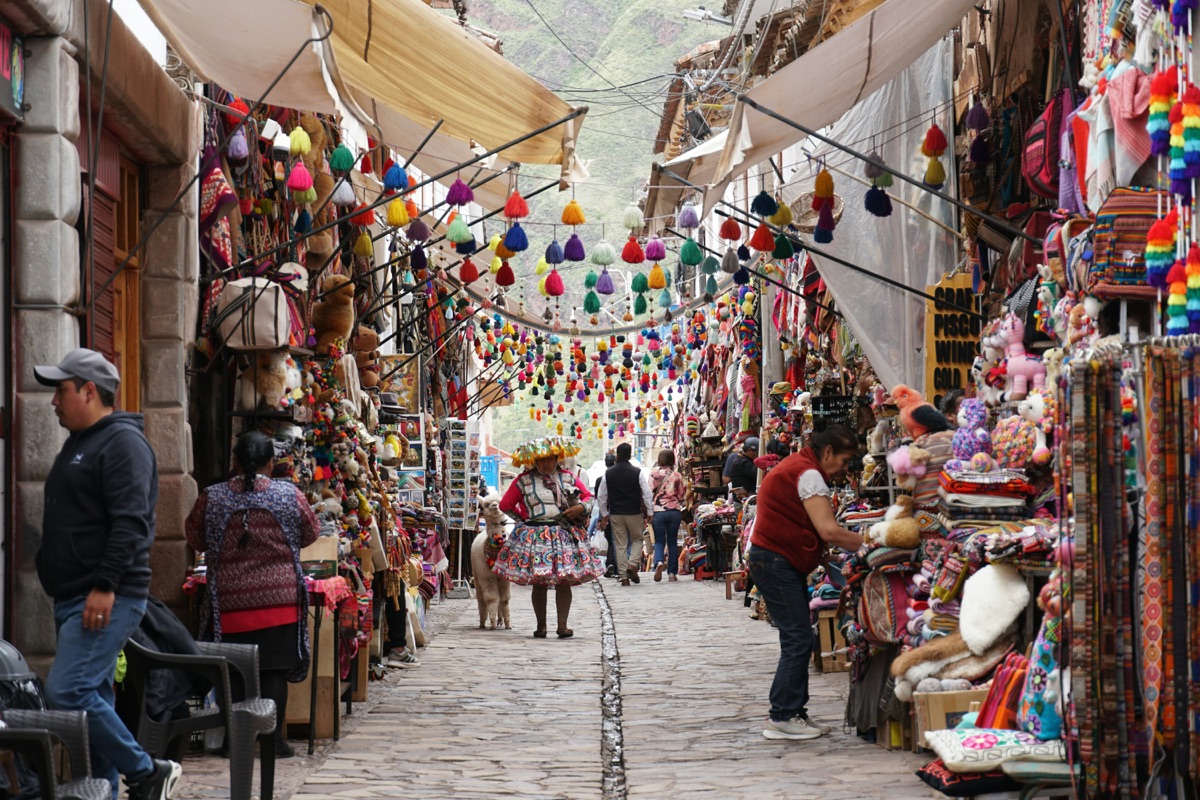
Peruvian Spanish is considered one of the clearest and easiest-to-understand varieties of Latin American Spanish, particularly the dialect spoken in Lima and along the coast. The pronunciation is clean, without the dropped consonants common in Caribbean Spanish or the strong “sh” sound of Argentine Spanish. In the highlands around Cusco, Puno, and Huaraz, you will hear Quechua - an indigenous language spoken by roughly four million Peruvians. Many highland place names are Quechua in origin (Cusco, Machu Picchu, Ayacucho), and locals often mix Quechua words into their Spanish.
How to Say Hello in Peru
In Peruvian Spanish, “hola” (OH-lah) is the standard hello used across all situations: meeting someone on the street, entering a shop, greeting hostel staff, or starting a conversation in a market. It works at any time of day. For time-specific alternatives: “buenos días” (BWEH-nohs DEE-ahs) until noon, “buenas tardes” (BWEH-nahs TAR-dehs) from noon until early evening, and “buenas noches” (BWEH-nahs NOH-chehs) from dusk onwards.
In the highlands around Cusco, the Sacred Valley, Puno, and Huaraz, many Peruvians speak Quechua as their primary language. The Quechua hello is “allillanchu” (ah-yee-YAHN-choo) — literally “how are you?” used as a greeting. The response meaning “I’m well” is “allillanmi” (ah-yee-YAHN-mee). Using these phrases at highland markets or community visits earns genuine warmth. You don’t need Quechua fluency; one correct phrase signals cultural respect rather than the usual tourist approach.
A note on greeting culture in Peru: entering a small restaurant or family shop without saying anything reads as impolite. A clear “hola, buenos días” with brief eye contact takes two seconds and sets the tone for every interaction. This is standard practice for Peruvians and immediately marks you as a respectful visitor.
How to Say Thank You in Peru
“Gracias” (GRAH-see-ahs) is the universal thank you in Peruvian Spanish. A warmer version, “muchas gracias” (many thanks), is appropriate whenever someone has gone out of their way to help. In service settings — restaurants, hotels, guided tours — “muy amable” (mwee ah-MAH-bleh, “very kind”) is a genuine compliment that Peruvians appreciate more than a simple gracias.
The Quechua equivalent is “sulpayki” (sool-PIE-kee), used widely in the highlands. If you buy textiles directly from artisans at the Pisac or Chinchero markets in the Sacred Valley, or visit Shipibo-Conibo communities near Pucallpa, using “sulpayki” alongside “gracias” is a small but meaningful gesture — particularly for older artisans whose primary language is Quechua.
Responses to watch for: “de nada” (deh NAH-dah, “it’s nothing”) is the most common; “con gusto” (with pleasure) is warmer and heard frequently in Cusco guesthouses and tour guide contexts.
Greetings and Basics
| English | Peruvian Spanish | Pronunciation |
|---|---|---|
| Hello | Hola | OH-lah |
| Good morning | Buenos días | BWEH-nohs DEE-ahs |
| Good afternoon | Buenas tardes | BWEH-nahs TAR-dehs |
| Good evening | Buenas noches | BWEH-nahs NOH-chehs |
| How are you? | ¿Cómo estás? | KOH-moh ehs-TAHS |
| Very well, thanks | Muy bien, gracias | mwee bee-EHN, GRAH-see-ahs |
| Please | Por favor | por fah-VOR |
| Thank you | Gracias | GRAH-see-ahs |
| You’re welcome | De nada | deh NAH-dah |
| Excuse me | Disculpe | dees-KOOL-peh |
| Yes / No | Sí / No | see / noh |
| I don’t understand | No entiendo | noh ehn-tee-EHN-doh |
| Do you speak English? | ¿Habla inglés? | AH-blah een-GLEHS |
Getting Around
| English | Peruvian Spanish | Pronunciation |
|---|---|---|
| Where is…? | ¿Dónde está…? | DOHN-deh ehs-TAH |
| How much is a taxi to…? | ¿Cuánto cuesta un taxi a…? | KWAHN-toh KWEHS-tah oon TAK-see ah |
| Bus terminal | Terminal terrestre | tehr-mee-NAHL teh-RREHS-treh |
| Left / Right / Straight | Izquierda / Derecha / Derecho | eez-kee-EHR-dah / deh-REH-chah / deh-REH-choh |
| How far is it? | ¿Qué tan lejos está? | keh tahn LEH-hohs ehs-TAH |
| I need to go to… | Necesito ir a… | neh-seh-SEE-toh eer ah |
| One ticket, please | Un boleto, por favor | oon boh-LEH-toh, por fah-VOR |
| Airport | Aeropuerto | ah-eh-roh-PWEHR-toh |
| Collectivo (shared minibus) | Colectivo | koh-lehk-TEE-voh |
| Stop here, please | Pare aquí, por favor | PAH-reh ah-KEE, por fah-VOR |
Food and Dining
| English | Peruvian Spanish | Pronunciation |
|---|---|---|
| The menu, please | La carta, por favor | lah KAR-tah, por fah-VOR |
| The bill, please | La cuenta, por favor | lah KWEHN-tah, por fah-VOR |
| Water (bottled) | Agua embotellada | AH-gwah ehm-boh-teh-YAH-dah |
| Beer | Cerveza | sehr-VEH-sah |
| Set lunch menu | Menú del día | meh-NOO dehl DEE-ah |
| I am vegetarian | Soy vegetariano/a | soy veh-heh-tah-ree-AH-noh/nah |
| Delicious | Riquísimo | ree-KEE-see-moh |
| Spicy | Picante | pee-KAHN-teh |
| Ceviche | Ceviche | seh-VEE-cheh |
| Cheers! | ¡Salud! | sah-LOOD |
Numbers
| Number | Spanish | Pronunciation |
|---|---|---|
| 1 | Uno | OO-noh |
| 2 | Dos | dohs |
| 3 | Tres | trehs |
| 4 | Cuatro | KWAH-troh |
| 5 | Cinco | SEEN-koh |
| 6 | Seis | says |
| 7 | Siete | see-EH-teh |
| 8 | Ocho | OH-choh |
| 9 | Nueve | NWEH-veh |
| 10 | Diez | dee-EHS |
Emergency Phrases
| English | Peruvian Spanish | Pronunciation |
|---|---|---|
| Help! | ¡Ayuda! | ah-YOO-dah |
| I need a doctor | Necesito un médico | neh-seh-SEE-toh oon MEH-dee-koh |
| Call the police | Llame a la policía | YAH-meh ah lah poh-lee-SEE-ah |
| Hospital | Hospital | ohs-pee-TAHL |
| I’m lost | Estoy perdido/a | ehs-TOY pehr-DEE-doh/dah |
| It’s an emergency | Es una emergencia | ehs OO-nah eh-mehr-HEHN-see-ah |
| Pharmacy | Farmacia | far-MAH-see-ah |
| I’ve been robbed | Me han robado | meh ahn roh-BAH-doh |
Peruvian Spanish pronunciation is straightforward - words are spoken as they are written, with stress usually on the second-to-last syllable unless an accent mark indicates otherwise. The double “ll” is pronounced as a clear “y” sound (unlike Argentina’s “sh”). In the highlands, you may hear Quechua greetings like “Allillanchu” (how are you?) and “Allillanmi” (I’m fine) - using these in places like Cusco or the Sacred Valley will delight locals. One useful Peruvian slang term: “chévere” (CHEH-veh-reh) means “cool” or “great” and works in almost any positive context.
If you want to practise your Spanish with local context, guided tours in Peru typically pair you with bilingual guides who move between Spanish and English - useful for picking up natural phrases on the ground. Staying connected also helps: a local eSIM for Peru means you can look up phrases and navigate without relying on Wi-Fi.
Related Guides
- First-Time in Peru Guide - Everything you need to know before arriving: visas, money, safety, and getting around.
- Cusco Travel Guide - The highland city where Quechua is most commonly heard alongside Spanish; the Spanish phrases above apply everywhere in the region.
- Lima Travel Guide - Lima’s coastal Spanish is the clearest in Latin America and a good place to practise before heading to the highlands.
- Sacred Valley Guide - Markets and communities in the valley are where Quechua greetings earn the warmest responses.
- Is Peru Safe? - Knowing basic emergency phrases in context, and how to stay safe while travelling independently.
- Solo Travel in Peru - Why language basics matter more for solo travellers, and how to use them to meet locals.
Plan Your Trip
✈️ Book your flights to Peru 🛡️ Get travel insurance 📱 Stay connected with an eSIM 🚗 Rent a car