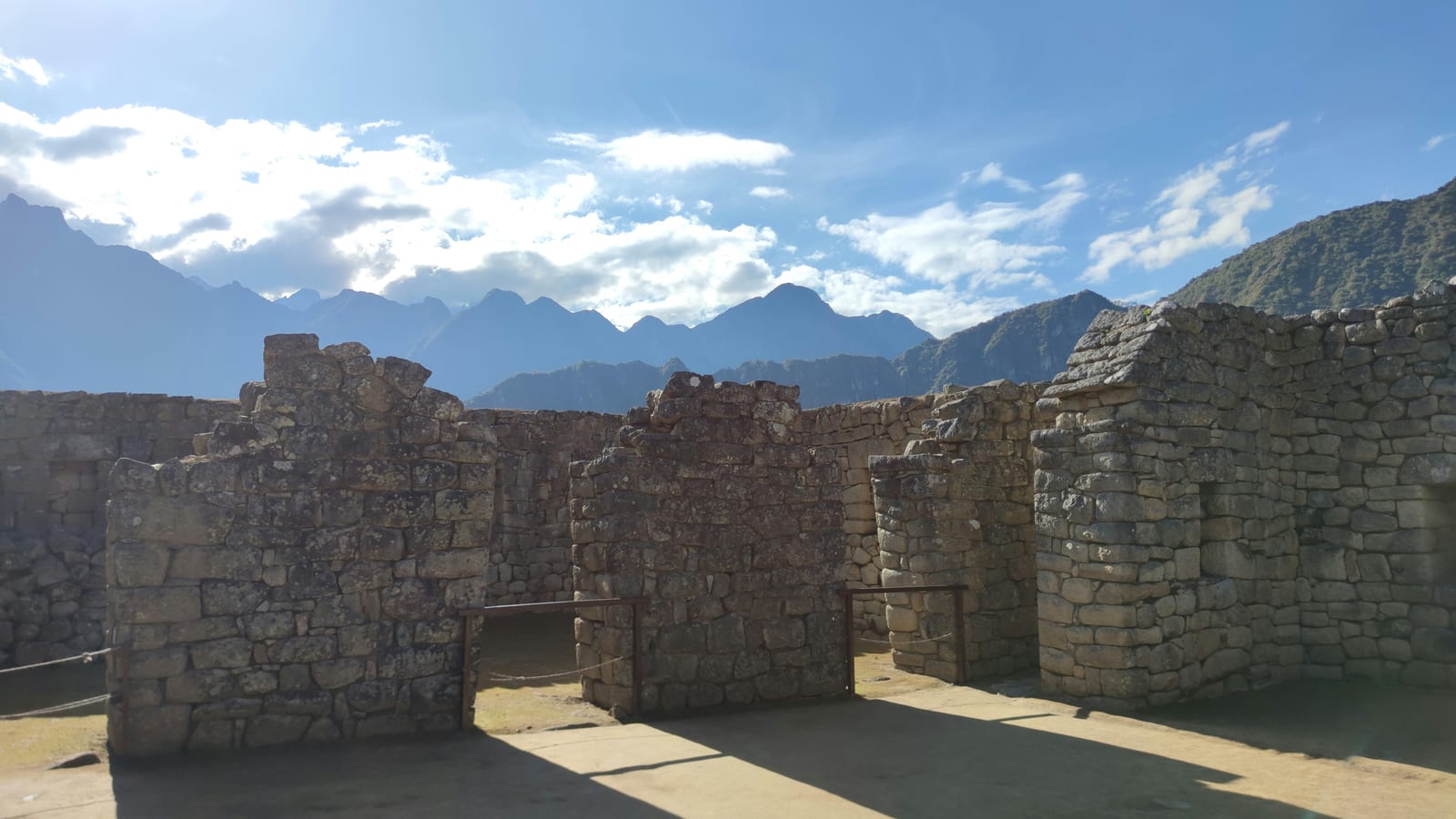
Machu Picchu is the most significant Inca site in existence - a 15th-century citadel built on a narrow mountain ridge above the Urubamba river in a location so remote and difficult to reach that it survived the Spanish conquest largely intact. The Spanish never found it during the colonial period; it was recorded by the outside world only in 1911 when American explorer Hiram Bingham brought it to international attention. Today it is a UNESCO World Heritage Site and one of the New Seven Wonders of the World, visited by approximately 1 million people per year.
Historical Context
Machu Picchu was constructed during the reign of Inca Pachacútec (approximately 1438–1471 AD), who transformed the Inca from a regional Andean kingdom into the largest empire in pre-Columbian America. The site served multiple functions: a royal estate, a ceremonial centre, and an administrative hub for the surrounding region.
The 140+ stone buildings at Machu Picchu include temples, residences, storehouses, and agricultural terraces, all constructed from locally quarried white granite using a technique that required no mortar - stones were shaped to interlock precisely. The most significant structures include:
The Temple of the Sun (Torreon): A curved tower aligned so that the sun enters through its windows at the solstice and equinox, illuminating specific stones below. Access is restricted to the exterior.
The Intihuatana Stone: A carved granite gnomon (solar indicator) at the highest point of the ceremonial sector. Most Intihuatana stones were destroyed by the Spanish - Machu Picchu’s survived intact because the site was never found. A restricted zone around the stone limits how close visitors can approach.
The Room of the Three Windows: The Sacred Plaza’s most photographed structure. The three trapezoidal windows frame views of the surrounding valley in a deliberately theatrical manner.
The Agricultural Terraces: Approximately 700 terraces covering the lower slopes, which served both as productive farmland and as erosion control to prevent the steep slopes from failing.
Getting There
From Cusco: The standard route. Take a train from Cusco’s Poroy station (approximately 30 minutes outside Cusco by taxi) to Aguas Calientes (Machu Picchu Pueblo). PeruRail and Inca Rail operate multiple daily services; journey approximately 3.5 hours. Economy class (Expedition/Explorer) costs approximately USD 55–USD 80 one-way as of 2026. Book online at perurail.com or incarail.com.
Faster option: Train from Ollantaytambo station in the Sacred Valley to Aguas Calientes (approximately 1.5 hours). Useful if you are staying in the Sacred Valley or arriving via the Inca Trail.
From Aguas Calientes to Machu Picchu: Bus from the main square (approximately 25 minutes; USD 12–USD 16 round trip as of 2026). Buses run from approximately 05:30 until 17:30. Or walk the Hiram Bingham Road (approximately 1.5–2 hours on foot, very steep, free).
Entry Tickets and Circuits
Entry is managed through a circuit system as of 2026. Tickets are purchased at machupicchutickets.gob.pe and are date-and-time specific.
Circuit 1 (Classic): The main route through the agricultural terraces, the Sun Gate, and the principal buildings. Approximately 2.5km. Duration 2–3 hours.
Circuit 2 (Extended): Adds the Intihuatana sector and passes through additional residential areas. Approximately 3.5km. Duration 3–4 hours.
Circuit 3 and 4: Shorter options through the lower terraces and the industrial sector. Better for visitors with limited time or mobility.
Entry prices (foreign nationals, as of 2026, approximately):
- Machu Picchu only: USD 20–USD 45 depending on circuit
- Machu Picchu + Huayna Picchu: USD 55–USD 80
- Machu Picchu + Machu Picchu Mountain: USD 45–USD 65
Opening hours: Daily 06:00–17:30. Last entry 15:30.
Booking Requirements
Tickets cannot be purchased at the gate. Purchase online at machupicchutickets.gob.pe. You will need your passport number; the ticket is linked to your identity and is non-transferable. Carry your original passport (or certified ID) on entry.
In peak months (May–August), tickets sell out 2–6 months in advance. Check availability immediately upon booking travel to Peru. For skip-the-planning convenience, Machu Picchu tours from Cusco bundle entry, transport, and a guide into a single booking.
Photography
Machu Picchu is photogenic from multiple angles:
Best viewpoints:
- The main classic viewpoint (guardiola/guard house) above the agricultural terraces - the widest panorama of the entire site.
- Intihuatana sector - for close-up architectural detail with Huayna Picchu in the background.
- The Sun Gate (Intipunku), approximately 45 minutes’ walk from the main site - sunrise approach view.
- Huayna Picchu summit - the downward view over the ruins (separate permit required).
Best light: Early morning (06:00–08:00) in the dry season for clear blue skies. In wet season, clouds create dramatic effects around the ruins, though the site is often obscured.
Photography rules: Commercial photography and drone use require special permits. Tripods are permitted but cannot block visitor flow. The Intihuatana stone and certain interior spaces have photography restrictions - follow ranger guidance.
Transport from Nearest City
Cusco is the nearest city with major transport connections (airport, international bus services). The train to Aguas Calientes departs from Poroy station (approximately 30 minutes from Cusco by taxi, approximately S/20–S/30 as of 2026) or from Ollantaytambo station in the Sacred Valley.
There is no road into Aguas Calientes - the town is accessible only by train or on foot via the various hiking routes, including the Inca Trail and Salkantay Trek.
For step-by-step instructions on booking entry tickets - including circuit options, Huayna Picchu add-ons, and what to do when preferred slots are sold out - see our Machu Picchu tickets guide. For guided day tours and multi-day packages from Cusco, see our Machu Picchu tours guide.
Related Guides
- Aguas Calientes Travel Guide - The base town for Machu Picchu: hotels, hot springs, trains, and the bus to the ruins gate.
- Where to Stay in Aguas Calientes - Hotels by budget and proximity to the train station and bus terminal.
- Cusco to Machu Picchu Guide - All your transport options: Ollantaytambo or Poroy trains, and the budget walking route via La Hidroeléctrica.
- Sacred Valley Guide - Ollantaytambo, Pisac, and Maras on the route between Cusco and Aguas Calientes.
- Sacsayhuamán - The Inca fortress overlooking Cusco; the best context for understanding Machu Picchu’s construction scale. Search hotels in Aguas Calientes on Booking.com