The best beaches in Peru are Máncora, Punta Sal, Huanchaco, Paracas and Punta Hermosa. Peru is not a tropical beach country in the Caribbean sense, because the cold Humboldt Current keeps the water cool along most of the coast. What it offers instead is surf, fishing culture, desert cliffs and, in the far north, warm water. All prices below are approximate and as of 2026.
Pick by what you want to do: swim and relax in the north, learn to surf at Huanchaco, see wildlife and red sand at Paracas, or reach big waves in a day from Lima. For flights, buses and route planning, start with our first time in Peru guide.
1. Máncora: Peru’s Surf and Beach Town
Máncora is the country’s main beach resort, on the far north coast, and it has the warmest water on the Peruvian coast. The town beach is a social surf spot with schools along the sand. Group lessons with board hire cost approximately S/80-S/120 for two hours, and board rental alone is approximately S/30-S/50 per day. Afternoon winds also suit kitesurfing.
- Best for: surfing, nightlife, and combining beach days with whale watching (July to October) and mud baths.
- Getting there: the bus from Piura takes 3 to 3.5 hours each way. Stay at least two nights.
- Best time: December to March for the warmest water, though prices rise in the December to February high season.
Local tip: for beginners, Vichayito, a 10-minute taxi south, is calmer and has no rocks near shore.
Read our full guide to things to do in Máncora, see where to stay in Máncora or compare hotels in Máncora.
2. Punta Sal: The Calm Swimming Bay
Punta Sal is a long, calm bay about 25 km north of Máncora with a handful of resorts. It is better for swimming than the main Máncora beach and is the place on this list to spend a slow, restful day. Resorts here are the main draw, so it suits couples and families more than backpackers.
- Getting there: about 25 km north of Máncora by taxi or colectivo.
- Best for: long swims, quiet days and families.
- Best time: the same warm months as Máncora.
Local tip: treat it as a fourth-day escape from Máncora, after you have done the surf, whales and mud baths.
Browse tours across the Piura region before you go.
3. Huanchaco: Reed Boats and a Surf Beach
Huanchaco, 12 km west of Trujillo, is a fishing village with one of Peru’s oldest surf breaks, a consistent left-hand beach break that suits learners. The caballitos de totora, reed boats identical to those shown in Moche ceramics 1,500 years ago, are still used by local fishermen. Watching them launch at dawn (approximately 6:00-7:00 am) and return in the late afternoon is free.
- Cost: surf lessons run approximately USD 25-35 per 1.5-hour session, and board and wetsuit rental approximately USD 10-15 for a half day. Several schools operate along Avenida La Rivera.
- Getting there: colectivos from Trujillo cost approximately PEN 2-3.
- Water: cold year-round at roughly 17-21°C, so a wetsuit is recommended. Swimming in the main beach area is safe.
Local tip: combine a morning at the beach with the pre-Inca site of Chan Chan the same day.
See things to do in Trujillo, book Trujillo and Huanchaco tours or look at where to stay in Trujillo.
4. Paracas: Red Sand, Cliffs and Sea Lions
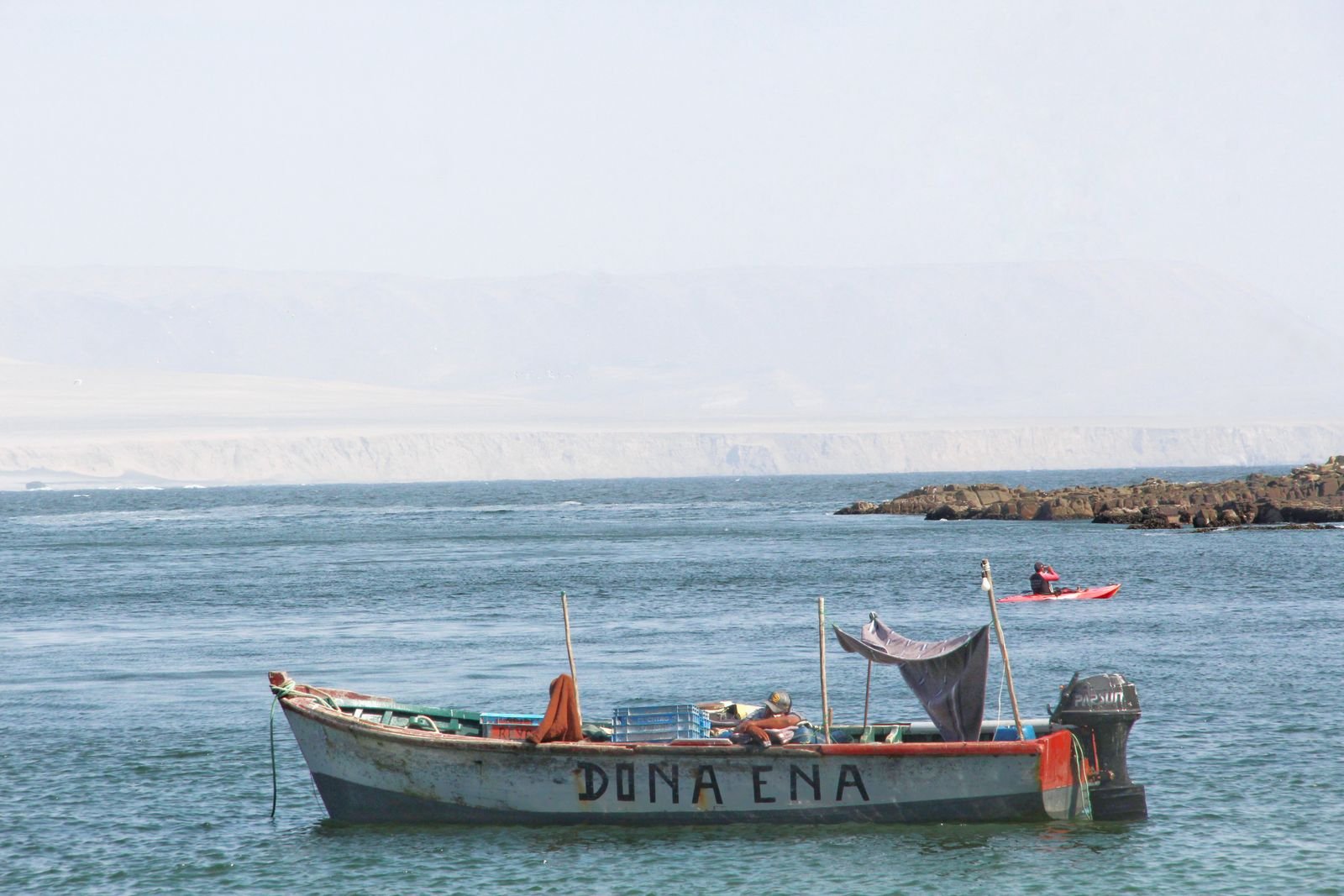
Paracas is the most scenic beach destination here, and a landscape to look at rather than a place for long swims. The Paracas National Reserve covers 335,000 hectares of desert coast and marine area, the largest marine protected area in Peru. Playa Roja (the red beach) gets its colour from volcanic rock, and the coast south of the visitor centre alternates between sheltered coves and wind-carved cliffs. Lagunillas is a fishing cove with basic seafood restaurants.
- Cost: reserve visitor centre entry is approximately PEN 11. The Ballestas Islands boat tour costs approximately PEN 35-45.
- Getting there: about 3.5 hours from Lima by bus (Cruz del Sur approximately PEN 35-55).
- Best for: scenery, wildlife and a combined beach and boat day.
Local tip: bring water and sun protection, because the reserve track has no infrastructure beyond the visitor centre.
Read our things to do in Paracas guide or book Paracas tours. The reserve is managed by SERNANP, Peru’s protected areas agency.
5. Punta Hermosa: Big Waves Near Lima
Punta Hermosa is about 45 km south of Lima and the surf capital within day-trip distance. Pico Alto and Señoritas produce some of the longest and most consistent right-hand waves in South America, and Pico Alto can reach 6-8 metres in big swells. The beach is not ideal for swimming because of wave action and currents, but the town has a relaxed feel, with a few restaurants and surf shops.
- Cost: surf lessons run approximately 70-120 soles including board and wetsuit.
- Getting there: 1 to 1.5 hours by car on the Panamericana Sur (up to 2 hours on weekend mornings), or an Asia or Punta Hermosa bus for approximately 5-8 soles.
- Best time: summer (December to March) for sun, winter for bigger swells and fewer crowds.
Local tip: for calmer swimming nearby, Santa María del Mar, about 60 km from Lima, is sheltered and quieter.
Our guide to beaches near Lima covers Agua Dulce, Punta Rocas and more, or book Lima surf lessons and coastal tours.
How to Choose
For warm water and a social scene, go to Máncora, with Punta Sal as the swimming alternative. For culture plus surf, Huanchaco pairs with Trujillo’s ruins. For scenery and wildlife, Paracas wins. For waves without leaving Lima, Punta Hermosa wins. Expect cold water on the central and southern coast, and pack a wetsuit if you plan to surf. If you want to extend a northern coast trip, see our underrated places in Peru.