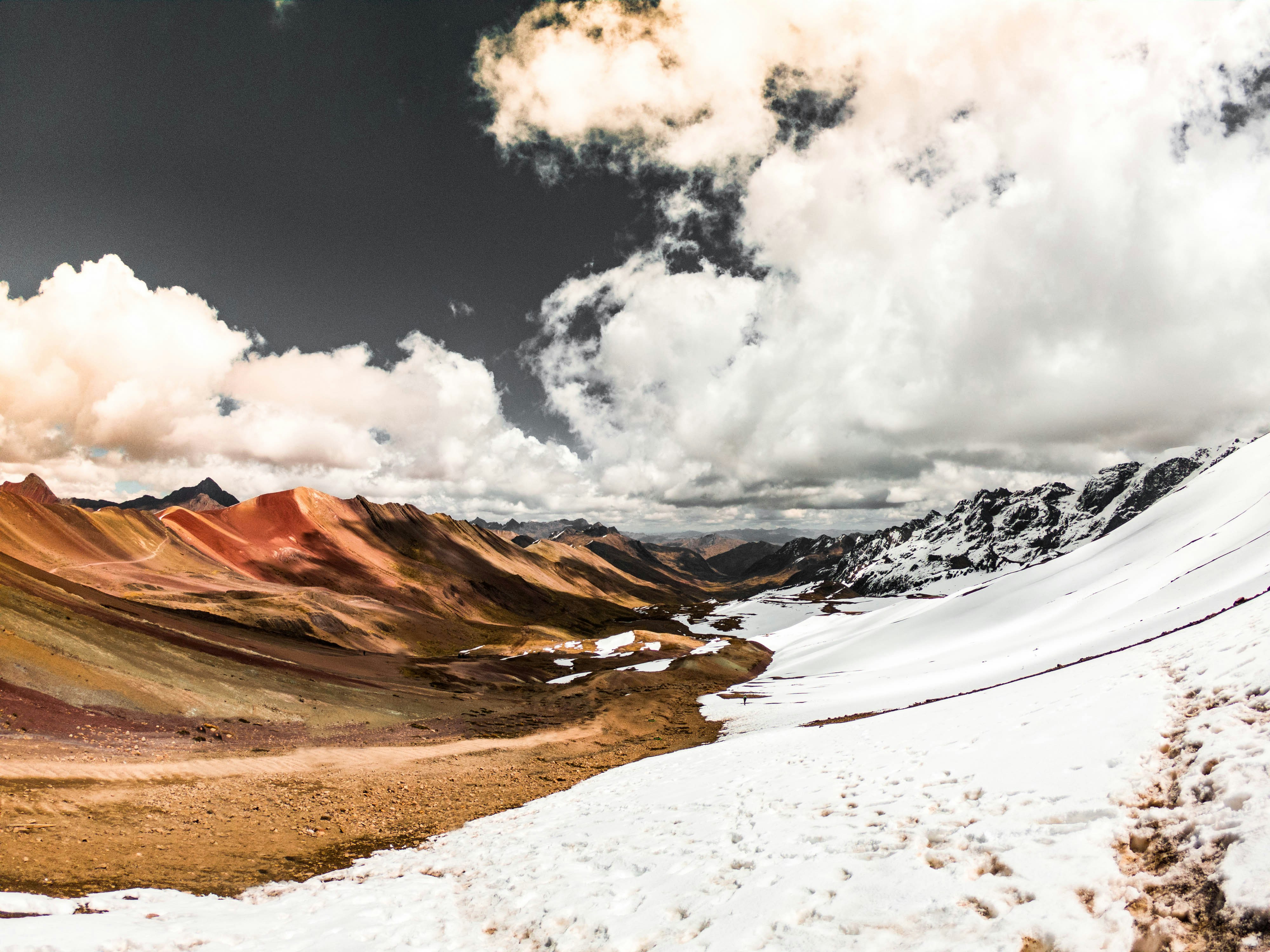
Ausangate (6,372m) is the highest mountain in the Cusco region and one of the most sacred peaks in Andean cosmology. The Quechua people regard it as an Apu — a mountain deity — and the annual Qoyllur Riti festival (May or June, timing shifts with the Catholic calendar) draws tens of thousands of pilgrims to the snowfields at its base each year. The circuit around this mountain takes 4–5 days and passes through landscapes that are dramatically different from the tourist trails of the Sacred Valley: no crowds, no entry kiosks, and campsites at altitudes (4,400–4,700m) that make every afternoon’s rest feel genuinely earned.
The trek’s distinguishing features are altitude, scale, and isolation. The entire circuit runs above 4,400m. Three passes exceed 5,000m. Herds of alpaca and llama graze the bofedal (high-altitude wetlands) between mountain ridges, and condors are a regular sight above the high passes. Hot springs at Pacchanta provide genuine physical relief on the final day. The proximity to Rainbow Mountain (Vinicunca) makes this the natural full multi-day version of the day trip that most Cusco visitors do — same massif, completely different experience.
Route Overview
Start: Tinki (4,300m) or Upis (4,400m) — approximately 3.5–4 hours from Cusco by road. End: Same point (circuit), or Cusipata/Pitumarca for the Rainbow Mountain variant. Distance: Approximately 65–75km for the standard circuit. Duration: 4 days (fast), 5 days (standard with rest time). Maximum altitude: Palomani Pass, approximately 5,200m; Ausangate Pass, approximately 5,020m. Difficulty: Very challenging. Best season: May–September (June and July are driest).
Day-by-Day Route
Day 1: Cusco → Tinki → Upis (4,400m) — acclimatisation afternoon The drive from Cusco takes 3.5–4 hours via the town of Ocongate. Lunch in Ocongate (basic restaurants, approximately S/10–S/15). Arrive at Upis in the early afternoon and camp. The community here maintains simple latrines and sells basic snacks. Afternoon rest and short acclimatisation walk. Temperature at Upis drops sharply after sunset — prepare for a cold first night. Community hot springs at Upis (approximately S/10) help.
Day 2: Upis → Ausangate Camp via Arapa Pass (4,900m) — 18km, very hard The first major day. The trail climbs from Upis through bofedal wetland and rocky moraine to Arapa Pass (approximately 4,900m). The views of Ausangate’s southern face from the pass are the defining image of the circuit — enormous glaciated walls above a vast grassland valley. Descent to the valley camp at approximately 4,600m. Long day; expect 7–8 hours including breaks.
Day 3: Ausangate Camp → Jampa → Palomani Pass (5,200m) → Pacchanta — 20km, very hard The hardest day. The circuit’s high point, Palomani Pass (approximately 5,200m), involves a sustained climb on loose scree and patches of glacial moraine. At the top, the full southern cordillera opens up — Ausangate’s east face, Jatunhuma (5,750m), and the broad Sibinacocha lake basin. The descent to Pacchanta (4,300m) is steep and long. Hot springs at Pacchanta (approximately S/10, outdoor pools, basic changing area) at the end of the day are the circuit’s most anticipated stop. Camp at Pacchanta.
Day 4: Pacchanta → Upis via Ausangate Pass (5,020m) — 17km, hard The return leg passes through Ausangate Pass (approximately 5,020m) with views back across the massif. The descent is more gradual than the previous day. Arrive at Upis or Tinki by midday to early afternoon. Drive back to Cusco.
Day 5 option: Some 5-day itineraries build in a rest half-day at Pacchanta or add the Rainbow Mountain detour as a Day 4 approach before the final return.
Rainbow Mountain variant: Start from Cusipata or Pitumarca (accessible from the Cusco–Puno highway). Day 1 climbs to Vinicunca (5,036m) before descending to the first circuit camp. This route passes through the area most visited by day-trippers in the morning but arrives at Rainbow Mountain either early (07:00–08:00) or late (14:00–15:00) — avoiding the peak crowd window.
Operators from Cusco
Alpaca Expeditions — Runs a strong Ausangate circuit alongside their Inca Trail programme. 4-day standard circuit from approximately USD 380–USD 450 per person in a group as of 2026, including all camping equipment, cook, and mule support. Private departures available at premium.
Llama Path — Cusco-based operator with B Corp certification and established community relationships in the Ocongate area. 5-day circuit from approximately USD 420–USD 500 per person. Known for ethical practices and strong community benefit agreements with the Tinki and Upis communities.
Peru Treks — Specialist trek operator offering a 5-day Ausangate with Rainbow Mountain combination. From approximately USD 450 per person. Good reputation for guide quality and equipment standards.
Andean Treks — US-based operator that uses Cusco-based guides. More expensive (approximately USD 700–USD 900 per person) but convenient for pre-booking from abroad with English-language customer service.
Independent trekking: The circuit is navigable without a guide for confident navigators with a GPS track (download from Wikiloc or AllTrails before leaving Cusco — no mobile signal on most of the circuit). An arrieros hired from Tinki carries equipment for approximately S/50–S/70 per mule per day as of 2026. Community fees at Upis are approximately S/30–S/50 per person. Carry all food from Cusco; the only resupply options are basic snacks at Upis and Pacchanta.
Altitude and Acclimatisation
The base camp at Upis (4,400m) is already at serious altitude. Trekkers arriving in Cusco and starting the Ausangate circuit the next day will almost certainly suffer from altitude sickness. Minimum preparation:
- 2 nights in Cusco (3,400m) before starting
- One day hike to 4,000m+ in the Cusco region (Sacred Valley, Chinchero plateau, or similar)
- Avoid alcohol for the first 48 hours in Cusco
- Stay hydrated — 3+ litres per day on the trail
Diamox (acetazolamide) is available at pharmacies in Cusco’s San Blas neighbourhood and near the Plaza de Armas. Consult a physician about appropriate dosage before travelling.
Essential Kit
The Ausangate circuit is a full camping trek. Kit requirements:
- Sleeping bag rated to -15°C minimum (overnight temperatures at 4,600m camp regularly drop to -10°C or below, particularly outside July–August)
- Insulated down jacket and waterproof shell
- Trekking poles (mandatory on Palomani Pass descent)
- Gaiters (useful on moraine and scree)
- Sun protection — UV at 5,000m is extreme, particularly on reflective glacial approaches
- Blister prevention and foot care (wet bofedal sections can soften feet)
Guided tours typically include tents, sleeping mats, cooking equipment, and all meals. Verify whether sleeping bags are included — most operators do not supply them.
Cost Summary
| Option | Approximate cost per person |
|---|---|
| Guided group circuit (4 days, standard) | USD 350–USD 480 |
| Guided group circuit (5 days with Rainbow Mountain) | USD 420–USD 550 |
| Private guided circuit | Add approximately USD 150–USD 200 |
| Independent (arrieros + community fees) | USD 60–USD 130 |
Prices as of 2026. Transport from Cusco to Tinki not included in tour prices.
Search hotels in Cusco on Booking.com
Getting There Without a Tour
Combis to Ocongate depart from Cusco’s Terminal Terrestre (Av. Tomás Tuyro Túpac) in the early morning. Journey time approximately 3 hours, fare approximately S/15 as of 2026. From Ocongate’s main square, mototaxis and taxis serve Tinki (approximately S/30–S/50, 30 minutes on unpaved road). Confirm transport back to Ocongate in advance — vehicles are less frequent in the afternoon.