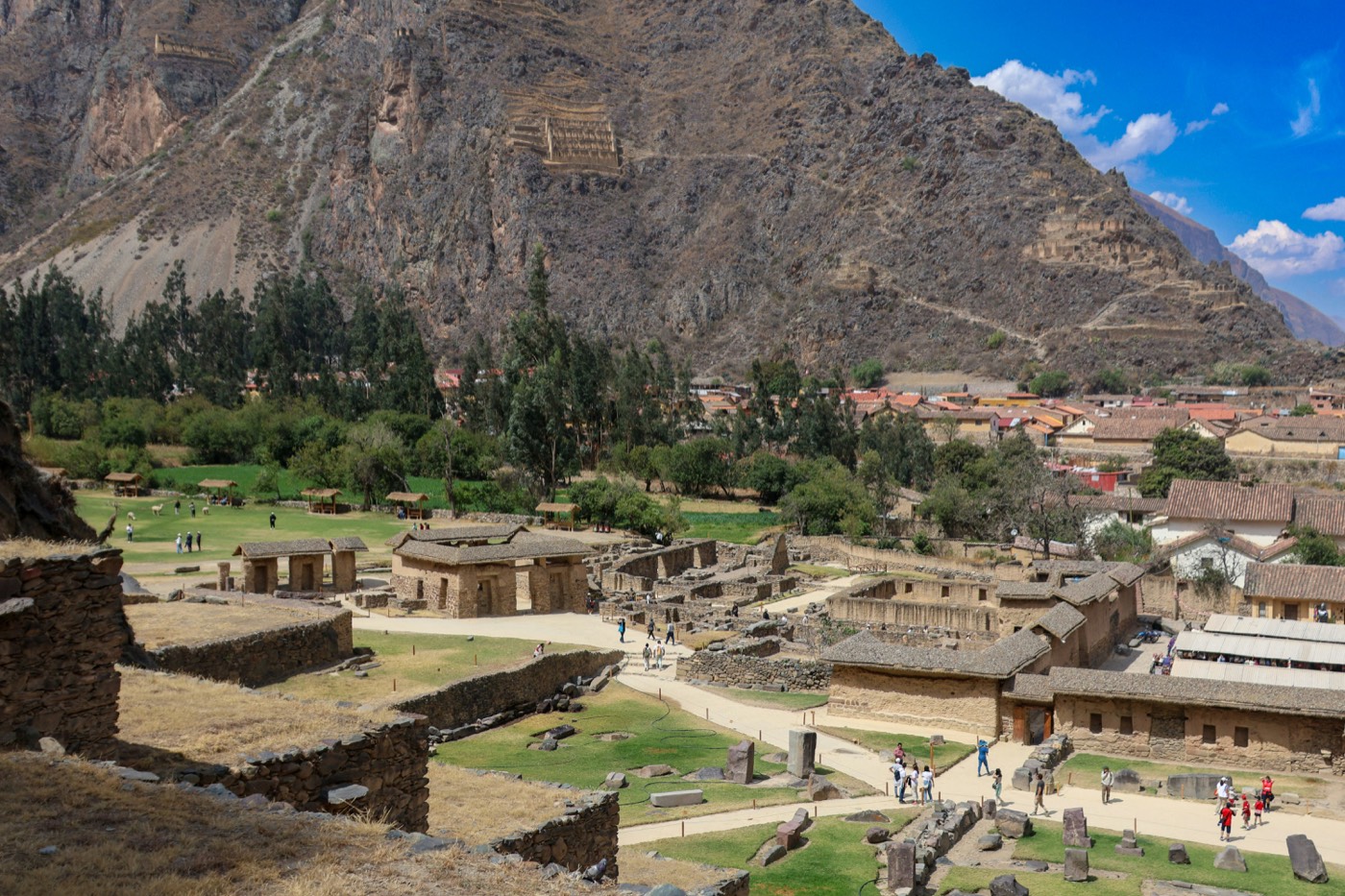
Ollantaytambo is the best-preserved example of Inca urban planning in existence - a town where the same stone compounds and water channels built under Pachacútec in the 15th century are still in daily use. It also served as one of the most strategically significant military positions in the empire, guarding the entrance to the Sacred Valley from the jungle lowlands below. At 2,792 metres above sea level, it sits 93km northwest of Cusco and is the main train departure point for Machu Picchu.
Historical Context
Ollantaytambo was constructed by the Inca Pachacútec (reigned approximately 1438–1471) as both a royal estate and a military stronghold at the confluence of the Urubamba and Patakancha rivers. Its position was deliberate: the site controls the narrow gorge where the Sacred Valley narrows before dropping toward the Amazon basin, making it both an administrative centre and a defensive chokepoint.
The town itself was designed on a grid of rectangular blocks (kanchas) separated by narrow alleys, with a central water channel running through each kancha. This layout still shapes the lower town today. Residential buildings were arranged around interior courtyards, with shared water supply from the Patakancha river distributed via stone-lined channels that remain functional.
During the Spanish conquest, Ollantaytambo was the site of one of the few Inca military victories over Spanish forces. In 1537, Manco Inca led a resistance force here and repelled a cavalry attack by Hernando Pizarro by flooding the valley floor and firing projectiles from the terraces above. The Spanish eventually withdrew, though Manco Inca later abandoned Ollantaytambo for the more remote stronghold of Vilcabamba.
The Fortress and Temple of the Sun
The terraced hillside above the town rises steeply in approximately 17 rows of stone agricultural and defensive terracing. The top platform holds the most significant structures:
The Temple of the Sun: The uncompleted centrepiece of the upper complex. Six monolithic pink granite blocks, each weighing approximately 50 tonnes, were quarried at Cachicata on the opposite side of the Urubamba valley and transported several kilometres to this position. The stones are fitted with characteristic Inca precision - no mortar, surfaces cut to lock together - but construction was never finished, apparently halted by the Spanish invasion. The three visible doorways are classic Inca trapezoidal form.
The Wall of Six Monoliths: The unfinished western face of the Temple of the Sun, now the most photographed section of the site. The alternating wide and narrow stone blocks are connected by carved T-shaped joints visible at several points.
The Water Temple: Below the main fortress, a carved stone fountain complex in the lower section of the site. Spring water was directed through stone channels and ceremonial niches in a form typical of Inca water management architecture.
The Granaries (Qollqas): A series of small stone storehouses visible on the opposite cliffside across the valley floor - rectangular buildings positioned to catch maximum airflow for food preservation. These were used to store goods redistributed through the Inca administrative system.
The Living Town
The residential grid below the fortress is the part of Ollantaytambo that distinguishes it from every other Inca site in Peru. Walk the alleys between the kanchas in the early morning and the town is simply alive - households opening, chickens in the courtyards, the original water channels running at full flow.
The most intact kanchas are east of the main plaza. Several are open to visitors; others remain private residences. The original stone doorways, interior niches, and water distribution points are visible throughout. This continuous habitation over 600 years is why the lower town retains its structure better than most restored Inca sites.
Entry Fees and Opening Hours
The archaeological site (fortress and surrounding monuments) is covered by the Cusco Tourist Ticket (Boleto Turístico):
- Partial circuit (4 sites including Ollantaytambo): approximately S/70 as of 2026
- Full circuit (16 sites, 10-day validity): approximately S/130 as of 2026
Standalone entry tickets are also sold at the site entrance for visitors who have not purchased the Boleto Turístico. The town itself - the residential kanchas, streets, and market area - requires no ticket and is freely accessible.
Opening hours: Daily 07:00–18:00. Ticket sales close at approximately 17:00.
The Boleto Turístico can be purchased at the main Cusco office (Avenida El Sol 103, Cusco), at the Sacsayhuamán gate, or at Ollantaytambo’s site entrance.
Getting There from Cusco
Ollantaytambo is approximately 93km northwest of Cusco via the Urubamba valley road.
Shared minibus (colectivo): Departs from Cusco’s Pavitos terminal (Calle Pavitos, near Avenida Grau). Journey takes approximately 1.5–2 hours depending on traffic. Cost approximately S/10–S/15 as of 2026. Minibuses run throughout the day; the service is reliable and the most economical option.
Private taxi: Approximately S/80–S/120 one way as of 2026. More flexible for combining with other Sacred Valley stops. Negotiate the fare before departure.
Organised day tour: Most Cusco agencies offer Sacred Valley day tours combining Pisac, Chinchero, Moray, and Ollantaytambo. Browsing Sacred Valley tours lets you compare group sizes, guides, and inclusions before committing. Cost approximately S/60–S/120 per person as of 2026 including transport and a guide. These typically arrive mid-morning, so independent travellers using the colectivo can reach the site earlier.
Ollantaytambo as Train Departure Point
Ollantaytambo station is one of the two main departures for trains to Aguas Calientes (the town at the base of Machu Picchu). The journey from here takes approximately 1.5 hours, compared to approximately 3.5 hours from Cusco’s Poroy station. Fares start at approximately USD 35–USD 55 one way for expedition class as of 2026, typically cheaper than Poroy departures.
PeruRail (perurail.com) and Inca Rail (incarail.com) both operate this route. In peak months (May–August), trains sell out weeks in advance - book as early as possible.
If you are doing the Inca Trail or Salkantay Trek, your group will typically end the trek at Aguas Calientes and take the train back to Ollantaytambo, finishing the trip in the Sacred Valley rather than returning directly to Cusco. Machu Picchu is approximately 1.5 hours by train from here.
Where to Stay in Ollantaytambo
Many travellers stay overnight here rather than commuting from Cusco, particularly if catching an early train to Aguas Calientes.
Pakaritampu Hotel - The most established mid-range option in town. Set in a colonial-style building two blocks from the main plaza, with garden courtyard and 36 rooms. Rates approximately USD 80–USD 130 per night as of 2026. Breakfast often included.
KB Tambo Hotel - Stone-and-timber boutique hotel with mountain views and wood-burning fireplaces in the rooms. Approximately USD 60–USD 90 per night as of 2026. Good location near the train station end of town.
Hostal Iskay - Clean and well-run budget guesthouse with private and dorm rooms. Approximately USD 15–USD 35 per night as of 2026 for a private room. Popular with trekkers departing on early trains. Located near the main plaza.
Apu Lodge - Small family-run guesthouse with views toward the fortress terraces. Approximately USD 40–USD 65 per night as of 2026 for a double room.
Search hotels in Ollantaytambo on Booking.com
Practical Notes
- Arrive early if possible. Tour groups from Cusco arrive from approximately 09:30 onward. The site is far more atmospheric in the first two hours of the day.
- The Sun Gate viewpoint at the top of the fortress requires a steep 20–30 minute climb on stone steps. Take altitude into account - at 2,792m, many visitors find the ascent harder than expected.
- The town has a daily market (busiest on Wednesday and Sunday) selling produce and local crafts along the main street.
- ATM availability is limited - carry sufficient cash from Cusco.
- Walking the alleys of the residential quarter is free and takes approximately 1 hour if you explore thoroughly.
Ollantaytambo: More Resources
- Sacred Valley Travel Guide - Planning the valley between Pisac and Ollantaytambo including transport from Cusco.
- Things to Do in the Sacred Valley - Pisac market and ruins, Chinchero, Moray, and Urubamba rafting.
- Maras Salt Mines and Moray - The plateau sites north of Urubamba, easily combined with Ollantaytambo.
- Cusco Travel Guide - The standard base 1.5–2 hours east by bus.
- Machu Picchu Tours - Trains from Ollantaytambo station and guided day tours to Machu Picchu.
- Machu Picchu Tickets - Book entry before travelling to Ollantaytambo.
- Salkantay Trek - The Salkantay route ends at Aguas Calientes after passing through the Sacred Valley area.
- 3-Day Cusco Itinerary - Itinerary placing Ollantaytambo in a structured Cusco visit.