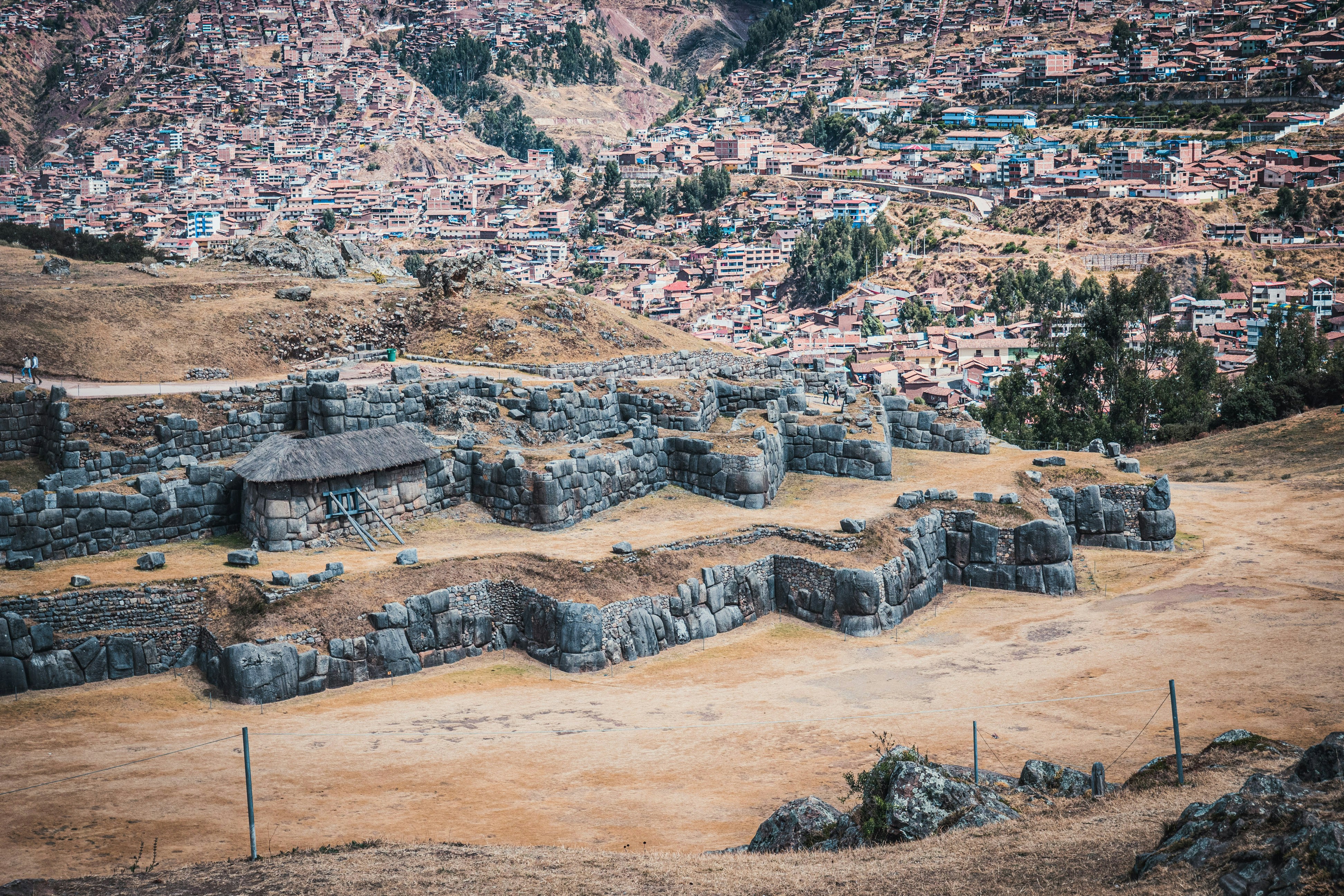
Sacsayhuamán (often written Saqsaywaman or Saxaywaman, and pronounced approximately “sexy woman” by many visitors) is the most impressive Inca construction visible from Cusco. The three great zigzag terraces of the outer fortification walls rise above the northern edge of the city in steps, each course of massive limestone and andesite blocks fitted with a precision that continues to confound engineers. The largest stone in the complex weighs an estimated 361 tonnes - and was transported from a quarry approximately 20km away by a civilisation without wheeled vehicles or iron tools.
History
Construction began under Sapa Inca Pachacútec (r. 1438–1471) as part of his transformation of Cusco into the symbolic capital of the Inca world. Spanish chronicler Pedro Sarmiento de Gamboa estimated that 20,000 workers laboured for 70 years on the complex. Work was still ongoing when the Spanish arrived in 1533.
The exact original function of the complex is debated. The Spanish called it a fortress, and it did serve a military function in the resistance period (the Manco Inca rebellion of 1536–1537 was centred here). However, Andean scholars now believe the complex was primarily a religious centre - possibly representing the head of Puma-shaped Cusco (the body of the puma was the city below).
After the Spanish conquest, the complex was systematically quarried for building material - the colonial city of Cusco’s churches, palaces, and walls were largely built from stone removed from Sacsayhuamán. Only the largest stones, too heavy to move economically, remain in place today.
What to See
The Three Terraces (Muyuqmarka, Suchuna, Salaq Marca): The main feature. Three zigzag tiers of limestone and andesite blocks, each wall approximately 6m high. Walk along the tops of the terraces for the best views of the stone joinery and of Cusco below.
The Large Field (Esplanade): The flat open area between the terrace walls and the hill opposite was the main ceremonial space. Today it hosts the annual Inti Raymi re-enactment on 24 June, drawing tens of thousands of spectators.
Rodadero Hill: The exposed rock outcrop opposite the main walls, with carved stone slides, channels, and thrones. This was likely a ceremonial location rather than a children’s playground, as was suggested by early archaeologists who named features here “the slide” and “the throne of the Inca.”
Chincana (labyrinth): The remains of buildings behind the main terrace walls, including partially restored round towers and underground passages. Some passages are accessible with a guide.
Entry Information
Entry: Included in the Cusco Boleto Turístico (approximately S/130 for the full 16-site circuit, or S/70 for the Cusco area circuit, as of 2026). Both versions are valid for 10 days. Alternatively, single-site entry approximately S/70 as of 2026. Purchase at the Boleto Turístico office on Avenida El Sol in Cusco, or at the site entrance.
Opening hours: Daily 07:00–18:00. The last entry is accepted at approximately 17:30.
Guides: Licensed guides offer tours at the entrance (approximately S/50–S/80 for a 1.5-hour tour as of 2026). Guides provide historical context that significantly enriches the visit; the site has minimal interpretive signage. Pre-booked Cusco city tours typically include Sacsayhuamán alongside Qorikancha and other Boleto Turístico sites in a single guided day.
Getting There from Cusco
On foot: 30–40 minutes uphill from Plaza de Armas. Take the street behind the Cathedral (Calle Suecia or Plateros) heading north, then follow the path marked with “Sacsayhuamán” signs. Elevation gain approximately 300m. Take it slowly - the walk is at 3,400–3,700m.
By taxi: Approximately S/8–S/12 from Plaza de Armas, journey approximately 10 minutes as of 2026.
Combined with other sites: Sacsayhuamán is the starting point for the “circuit of the four ruins” - a 5–6 hour walk from Cusco that continues to Qenqo, Puca Pucara, and Tambomachay. All are included in the Boleto Turístico. A taxi can return you from Tambomachay for approximately S/15–S/20.
Photography
The best photography conditions are in the morning (soft light from the east) for the terrace walls and from the hill (Rodadero) for the classic wide angle. The view of Cusco from the upper terrace - the red-tiled colonial city spread across the valley floor with the snow-capped Ausangate massif visible on a clear day - is excellent. Bring a telephoto or zoom lens for stonework detail.
Inti Raymi: If visiting Cusco on 24 June, Sacsayhuamán hosts the main Inti Raymi ceremony at approximately 13:00. Ticketed seating costs approximately USD 80–USD 150; hillside standing positions fill from 08:00 onward.
Practical Tips
Altitude: The site is at approximately 3,700m - about 300m above Cusco’s Plaza de Armas. Visitors who feel altitude effects at the plaza will feel them more here. Rest frequently; do not rush.
Combined visit timing: Plan Sacsayhuamán for the morning (cooler, better light, slightly fewer tour groups). Combine with Cusco city sights in the afternoon.
Search hotels in Cusco on Booking.com
Plan Your Cusco Archaeological Visit
- Cusco Travel Guide - Base city for Sacsayhuamán. Hotels, acclimatisation advice, and the Boleto Turístico purchasing guide.
- Things to Do in Cusco - All of Cusco’s main sites: Qorikancha, San Blas, the Cathedral, Mercado de San Pedro, and the full Boleto Turístico circuit.
- Maras Salt Mines and Moray Terraces - The two most rewarding sites on the Sacred Valley plateau, easily combined with a Sacsayhuamán visit on a longer Cusco day.
- Machu Picchu Tours from Cusco - Day trips and overnight packages to Machu Picchu, usually the next stop after Cusco’s in-city sites.
- 3-Day Cusco Itinerary - How to fit Sacsayhuamán, Qorikancha, the Sacred Valley, and Machu Picchu into three days with named hotels per budget tier.
- Altitude Sickness in Peru - At 3,700m, Sacsayhuamán is higher than Cusco’s plaza. Essential reading before the walk up.