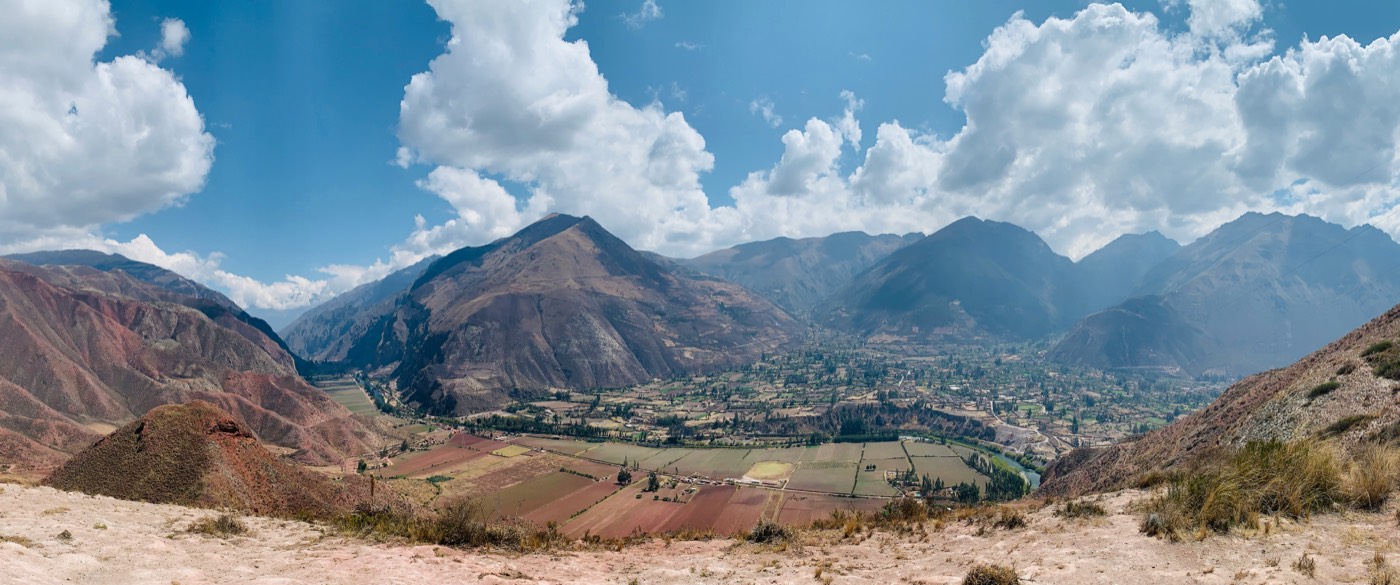
Sacred Valley of the Incas: Complete Visitor Guide
Plan your Sacred Valley trip - Pisac, Ollantaytambo, Moray, Maras, hotels, restaurants, and transport from Cusco all in one guide.
Guides for Sacred Valley
The Sacred Valley of the Incas (Valle Sagrado) runs roughly 60km between Pisac and Ollantaytambo along the Urubamba River, sitting approximately 500 metres lower than Cusco at elevations between 2,700m and 3,500m. For the Incas, it was a breadbasket and a sacred corridor; for modern travellers it is both a logical stopping point between Cusco and Machu Picchu and one of the most archaeologically rich stretches of landscape in South America. The valley rewards a full day at minimum; two nights lets you see it properly.
Getting There from Cusco
By shared colectivo: The cheapest option. Colectivos to Pisac depart from Calle Puputi in Cusco (off Avenida de la Cultura) throughout the morning. Expect to pay approximately S/8–S/12 per person one-way as of 2026. Journey time: 45–60 minutes. Colectivos to Ollantaytambo (approximately S/12–S/18) depart from a separate stop near Cusco’s bus terminal. Useful for budget travellers willing to change vehicles.
By organised tour: Standard Sacred Valley day tours from Cusco depart at approximately 08:00 and return by 18:00–19:00, covering Pisac ruins and market, Moray, Maras, and Ollantaytambo. Cost approximately USD 25–USD 45 per person as of 2026. Meals and Boleto Turístico usually not included. Book through your hotel or at agencies on Cusco’s Avenida del Sol, or reserve a Sacred Valley guided tour in advance to lock in a spot during the busy dry season.
By private taxi: Approximately S/180–S/250 for a full-day taxi covering the main sites, negotiated in advance, as of 2026. More flexible than tours for timing and photography.
Distances from Cusco: Pisac 30km (45 min); Chinchero 28km (40 min); Moray 50km (1 hr); Maras 50km (1 hr); Ollantaytambo 80km (1.5–2 hrs).
Pisac: Market and Inca Ruins
Pisac divides into two distinct experiences that most visitors try to combine in a single day.
Pisac market is held at its liveliest on Tuesday, Thursday, and Sunday mornings. The open-air market on the main square sells textiles, ceramics, jewellery, and dried goods. Locals from surrounding communities descend in traditional dress; the Sunday market is the largest. The market is free to enter. Arrive before 10:00 to beat the day-trip buses from Cusco.
Pisac ruins sit dramatically above the market town, accessed either by a 2–3 hour hiking trail from the valley floor (steep but very scenic) or by taxi to the upper parking area (approximately S/15–S/20 per vehicle). The site contains an agricultural terrace system, a solar observatory (Intihuatana), baths, and a vast Inca cemetery. Entry included in the Boleto Turístico. Open daily approximately 07:00–17:30.
Ollantaytambo: Fortress and Gateway to Machu Picchu
Ollantaytambo is one of Peru’s most impressive Inca sites and a functioning town where the street plan has remained largely unchanged since Inca times. The fortress rises above the town on a series of massive terraces, with the unfinished Sun Temple at the top - a complex of giant fitted stones that was interrupted when the Spanish arrived in 1536.
Entry and hours: Included in the Boleto Turístico. Open daily approximately 07:00–18:00. Allow 2–3 hours for a thorough visit, including the climb to the upper terraces (steep stone steps, strenuous at altitude).
Across the valley: The granary buildings (Qollqas) built into the cliff face opposite the fortress are visible from the town; a short walk from the main square reaches the viewpoint. The town’s Inca street grid - narrow stone lanes, original water channels still running - is worth walking without a guide.
Train connection: Ollantaytambo station is the most practical departure point for trains to Aguas Calientes. PeruRail Vistadome departs approximately four times daily; journey time approximately 1 hour 30 minutes. Fares from approximately USD 55 one-way in expedition class as of 2026. Book online at perurail.com or incarail.com and check current schedules - trains sell out weeks ahead in peak season (June–August).
Moray: The Circular Agricultural Terraces
Moray consists of a set of circular concentric terraces cut into a natural depression in the plateau above the Urubamba Valley. The Incas used this site to create microclimates at different depths - the temperature difference between the top and bottom of the main circle is approximately 15°C - making it a working agricultural research station. No other Inca site looks quite like it.
Getting there: Moray sits on the high plain above Maras town, approximately 7km from Maras. Most visitors combine it with the Maras salt pans on the same half-day. By taxi from Pisac or Ollantaytambo: approximately 30–40 minutes. By tour from Cusco: included in most standard Sacred Valley day trips.
Entry and hours: Included in the Boleto Turístico. Open daily approximately 07:00–17:30. Allow 45–60 minutes at the site.
Maras Salt Mines (Salineras de Maras)
The Maras salt pans are a network of approximately 3,000 small terraced pools fed by a hypersaline spring above the Urubamba Valley. Families from the Maras community have worked them since pre-Inca times; each pool is still owned and harvested individually. The visual effect - white and pink pools cascading down a hillside - is unlike anything else in the valley.
Entry and hours: Approximately S/10 per person as of 2026, paid at the community gate. Open daily approximately 07:00–17:00. Walk down and back up through the pools takes approximately 45–60 minutes. Buy a packet of Maras salt to take home - it is sold at the site by the producing families.
Combining Maras and Moray: Both sites are on the high plain 7–9km from each other. Most day tours and organised taxis cover both in a 3–4 hour half-day. From Ollantaytambo, a taxi to both sites and back costs approximately S/100–S/130 as of 2026.
Getting to Aguas Calientes (Machu Picchu)
Ollantaytambo station is the standard train departure point for the Inca Trail to Machu Picchu and the direct rail service. The train journey to Aguas Calientes takes approximately 1 hour 30 minutes and passes through cloud forest canyon that is impossible to access by road - the train ride itself is part of the experience.
PeruRail and Inca Rail both operate this route. Expedition class (basic but comfortable) starts at approximately USD 55 one-way; Vistadome (panoramic windows, meal service) from approximately USD 75–USD 95 one-way as of 2026. First-class Belmond Hiram Bingham service from approximately USD 450 one-way includes meals, guides, and entry to Machu Picchu - suited for a special occasion. For everything you need to know about arriving in Aguas Calientes and getting up to the site, see our full guide.
Booking is essential for peak months. Trains for June, July, and August regularly sell out 4–6 weeks in advance. Check perurail.com and incarail.com for current availability. You can also book a Sacred Valley and Machu Picchu combined tour that handles train logistics and entry tickets in one package.
Where to Stay
Staying in the Sacred Valley rather than commuting daily from Cusco has several advantages: the altitude is lower (easier sleep, less headache), the mornings at major sites are quieter before day tours arrive, and you can reach Ollantaytambo station directly for the Machu Picchu train.
Explora Valle Sagrado - One of the premier lodge experiences in the valley, set on an old hacienda estate between Urubamba and Ollantaytambo. All-inclusive rates from approximately USD 900 per person per night as of 2026, covering accommodation, meals, guided excursions, and transport. Best for travellers who want the valley explored in depth.
Inkaterra Hacienda Urubamba - A mid-luxury option on a working farm between Urubamba town and Pisac, with views across valley terraces. Rates from approximately USD 280–USD 380 per night as of 2026. Good restaurant on-site; local guides available.
Sol y Luna Lodge and Spa - An established boutique property near Urubamba with bungalow-style rooms set around gardens. Rates from approximately USD 180–USD 260 per night as of 2026. A solid mid-range option for couples or families.
KB Tambo Hotel - Located in Ollantaytambo town, this mid-range hotel has stone-walled rooms within walking distance of the fortress and the train station. Rates from approximately USD 80–USD 130 per night as of 2026, including breakfast. Practical choice for the night before a morning train.
El Albergue - Longstanding budget-to-mid option right beside Ollantaytambo station. Rooms from approximately USD 70–USD 100 per night as of 2026. Good local food in the on-site restaurant; convenient for early morning trains.
Hostal Kinsa Cocha (Pisac) - Budget hostal in central Pisac with simple rooms and a rooftop terrace. Doubles from approximately USD 30–USD 50 per night as of 2026. Ideal base for exploring Pisac market at dawn before the crowds.
Where to Eat
El Huacatay (Urubamba) - One of the best restaurants in the valley, run by a chef couple combining Andean ingredients with European technique. Mains approximately S/55–S/85 per person as of 2026. Reservations essential. Located in a garden setting on Calle Arica, Urubamba.
Kaia Estudio Gastronómico (Urubamba) - A newer farm-to-table restaurant gaining recognition for its tasting menus built around valley-grown produce. Lunch menus from approximately S/120 per person as of 2026.
Chuncho (Ollantaytambo) - Good local cooking at reasonable prices near the fortress entrance. Roasted chicken, soups, and Andean stews. Mains approximately S/30–S/45 as of 2026.
Hearts Café (Ollantaytambo) - Run as a social enterprise supporting local women; the café serves solid breakfasts, sandwiches, and juices. Popular with trekkers the night before taking the train. Mains approximately S/20–S/35 as of 2026.
Pisac market food stalls - On market days, stalls set up beside the main square serving soups, corn, and grilled meat. A market meal costs approximately S/10–S/18 as of 2026. The most economical food option in the valley.
Best Time to Visit the Sacred Valley
The Sacred Valley shares its seasons with Cusco, but the lower altitude (2,700–3,100m versus Cusco’s 3,400m) means milder temperatures and more reliable weather throughout the year.
Dry season (May to October): This is peak season and the best time for most visitors. Days are clear and warm (18–22°C), nights are cold (2–8°C), and archaeological sites are dry and accessible. June through August is the busiest window; Ollantaytambo can feel crowded by mid-morning as day tours arrive from Cusco. The Pisac market on Sunday mornings is best visited before 09:00 during this period.
Wet season (November to April): Rain falls mainly in the afternoons, leaving mornings at sites clear and often cloud-free. The valley is dramatically green, and visitor numbers at sites like Moray are noticeably lower. Trails between the Pisac market and ruins become muddy. Accommodation prices drop by 20–30% compared to dry season peak. January through March sees the heaviest rain and is the quietest period — suitable for travellers who specifically want to avoid crowds.
Recommendation: May or October for the sweet spot — dry season clarity without the peak June–August crowds. November for budget travellers willing to time afternoon site visits around weather.
Sacred Valley Tours: What to Book
Whether you’re visiting for a day or basing yourself here for two nights, the table below compares the main tour options from Cusco and within the valley. Prices are per person as of 2026.
| Tour Type | Duration | Cost (approx.) | What’s Included |
|---|---|---|---|
| Standard Sacred Valley day tour | 1 day | USD 25–45 | Pisac, Moray, Maras, Ollantaytambo (transport only) |
| Sacred Valley + Machu Picchu combo | 2 days | USD 150–220 | Valley sites + train + Machu Picchu entry |
| Small-group Moray and Maras | Half day | USD 35–55 | Moray terraces, salt pans, local guide |
| Private taxi day tour | 1 day | S/180–250 | Full flexibility, all main sites |
| Chinchero weaving workshop | 3–4 hours | USD 20–35 | Weaving demonstration, Chinchero village |
Reserve a Sacred Valley guided tour to compare current availability for valley day tours and Machu Picchu combo packages.
Day Trip vs Overnight Stay
Reasons to day-trip: The valley’s main highlights - Pisac market, Moray, Maras, and a first look at Ollantaytambo - fit into a long day from Cusco (08:00–19:00). Cost is lower without overnight accommodation. Fine for travellers with limited time.
Reasons to stay overnight: Sites like Pisac ruins and Ollantaytambo fortress are significantly more atmospheric before 09:00, when day tours arrive. Staying at lower altitude (2,700–3,100m versus Cusco’s 3,400m) noticeably improves sleep quality for altitude-sensitive travellers. Staying near Ollantaytambo also means walking to the train station rather than a 2-hour taxi from Cusco to Poroy. For most travellers combining the Sacred Valley with a Machu Picchu trip, one night in Ollantaytambo is the most practical and enjoyable approach.
Practical Information
Altitude: The valley floor sits at approximately 2,700–3,100m. Lower than Cusco but still high enough for altitude effects in un-acclimatised travellers.
Weather: The valley has a milder, drier climate than Cusco. May through October is dry season with warm days and cold nights; November through April brings afternoon rain and greener vegetation.
Currency: Soles (S/) essential. Some restaurants and hotels accept USD or credit cards; market stalls do not. ATMs in Pisac town and Urubamba town; none at Moray or Maras.
Safety: The valley is generally safe. Use registered taxis; on market days, watch for pickpockets in the Pisac market crowd.
Sacred Valley Guides
- Things to Do in the Sacred Valley - Pisac ruins, Ollantaytambo fortress, Moray terraces, and lesser-known valley sites with entry fees and opening hours.
- Sacred Valley Food Guide - Farm-to-table restaurants, market stalls, and the best places to eat between Pisac and Ollantaytambo.
- Where to Stay in the Sacred Valley - Hacienda lodges, boutique hotels, and budget hostals in Pisac, Urubamba, and Ollantaytambo.
- Maras Salt Mines and Moray Terraces - The community-owned salt pans and Inca agricultural research site above the valley, with entry fees and logistics.
Sacred Valley vs Cusco
Not sure whether to base yourself here or in Cusco?
- Sacred Valley vs Cusco - Where to base your Inca region trip: city hub with more services, or quieter valley towns at lower altitude.
Book an experience
Top experiences in Sacred Valley
Explore the best tours and activities in Sacred Valley , with instant confirmation and free cancellation on most bookings.