The Sacred Valley of the Incas runs north-west from Cusco along the Urubamba River, connecting the market town of Pisac with the fortress village of Ollantaytambo - and beyond that, the train to Machu Picchu. At 2,800–2,900 m above sea level, it sits lower than Cusco and higher than Machu Picchu, making it a natural and practical base for acclimatisation.
Pisac Ruins (Pisaq)
Perched above the town of Pisac on a cliff spur with views down the valley to the Urubamba River below, the Pisac ruins are one of the finest Inca sites in Peru and dramatically under-visited compared to Machu Picchu. The site combines a sun temple, agricultural terraces cascading down the hillside, and residential sectors. Entry is covered by the Cusco Boleto Turístico (approximately PEN 130 as of 2026 for the full pass) or by individual site ticket (approximately PEN 70 as of 2026). Open daily 7:00 am–5:30 pm.
The ruins are 33 km from Cusco via a switchback road above Pisac town. Taxis from Pisac market up to the ruins cost approximately PEN 15–20. A colectivo from Cusco to Pisac town costs approximately PEN 8–10 as of 2026.
Pisac Market
The Sunday market in Pisac Plaza de Armas is the most famous artisan market in the Sacred Valley, though it now runs in reduced form on Tuesday and Thursday as well. Textiles, ceramics, jewellery, and carved gourds fill the square from around 8:00 am. Quality varies: the inner ring of stalls with artisans actively weaving or carving tends to offer more authentic goods than the outer rows. Prices are negotiable but start fair - excessive bargaining is discouraged in community-run stalls.
Ollantaytambo Fortress
The Inca fortress of Ollantaytambo sits at the north-west end of the Sacred Valley and is one of the few places where the Inca successfully repelled a Spanish advance (1536). The site’s massive fitted stone terraces and ceremonial platform are among the largest intact Inca constructions anywhere. Entry is by Boleto Turístico or individual site ticket (approximately PEN 70 as of 2026). Open daily 7:00 am–6:00 pm.
Ollantaytambo town itself - cobbled Inca streets, narrow channels carrying mountain water, and original two-storey Inca buildings still in use - is equally compelling. The town is the embarkation point for the Vistadome and Expedition trains to Aguas Calientes (for Machu Picchu). Book train tickets through Peru Rail or Inca Rail well in advance.
Moray Agricultural Terraces
Moray is an extraordinary Inca site of concentric circular terraces descending into a natural depression in the altiplano above the Sacred Valley. The temperature differential between the top and bottom rings is approximately 15°C - archaeologists believe Moray functioned as an agricultural research station where the Incas experimented with different crop microclimates. Entry is by Boleto Turístico or approximately PEN 40 individually as of 2026. Open 7:00 am–5:30 pm.
Moray is 12 km west of Maras village. Combine it with Salineras de Maras (see below) in a half-day. A taxi from Urubamba to both sites costs approximately PEN 60–80 return as of 2026.
Salineras de Maras (Salt Pans)
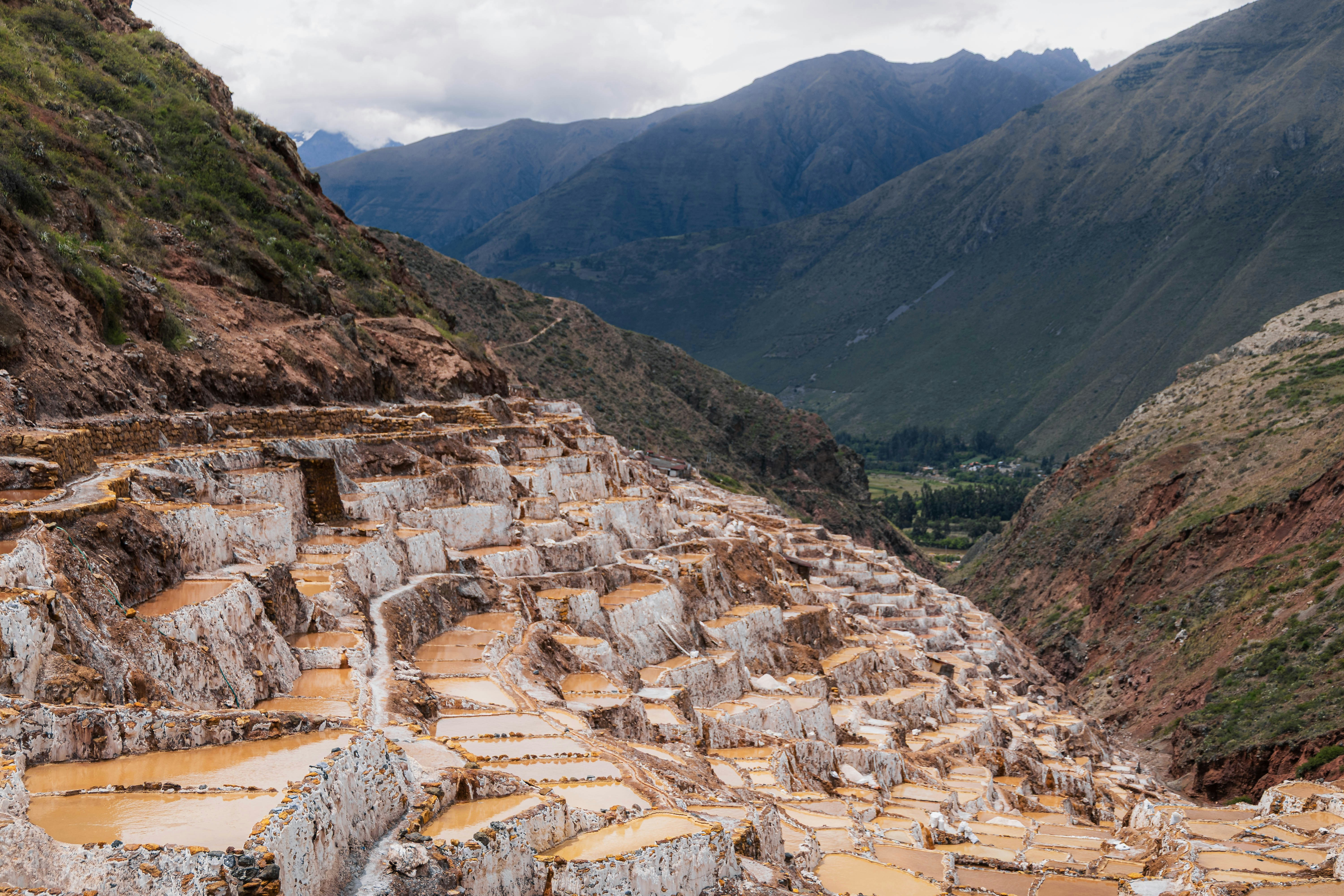
The Maras salt pans are a cascade of approximately 3,000 individual pools fed by a hypersaline spring, in continuous use since pre-Inca times. The pools are still worked by local families who rake and bag the salt by hand. Entry costs approximately PEN 10 as of 2026, paid to the local salt-workers’ cooperative - money that goes directly to the community. The pans are most photogenic in the late afternoon when the light turns the pools amber and pink. Open daily, roughly dawn to dusk.
Chinchero Weaving Village
Chinchero sits at 3,762 m above the Sacred Valley proper, near Cusco’s airport. The town is known for its Sunday market (smaller and more local than Pisac) and, more importantly, for its community of indigenous weavers who demonstrate natural dyeing and backstrap loom weaving. Entry to the weaving cooperative demonstrations is approximately PEN 10–15 as of 2026; the Chinchero archaeological site and church (over Inca foundations) are covered by the Boleto Turístico. Allow 2–3 hours.
Urubamba River Rafting
The Urubamba runs grade III–IV rapids through the Sacred Valley between Huarán and Ollantaytambo. Half-day rafting trips are operated by several agencies based in Urubamba and Cusco, costing approximately USD 35–55 per person as of 2026, including transport, equipment, and guide. The best season is May–October when water levels are predictable; during the rainy season (November–April) some sections close.
Yucay and Urubamba Town
Often bypassed for the larger sites, the twin towns of Yucay and Urubamba sit at the valley floor and offer a gentler pace. The Sunday market in Urubamba is a practical local alternative to the tourist-heavy Pisac market. The town has several good restaurants, the valley’s only supermarket (Orión), and is centrally located for day trips in either direction. Sacred Valley tours can be booked online for guided market visits, site combinations, and private valley day trips.
Q’eswachaka Rope Bridge (Day Trip)
A UNESCO-recognised living cultural heritage, the Q’eswachaka suspension bridge over the Apurímac River is rebuilt entirely from ichu grass every year by four local communities using traditional Inca techniques. The festival of rebuilding occurs each June. The bridge is a 3–4 hour drive from Cusco - doable as a long day trip or as part of an extended itinerary. No entry fee; a donation to the community is appropriate.
Practical Notes
- Start early: The Sacred Valley sites get busy after 10:00 am as day tours arrive from Cusco. Aim to be at Pisac ruins and Ollantaytambo by 8:00 am.
- Altitude: The valley floor at 2,800 m is lower than Cusco but still significant. Drink plenty of water and avoid heavy meals for your first day.
- Photography at markets: Always ask permission before photographing community members. A small tip (PEN 2–5) is customary if someone poses.
For accommodation in the valley, see our Sacred Valley hotels guide and for the best places to eat, our Sacred Valley food guide. Search hotels in Sacred Valley on Booking.com
Sacred Valley: More Resources
- Cusco Travel Guide - The standard base for Sacred Valley day trips, 1 hour by bus from Pisac.
- Sacred Valley Food Guide - Mil Centro at Moray, El Albergue in Ollantaytambo, and picanterías in Urubamba.
- Where to Stay in the Sacred Valley - From Pisac guesthouses to Explora and Inkaterra luxury lodges.
- Maras Salt Mines and Moray - Cultural and historical background on the valley’s two most distinctive non-Inca sites.
- Ollantaytambo - The Inca fortress town and its temple complex in detail.
- Machu Picchu Tours - Trains from Ollantaytambo and tour options to Machu Picchu.
- Machu Picchu Tickets - Booking in advance from Cusco or the Sacred Valley.
- Cusco Day Trips - How the Sacred Valley fits into a multi-day Cusco excursion programme.
- Salkantay Trek - The most popular alternative trek to Machu Picchu, passing through the valley area.