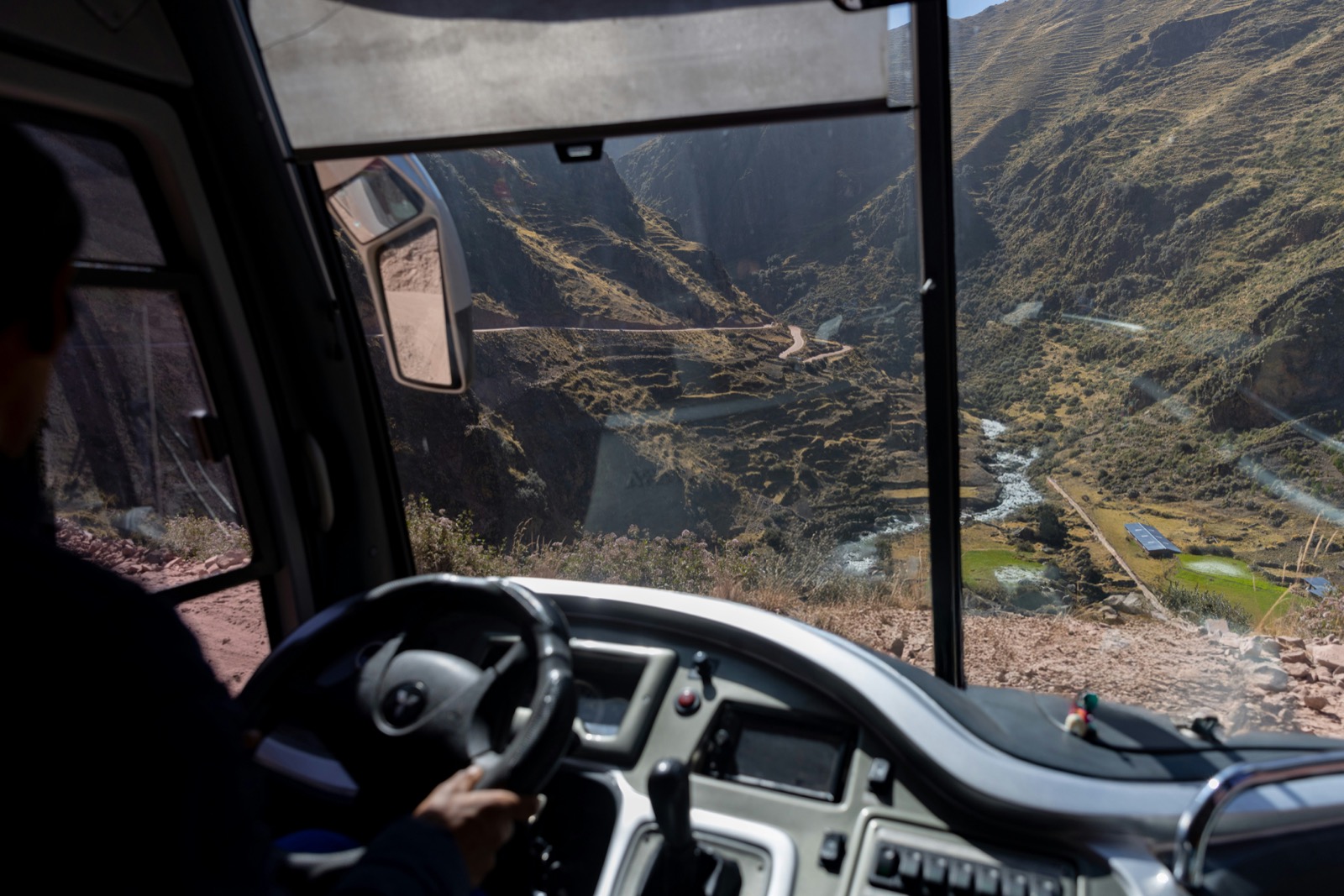
Peru has no meaningful intercity rail network - the Andean rail lines serve tourists between Cusco and Aguas Calientes, not the travelling public. Domestic flights exist between major cities, but a one-way Lima–Cusco ticket regularly runs USD 80–200, and smaller cities aren’t served at all. That leaves the bus, and Peru’s long-distance bus network is extensive, competitive, and - when you choose the right operator - genuinely comfortable.
We’ve covered every major route, every bus tier worth considering, and the practical details that make the difference between a smooth overnight ride and a frustrating one.
Bus Company Tiers: Who to Book
Premium / VIP Operators
Cruz del Sur is the largest and most reputable long-distance operator in Peru. Their Cruzero Suite and Cruzero Plus services offer full-cama seats (seats that recline to 180°), onboard meals served by an assistant, individual entertainment screens, and two drivers on all overnight routes. Cruz del Sur publishes on-time records and has a consistently safer track record than budget operators. Book at cruzdelsur.com.pe or via recorrido.pe.
Oltursa is the premium alternative to Cruz del Sur and covers the Lima–Arequipa and Lima–Trujillo corridors particularly well. Their Premium class is comparable to Cruz del Sur’s suite level. Worth comparing prices across the two - Oltursa sometimes undercuts on the southern routes.
TEPSA operates on Lima–Arequipa, Lima–Trujillo, and Lima–Piura. Their executive class is a reliable step up from budget operators, though slightly below Cruz del Sur in seat quality. A solid option when Cruz del Sur seats are sold out.
Seat classes explained:
- Cama (bed): reclines to approximately 160–180°, often with footrest - the correct choice for any journey over 12 hours
- Semi-cama: reclines to around 130°. Fine for 6–8 hour daytime routes; tiring on overnights
- Económico: standard upright seats - avoid for long routes
Mid-Range Operators
Movil Tours covers routes to northern Peru (Trujillo, Chiclayo, Piura) and the Huaraz corridor. Reliable, slightly cheaper than Cruz del Sur, with business and economy class options.
Civa has the largest network of any Peruvian operator, covering over 40 routes including jungle corridors that Cruz del Sur doesn’t serve (Lima–Tarapoto, Lima–Pucallpa). Quality is variable by route - their Excluciva class is comfortable, their economy service much less so.
Flores Hermanos is the main budget operator for the Lima–Arequipa–Puno corridor. Cheaper than Cruz del Sur by 30–50%, with acceptable semi-cama service on daytime routes. Not our first recommendation for overnight trips.
Hop-On Hop-Off: PeruHop
PeruHop operates differently from every other company on this list. It’s a tourist bus service - English-speaking guides, curated stops, and flexible tickets that let you pause the journey anywhere along the route. Their main corridor runs Lima → Paracas → Huacachina → Nazca → Arequipa → Puno → Cusco, with an extension to Copacabana and La Paz in Bolivia. If you prefer not to deal with bus terminals at all, pre-booked transfers in Peru offer door-to-door private transport on many of these routes.
PeruHop costs more than a direct Cruz del Sur ticket but includes guided stops, hostel connections, and the ability to hop off and rejoin later. Ideal if you want to break up the Lima–Cusco journey with stops at Paracas or Huacachina without planning each leg separately. Book at peruhop.com; advance booking strongly recommended in high season (June–August).
Key Routes: Duration and Price Ranges
All prices are approximate as of 2026 and reflect the range from economy to premium cama seats. Actual fares vary with season and booking lead time.
| Route | Duration | Approximate Price (soles) |
|---|---|---|
| Lima → Cusco | 21–22 hrs | 80–200 |
| Lima → Arequipa | 15–16 hrs | 60–180 |
| Lima → Huaraz | 8 hrs | 40–90 |
| Cusco → Puno | 6–7 hrs | 35–80 |
| Arequipa → Puno | 5–6 hrs | 30–70 |
| Cusco → Copacabana (Bolivia border) | 4–5 hrs + crossing | 30–60 |
Lima → Cusco is the route most travellers consider first. At 21–22 hours, the overnight option makes sense - you board around 7–8 pm, sleep through the Andes, and arrive in Cusco the following morning. Cruz del Sur’s overnight cama service includes a dinner, blanket, and individual screen. Budget around 150–180 soles as of 2026 for a premium cama seat.
Lima → Arequipa at 15–16 hours is manageable overnight with a cama seat. Cruz del Sur and Oltursa both serve this route frequently; compare schedules on recorrido.pe.
Cusco → Puno covers some extraordinary Altiplano scenery during the day - the 6–7 hour ride passes through small Andean communities and high-altitude plains. Several tourist shuttle services (not just public buses) run this route and include a stop at the Andean Raqchi temple ruins and La Raya pass at 4,335m. Worth considering over a standard bus for the guided experience.
Cusco → Copacabana / La Paz: several companies run cross-border services including Bolivia Hop (sister company to PeruHop). The route passes through Puno and crosses at the Kasani/Yunguyo border. Allow extra time for immigration - crossings can take 30–90 minutes. Bring USD for any border fees and ensure your Bolivia visa situation is sorted in advance if applicable.
Booking Your Tickets
recorrido.pe is the best comparison tool for Peruvian bus tickets. It aggregates schedules and prices from Cruz del Sur, Oltursa, Movil Tours, Civa, and others on a single search. Book directly through the site or link through to each operator’s own checkout. Omio is worth checking alongside recorrido.pe — it covers international and cross-border routes and can surface fares for Peru’s major corridors that aren’t always shown in local aggregators.
For Cruz del Sur and Oltursa, their own websites often have the full seat map and allow you to choose your specific seat - worthwhile for securing the lower deck front seats on a cama service.
PeruHop requires booking at peruhop.com. Their flexible passes are best purchased at least a week ahead in June–August high season. Walk-in availability exists but isn’t guaranteed.
For budget operators and shorter regional routes, ticket counters at bus terminals remain common. Arrive early, compare prices across operators at adjacent windows, and inspect the bus before boarding.
Safety: What Actually Matters
Peru’s road accident rate is higher than Western Europe or North America - but the risk is heavily concentrated among unlicensed and budget operators, particularly on mountain routes at night. The premium operators mitigate this with newer fleets, GPS monitoring, speed governors, and mandatory rest stops.
Practical rules:
- Use Cruz del Sur, Oltursa, TEPSA, or Movil Tours for any route involving mountain terrain or overnight travel
- Never board an unmarked colectivo or informal bus offering suspiciously cheap fares on tourist routes
- Keep your passport, wallet, phone, and camera in your daypack in the overhead rack - not in the luggage hold beneath the bus, which is not locked during stops
- The AC on premium buses is set cold - often very cold. Bring a layer even in summer, and especially on overnight routes where you’ll be still for hours
- On high-altitude routes (anything arriving in Cusco at 3,400m, Puno at 3,830m), start drinking extra water 24 hours before arrival. Some travellers bring acetazolamide (altitude medication) - consult a doctor before your trip
Rainy season (December–March): Landslides are a real risk on mountain roads, particularly between Lima and Huaraz, and on the Andean approaches to Cusco. Schedule delays of several hours are possible. If you’re on a tight connection (say, a Machu Picchu booking), build in buffer time or fly.
Night bus trade-offs: You save accommodation costs and travel time, and the best cama services are genuinely restful. The risk is higher on mountain routes at night versus daytime. For the Lima–Cusco run on Cruz del Sur or Oltursa, the risk-benefit trade-off is reasonable for most travellers. For less-established mountain routes, consider a daytime trip instead.
Terminal Tips
Lima has no central bus terminal - a common point of confusion. Each operator has its own terminal:
- Cruz del Sur operates from Javier Prado (Surquillo) for most routes
- Oltursa uses terminals in Miraflores and San Isidro
- Movil Tours and budget operators often cluster in the La Victoria / Plaza Norte area
Confirm the exact terminal address when you book - don’t assume all Lima buses leave from the same place. Allow 45–60 minutes to reach the terminal from Miraflores in Lima traffic, and plan to arrive at least 30 minutes before departure.
Cusco Terminal Terrestre is the main long-distance hub, located in the Wanchaq district, about 3km from the Plaza de Armas. Taxi from the city centre costs around 8–15 soles as of 2026.
What to Pack for the Journey
- Layers or a light jacket: bus AC is kept cold by design - cama class travellers are often surprisingly cold by 3 am even in summer
- Snacks and water: premium services provide a meal but the portions are small; budget services provide nothing
- Altitude medication: if you’re heading to Cusco or Puno for the first time, discuss soroche pills (acetazolamide) with a pharmacist or doctor before departure
- Charger and power bank: most cama seats have a USB port, but availability isn’t guaranteed on all operators
- Headphones and entertainment: even with onboard screens, long waits (border crossings, landslide delays) are easier with your own device loaded with content
- Neck pillow: cama seats recline well, but a pillow adds meaningful comfort on 20+ hour routes
Bus travel through the Andes is an experience in its own right - the scenery on the Lima–Huaraz and Cusco–Puno corridors is genuinely spectacular. Get on the right bus and you’ll arrive rested and with a better sense of the country’s geography than any flight could give you. For a broader sense of what to do at your destination, guided tours across Peru are bookable from most cities on this network.
Related Guides
- Lima Travel Guide - Terminal locations, Uber advice, and neighbourhoods to stay in before your long-distance departure.
- Cusco Travel Guide - Terminal Terrestre Cusco address and onward connections to Aguas Calientes, Puno, and Arequipa.
- Huaraz Travel Guide - Movil Tours and Civa services from Lima; 8-hour overnight journey through the Callejón de Huaylas.
- Puno Travel Guide - Cusco–Puno route via the Altiplano, including the tourist shuttle option with guided stops.
- Arequipa Travel Guide - Lima–Arequipa is one of the best overnight bus routes in Peru; Cruz del Sur and Oltursa both serve it well.
- Peru Travel Costs - How bus costs fit into a realistic daily budget at different spending levels.
- First-Time in Peru Guide - Airport arrivals, safety overview, and getting your first days in Peru right.
Plan Your Trip
✈️ Book your flights to Peru 🛡️ Get travel insurance 📱 Stay connected with an eSIM 🚗 Rent a car