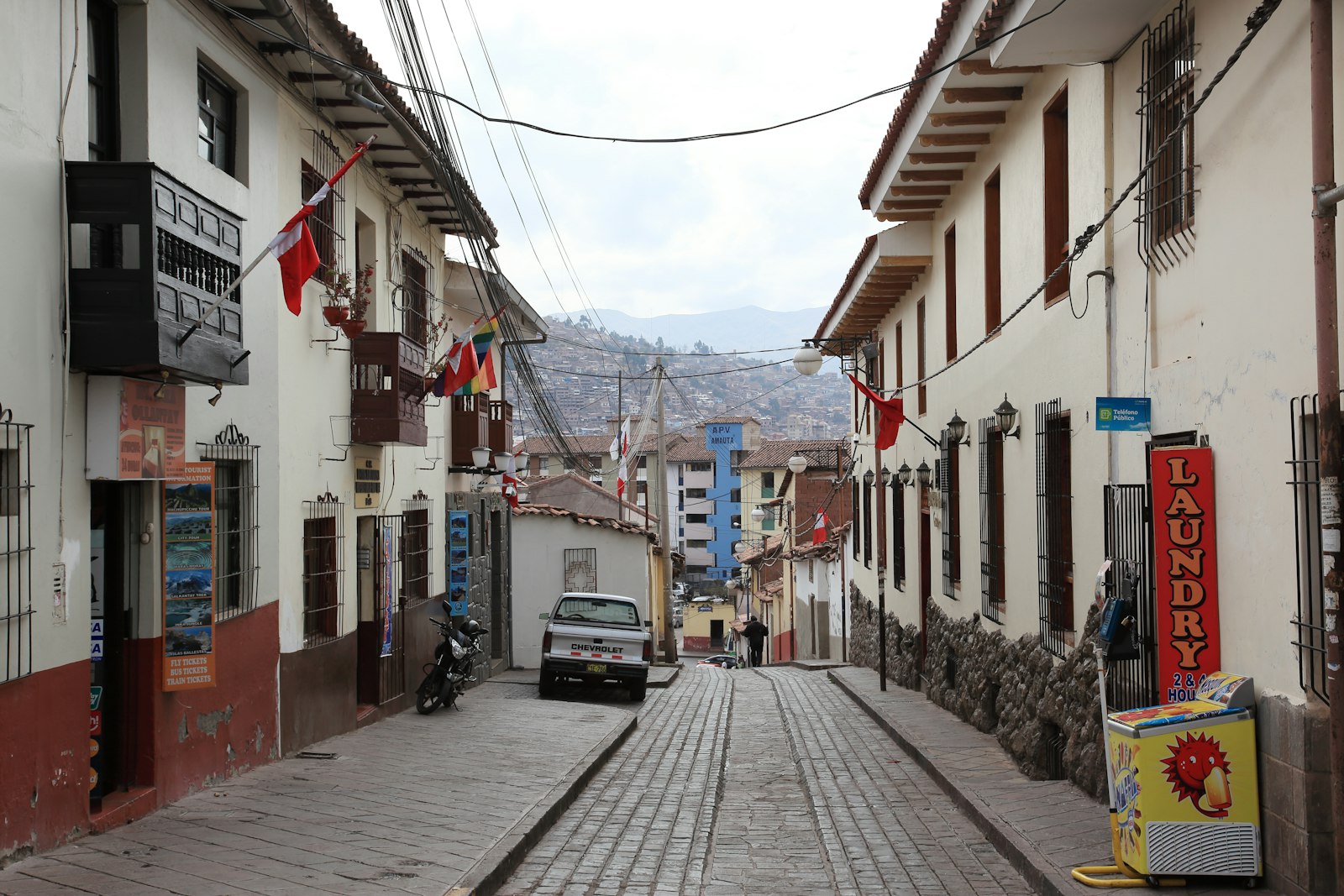
Alejandro Velasco Astete Airport (IATA: CUZ) is one of the highest commercial airports in the Americas at 3,400 m (11,150 ft) above sea level. It sits about 6 km southeast of Cusco’s historic centre - a short distance, but arriving at altitude requires a calm, organised approach. This guide covers every transfer option in plain terms, with current fares and practical advice for managing the ascent.
Quick Reference: Transfer Options and Costs
| Option | Approx. cost (PEN) | Approx. cost (USD) | Journey time | Best for |
|---|---|---|---|---|
| Pre-booked private transfer (Kiwitaxi / GetTransfer) | S/40–80 | USD 11–22 | 15–25 min | Comfort, group travel, late arrivals |
| Official airport taxi (metered, from taxi desk) | S/15–25 | USD 4–7 | 15–25 min | Solo travellers, no pre-booking |
| Unmetered street taxi | S/10–20 | USD 3–6 | 15–25 min | Budget, with negotiation skills |
| Colectivo (shared minibus) | S/3–5 | USD 1 | 30–60 min | Not recommended for tourists |
All prices are approximate as of 2026. Exchange rate used: 1 USD ≈ S/3.70. Verify current rates at time of travel.
Pre-Booked Private Transfers
A pre-booked transfer is the easiest option for first-time visitors to Cusco. You pay before you travel, your driver meets you in the arrivals hall with a name board, and the fare is fixed - no negotiating while lightheaded from the altitude.
Kiwitaxi offers fixed-price private transfers with free cancellation up to 24 hours before travel. Vehicles range from saloon cars to minivans for groups with heavy bags from trekking gear. The driver tracks your flight, so delays do not leave you scrambling. Compare Kiwitaxi transfer prices for Cusco.
GetTransfer works on a bid model where local operators compete for your booking, often resulting in lower rates than fixed-price platforms. It covers all major hotel zones in central Cusco and the San Blas neighbourhood. Compare transfer quotes on GetTransfer.
Welcome Pickups is a pre-booked private transfer service with meet-and-greet at arrivals and flight tracking. Given the altitude factor at CUZ, having a calm, organised handover from driver to hotel is worth the marginal premium. Book a Welcome Pickups transfer from Cusco Airport.
Both services let you pre-specify the number of passengers and luggage volume, and neither charges extra for flight delays. For early-morning or late-evening arrivals - when metered taxis thin out - pre-booking removes a significant friction point.
Official Airport Taxis
Cusco airport has a regulated taxi desk inside the arrivals terminal. Fares are fixed by zone and paid at the counter. The standard fare to the city centre (Plaza de Armas, San Blas, Cusco historic centre) is approximately S/15–25 (USD 4–7) as of 2026.
The main advantage is availability - no pre-booking, no app, no data needed. The taxi desk is staffed during all flight arrivals. Drivers assigned through the official desk are vetted and display airport identification.
Avoid anyone offering rides inside the terminal who is not wearing official identification. Unlicensed touts operate near both domestic and international arrivals at CUZ and often quote inflated fares.
Unmetered Street Taxis
Outside the terminal, you will find street taxis that are cheaper but unregulated. Fares are negotiated before you get in - typical range is S/10–20 (USD 3–5) to the city centre. Always agree the price explicitly before departure.
The risk is lower in Cusco than in larger cities: most drivers are local and routes are short. But after a long flight at altitude, negotiating in Quechua-accented Spanish while managing luggage is less than ideal. If you are comfortable with basic negotiation and speak some Spanish, unmetered taxis represent the cheapest manned option.
The Altitude Factor
Cusco airport is not just a transfer point - it is where altitude sickness either begins or where you first notice it. At 3,400 m, the air contains roughly 35% less oxygen than at sea level. The symptoms of soroche (acute mountain sickness) include headache, nausea, dizziness, and fatigue, and they can appear within minutes of stepping off the plane.
On arrival, move at a measured pace:
- Walk slowly through the terminal. Do not rush.
- Breathe steadily and avoid heavy lifting if possible.
- Sit down while waiting for luggage if you feel light-headed.
- Drink water rather than alcohol or caffeine for the first few hours.
Your hotel will likely offer coca tea (mate de coca) on arrival - accept it. Coca leaf has mild stimulant properties and is widely used throughout the Andes to ease altitude adjustment. It is entirely legal in Peru.
If you have a history of heart or respiratory conditions, consult your doctor before travelling to Cusco. Acetazolamide (Diamox) is available by prescription and reduces symptoms for some travellers - ask your GP two weeks before departure.
What to Expect at Arrivals
CUZ has separate domestic and international terminals. Most visitors arrive on a domestic flight from Lima (LIM), Arequipa (AQP), or Puerto Maldonado (PEM). International flights from a handful of regional routes land at the same building but clear through a separate immigration hall.
Baggage claim is compact - expect 15–20 minutes from landing to cleared customs on a normal day. On busy mornings (multiple Lima–Cusco flights cluster around 6–9 am), add another 15 minutes.
The taxi desk is immediately outside the baggage area. Pre-booked transfer drivers wait in the main arrivals hall, typically with printed name boards. Mobile signal inside the terminal is adequate for WhatsApp confirmation.
There is a Banco de la Nación ATM inside arrivals and a money exchange counter - rates are not favourable but are workable if you arrive with zero soles. Better rates are available in the city centre.
Getting to Specific Neighbourhoods
Plaza de Armas and historic centre: The most direct route from the airport runs northwest along Avenida de la Cultura to the city centre. Journey time is typically 15–20 minutes in normal traffic.
San Blas: The artisan neighbourhood sits uphill from Plaza de Armas. Streets here are steep and narrow - some are inaccessible to cars. Ask your driver to drop at the nearest accessible point and walk the final stretch. Factor in altitude: even a short uphill walk will feel harder than usual on arrival day.
Poroy (Sacred Valley train departure point): If your itinerary connects directly to a Vistadome or Peru Rail train from Poroy station, tell your driver in advance. Poroy is about 20 km northwest of CUZ - add 35–45 minutes and approximately S/50–70 (USD 14–19) to the transfer cost.
Urubamba and Sacred Valley hotels: Some travellers fly into Cusco and go directly to a Sacred Valley lodge rather than staying in the city. This is a good strategy for altitude acclimatisation (the valley sits lower at 2,800 m). The journey from CUZ to Urubamba is approximately 60–75 minutes via the Pisac or Chinchero roads. A pre-booked transfer via Kiwitaxi or GetTransfer handles this route cleanly - negotiate clearly that the destination is Sacred Valley, not central Cusco.
Returning to the Airport
All the same options apply in reverse. For early-morning departures (the Lima wave typically departs 6–8 am), allow 40–45 minutes from your hotel, accounting for slower morning traffic near the stadium.
Pre-booking a return transfer the night before removes the risk of hunting for a taxi before dawn. Kiwitaxi and GetTransfer both allow return-leg bookings at the same time as the inbound trip.
Departure tax at CUZ is included in ticket prices for most airlines - verify this at booking. The check-in hall is compact and can back up on busy mornings, so arrive at least 90 minutes before a domestic departure.
For more on getting around the region, see our Cusco to Machu Picchu guide and the full getting around Peru transport guide.
Prices correct as of 2026. Fares and services change - always verify current rates at the taxi desk or in your transfer confirmation before travel.
Plan Your Trip
✈️ Book your flights to Peru 🛡️ Get travel insurance 📱 Stay connected with an eSIM 🚗 Rent a car