Peru offers a wide cost range depending on how you travel. Budget backpackers live comfortably on approximately USD 30–USD 50 per day; mid-range travellers spending on quality hotels and guided tours pay approximately USD 70–USD 120 per day; and a comfortable trip with splurge accommodation and fine dining runs USD 200 or more. The major fixed costs - Machu Picchu entry, trains, and Inca Trail permits - are the expenses that most differentiate Peru from budget-only travel destinations, and they need to be factored from the start. Browsing guided tours in Peru upfront gives you a realistic sense of what organised excursions cost before you commit to a daily budget. For help structuring your trip around a budget, see our 1-week Peru itinerary and 2-week Peru itinerary.
Daily Budget Tiers
Budget Traveller: Approximately USD 30–USD 50 per day
This tier suits backpackers staying in hostel dorms, eating at market stalls and comedores (local set-lunch restaurants), and using shared public transport.
Accommodation: Hostel dorms in Cusco and Aguas Calientes: approximately USD 10–USD 20 per person as of 2026. Budget guesthouses with private rooms: approximately USD 20–USD 40. Lima is slightly more expensive; smaller towns like Puno are cheaper.
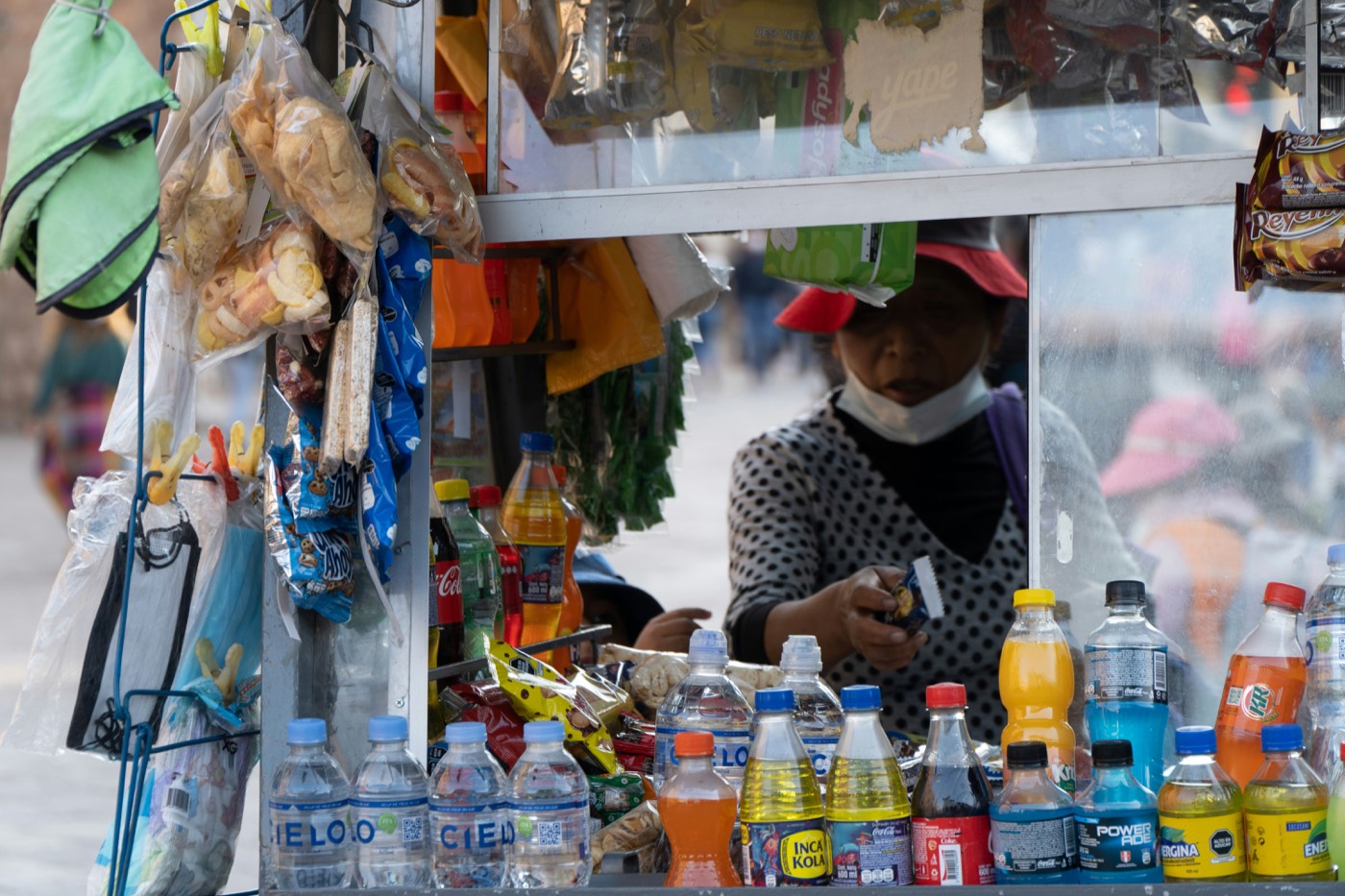
Food: A set lunch (menú del día) at a local comedor in Cusco or Lima: approximately S/12–S/20 (USD 3–USD 5) for soup, main, and juice as of 2026. Market breakfast (juice, bread, eggs): approximately S/8–S/12. Street food snacks (anticuchos, empanadas): S/3–S/6 each. Budget daily food: approximately USD 10–USD 20.
Transport: Shared colectivos between cities: S/8–S/18. Intercity buses (Cruz del Sur economy class): approximately S/45–S/90 for most routes as of 2026. Taxis within cities using Uber or InDrive: approximately S/8–S/18 for most urban journeys.
Activities: Many of Cusco’s main streets and the Plaza de Armas are free. The Boleto Turístico (approximately S/70 partial or S/130 full circuit as of 2026) covers most major archaeological sites. Free walking tours operate in Cusco and Lima (tip-based).
Budget reality check: Even at budget tier, the Machu Picchu train (minimum approximately USD 55 one-way from Ollantaytambo) and site entry (approximately USD 45–USD 60) add approximately USD 155–USD 175 as fixed costs for the Machu Picchu leg alone.
Mid-Range Traveller: Approximately USD 70–USD 120 per day
This tier covers 3-star hotels with private bathrooms, mid-range restaurants, some guided tours, and domestic flights where useful.
Accommodation: Mid-range hotels in Cusco: approximately USD 70–USD 130 per night as of 2026. Sacred Valley boutique hotels: approximately USD 80–USD 200. Lima (Miraflores): approximately USD 80–USD 150 for a good 3-star.
Food: Mid-range restaurant mains in Cusco: approximately S/35–S/65 per person as of 2026. A proper sit-down lunch at a quality restaurant (three courses): approximately S/70–S/120 per person. Coffee, breakfasts, and light meals add S/20–S/40 per item.
Transport: PeruRail Vistadome from Ollantaytambo to Aguas Calientes: approximately USD 75–USD 95 one-way as of 2026. Domestic flights (Lima to Cusco): approximately S/200–S/500 depending on timing. Private taxi for city transfers: approximately S/30–S/60.
Tours: Half-day Sacred Valley tour: approximately USD 25–USD 45. Guided city tour in Cusco: approximately USD 20–USD 35. A day trek with a guide: approximately USD 45–USD 80.
Splurge Traveller: Approximately USD 200+ per day
This tier covers luxury lodges, fine-dining restaurants, private guides, and premium transport.
Accommodation: Belmond Hotel Monasterio (Cusco): from approximately USD 450 per night as of 2026. Inkaterra Machu Picchu Pueblo Hotel: from approximately USD 400 per night. Explora Valle Sagrado (all-inclusive): from approximately USD 900 per person per night. Lima 5-star options (Belmond Miraflores Park): from approximately USD 250–USD 400 per night.
Food: Top restaurants in Lima and Cusco charge approximately S/100–S/250 per person for tasting menus as of 2026. Lima is home to some of South America’s most celebrated restaurants - Central, Maido, and Astrid y Gastón - where set menus range from approximately USD 80–USD 150 per person.
Transport: Belmond Hiram Bingham first-class train: approximately USD 450 one-way, including meals and Machu Picchu entry as of 2026. Private transfers, helicopters (for aerial views of Machu Picchu area, limited operators), and charter flights.
Key Fixed Costs: What to Budget Separately
These costs apply regardless of daily budget tier and should be budgeted in addition to your daily spend.
| Expense | Approximate Cost as of 2026 |
|---|---|
| Machu Picchu entry (basic circuit) | USD 45–USD 60 per person |
| Machu Picchu entry (with Huayna Picchu) | USD 60–USD 80 per person |
| Train Ollantaytambo → Aguas Calientes (Expedition class) | USD 55 one-way per person |
| Train Ollantaytambo → Aguas Calientes (Vistadome) | USD 75–USD 95 one-way per person |
| Bus Aguas Calientes → Machu Picchu (Consettur, round-trip) | Approximately S/48 (USD 12–USD 13) |
| Inca Trail permit (4-day, via licensed operator, full tour) | USD 650–USD 1,200 per person |
| Inca Trail permit cost alone (approximate) | USD 200–USD 250 per person |
| Boleto Turístico Cusco (partial circuit) | Approximately S/70 (USD 18–USD 19) |
| Boleto Turístico Cusco (full circuit) | Approximately S/130 (USD 34–USD 36) |
| Lima to Cusco domestic flight (one-way) | Approximately S/200–S/600 (USD 53–USD 160) |
Costs by City
Lima: The most expensive city in Peru for accommodation and dining. International tourist infrastructure (Miraflores, Barranco hotel districts) drives prices to near-Western European levels at the top end. Budget accommodation in Miraflores starts at approximately USD 25–USD 40 for a private room; decent 3-star rooms from approximately USD 80–USD 120 as of 2026. Street food in market districts is cheap (S/8–S/15 per meal) but restaurant dining in Miraflores is expensive.
Cusco: Mid-range for Peru standards. Higher tourist density means higher prices than smaller cities, but competition keeps mid-range accommodation reasonable (approximately USD 50–USD 130 for a decent private hotel). Restaurant prices are lower than Lima; transport within the city is cheap.
Aguas Calientes: Expensive for what you get - remoteness and captive demand inflate prices. Budget private rooms from approximately USD 35–USD 50; mid-range from USD 90–USD 140 as of 2026. Restaurant prices are 20–40% higher than comparable quality in Cusco.
Sacred Valley towns (Pisac, Ollantaytambo, Urubamba): Good value at the budget and mid-range. Small guesthouses from approximately USD 25–USD 50 per room; market food cheap. Upscale lodges are the opposite extreme.
Arequipa and Puno: Generally cheaper than Cusco for accommodation and food. Budget hotels from approximately USD 20–USD 40 per room; good local restaurants with full meals for S/15–S/25 as of 2026.
Amazon lodges (Iquitos, Puerto Maldonado): Lodge pricing is all-inclusive and set at premium rates - expect approximately USD 150–USD 400+ per person per night for reputable lodges, including meals, guides, and boat transport as of 2026. The Amazon is not budget travel territory for quality wildlife experiences.
Currency Tips
Soles vs USD: Peru’s official currency is the Peruvian Sol (S/). USD is widely accepted at tourist hotels, restaurants, and some tour operators, but the conversion rate is almost always worse than the ATM rate. Paying in Soles protects your purchasing power.
ATMs: BCP, Interbank, and Scotiabank ATMs give the best rates and charge lower (or no) local fees. Global Atm and independent ATMs in tourist areas often charge higher fees (approximately S/15–S/30 per withdrawal) and may apply less favourable exchange rates. Withdraw larger amounts less frequently to minimise per-transaction fees.
ATM fees from home bank: Most foreign banks charge a currency conversion fee (typically 1.5–3.5%) plus a flat foreign ATM fee (commonly USD 3–USD 7). Check your bank’s international fee structure before travelling. Travel cards (Wise, Revolut) typically offer better rates with lower fees.
Credit cards: Visa and Mastercard are accepted at mid-range and upmarket hotels and restaurants in Lima, Cusco, and Arequipa. Markets, taxis, and smaller towns are cash-only. Always carry sufficient Soles for a full day.
Counterfeit notes: Counterfeit S/50 and S/100 notes circulate in Peru. Avoid accepting large-denomination notes from street money changers. ATMs from reputable banks issue genuine notes. If a vendor refuses a note as potentially counterfeit, it likely is - do not attempt to pass it elsewhere.
Tipping: Service is not always included. Leaving S/5–S/15 per meal at mid-range restaurants is standard. Tour guides: S/20–S/50 per day depending on tour quality and group size. Porters on Inca Trail or other treks: approximately S/20–S/30 per day per porter. Tipping is not obligatory but is the norm for guides and hospitality staff. Ensure travel insurance for Peru is factored into your budget before departure - medical evacuation from altitude can far exceed the cost of the whole trip without cover. For a broader introduction to planning a first trip, see our first-time in Peru guide.
Search hotels in Peru on Booking.com
Plan Your Trip
✈️ Book your flights to Peru 🛡️ Get travel insurance 📱 Stay connected with an eSIM 🚗 Rent a car