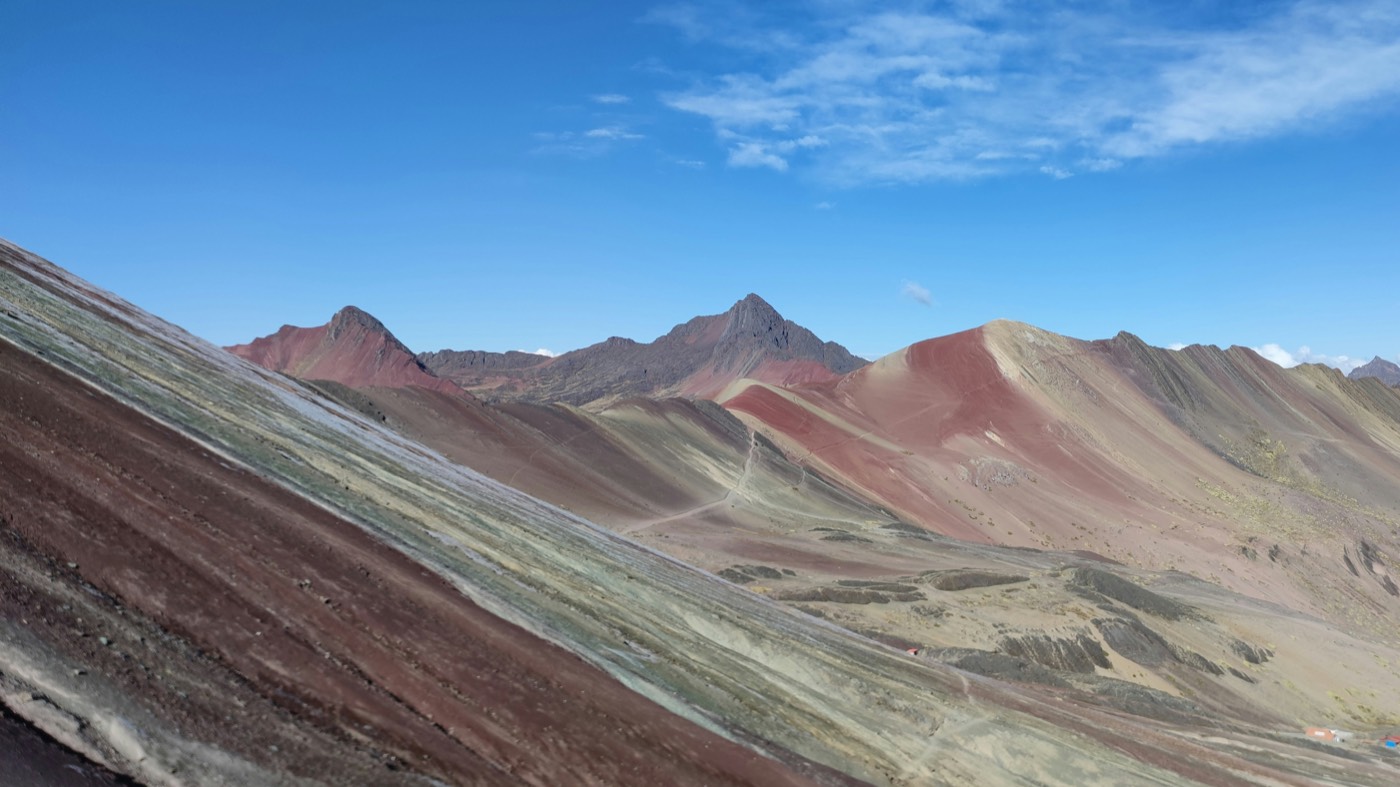
Vinicunca - better known as Rainbow Mountain - came to widespread traveller attention around 2015 when receding glacial ice revealed vivid bands of mineral colour across its flanks: reds, yellows, purples, and greens produced by different geological deposits of chlorite, limonite, and oxidised iron. The mountain sits at 5,200 metres above sea level in the Vilcanota range, approximately 3 hours by road from Cusco, and is now one of the most visited trekking destinations in the country. Go prepared for altitude and crowds in equal measure.
Key Facts
Summit altitude: 5,200m (17,060ft) Trailhead altitude: Approximately 4,300m (Cusipata sector) Distance: Approximately 7km round trip from trailhead (some operators use a closer starting point at approximately 4,700m, reducing the walk to around 5km) Elevation gain from trailhead: Approximately 450–500m Difficulty: Moderate trail, high difficulty due to altitude Distance from Cusco: Approximately 100km; approximately 3 hours by road Best season: May–October (dry season) Entry fee: Included in tour price (community entry approximately S/10 per person, paid by operator)
Altitude and Acclimatisation
At 5,200m, the Rainbow Mountain summit is higher than any point on the Inca Trail and comparable to the high camps on Salkantay. The body requires acclimatised blood and lung function to move comfortably at this elevation.
Minimum acclimatisation: Spend at least 2 nights in Cusco (3,400m) before attempting the trek. Three or four nights is better. Do not come directly from Lima (sea level) and attempt this on day two. Read our guide to altitude sickness in Peru before you travel.
Realistic pace: At 5,000m+, even fit trekkers breathe hard on gentle gradients. Pace yourself from the first step. The majority of people who turn back or require horse assistance on the way up are those who started too fast.
Horses available: Local community members offer horse transport from the trailhead to the summit for approximately S/60–S/100 one-way as of 2026. This is a legitimate option for those who find the altitude more challenging than expected. The horses are managed by local communities and the income supports valley families.
Altitude medication: Acetazolamide (Diamox) can help with adaptation. Consult a doctor before use. Coca leaf tea and chewing coca leaves are widely available at the trailhead and summit. Most reputable operators carry supplemental oxygen for emergencies.
Getting There and Typical Tour Structure
There is no public transport to the Rainbow Mountain trailhead. Virtually all visitors arrive on organised day tours from Cusco.
The standard day trip runs as follows:
- 03:00–04:00: Pickup from Cusco hotel by minibus
- 04:00–06:30/07:00: Drive approximately 3 hours south of Cusco through Tinqui and Cusipata sectors; road is partly unpaved
- 07:00: Arrive at trailhead; breakfast at community cafetería (usually included in tour)
- 07:30: Trek begins; approximately 2–3 hours at altitude pace to summit
- 10:30–11:30: Arrive at Rainbow Mountain summit (5,200m); 30–60 minutes at the top
- 12:00: Descend to trailhead; lunch at community cafetería
- 14:00: Return drive to Cusco
- 16:00–17:00: Arrive back in Cusco
The very early departure is non-negotiable if you want reasonable weather. Cloud typically builds from mid-morning; arriving at the summit before 11:00 gives the best chance of clear views. Groups that leave Cusco at 05:30 or 06:00 regularly find the summit socked in by cloud by the time they arrive.
Recommended Operators
Alpaca Expeditions - Highly regarded small-group operator with strong guide training and good safety standards. Day trip to Rainbow Mountain approximately USD 45–USD 60 per person as of 2026, including hotel pickup, breakfast, lunch, and community entry. Also offers a combined Rainbow Mountain and Red Valley option on the same day. For a broader comparison of Rainbow Mountain and other Cusco-region day trips, see Cusco tours.
Peru Treks - Established operator offering Rainbow Mountain as part of their wider portfolio. Day trip approximately USD 40–USD 55 per person as of 2026. Reliable logistics; bilingual guides.
Vinicunca Tours - Budget-end operator with larger group sizes; prices from approximately USD 25–USD 35 per person as of 2026. Less personalised but logistically functional for cost-conscious travellers.
Cusco Trekking - Mid-range operator with flexible small group sizes and the option to combine Rainbow Mountain with a night at Ausangate for a more complete high-altitude experience. Combined tour from approximately USD 120–USD 150 per person as of 2026.
What to verify before booking: Ask your operator whether the Red Valley extension is included or optional; whether supplemental oxygen is carried; the group size limit; and whether the departure time is 03:30–04:00 (essential for good conditions).
The Red Valley Alternative
Approximately 45 minutes beyond the main Rainbow Mountain summit, a trail follows the ridge southeast to the Red Valley (Valle Rojo). The valley floor has intense ochre and red colouration against a backdrop of the Ausangate massif (6,384m) - visually different from and arguably more dramatic than the main summit. It sees a fraction of the visitors.
Getting to the Red Valley from the main summit requires an additional hour of hiking at extreme altitude (above 5,000m throughout) and a total round trip from the trailhead of approximately 12–14km. It is demanding and only practical for fit, well-acclimatised trekkers with an operator who factors in the extra time. Confirm before booking that the Red Valley is either included or offered as an extension on the same day.
What to Bring
Clothing:
- Base layer (moisture-wicking)
- Insulating mid-layer (fleece or light down jacket)
- Waterproof outer layer - conditions at 5,200m change fast
- Warm hat and gloves - even in dry season, summit wind chill is significant
- Sun hat for the approach
Equipment:
- Trekking poles - strongly recommended for both ascent and descent on uneven ground at altitude
- Sunscreen (SPF 50+) - UV intensity at 5,200m is extreme
- Sunglasses
- 2+ litres of water; hydration bladder ideal
- Snacks (energy bars, nuts) - appetite often suppresses at altitude; eat before you feel hungry
Medical:
- Personal medications
- Ibuprofen or paracetamol for altitude headache
- Blister plasters
- Acetazolamide if prescribed
Most operators provide a packed breakfast and lunch. Confirm what is and is not included.
Realistic Expectations
Crowds: Rainbow Mountain receives thousands of visitors per day during peak season (June–August). The summit area has snack stalls, souvenir sellers, and horse rental operations. It does not feel remote. The trail from the trailhead is a queue at busy times. This is not a wilderness experience.
Photography: In good morning light with clear skies, the mineral banding is vivid and photographically rewarding. In cloud or flat light, the colours are muted. You will share the summit with dozens or hundreds of other people; solitary photos require patience and good angles.
Snow: The coloured layers require dry, snow-free conditions to be visible. In the wet season, or after an unexpected snowfall in dry season, the entire mountain can be uniformly white. There is no refund policy on most budget tours for weather conditions.
Worth it? For travellers who have acclimatised properly and time their visit for a clear morning, Rainbow Mountain is a genuinely extraordinary sight - nowhere else in Peru looks quite like it. Manage expectations around crowds and weather and it rewards the effort.
Best Season
May–October (dry season): Recommended. Clear mornings more frequent. Snow accumulation lower. July–August are peak crowd months; May, June, and September/October offer similar conditions with fewer visitors.
November–April (wet season): Not recommended. Snow frequently covers the coloured rock. Driving conditions on the unpaved access road deteriorate in heavy rain. The Inca Trail closes entirely in February; Rainbow Mountain does not close but conditions are often poor.
Search hotels in Cusco on Booking.com
Top Rainbow Mountain Tours on GetYourGuide
All tours depart Cusco at 3:00am–4:00am. Prices below are starting rates from verified GYG listings as of 2026.
| Tour | Duration | What’s included | From |
|---|---|---|---|
| Full-Day Rainbow Mountain Day Trip from Cusco | 14 hrs | Transport, guide, breakfast, Rainbow Mountain entrance fee (30 soles) | $25 per person |
| Rainbow Mountain with ATV Option | 14 hrs | Transport, guide, breakfast, ATV for the steep upper section, entrance fee | $55 per person |
| Rainbow Mountain + Red Valley Full-Day Tour | 14 hrs | Transport, bilingual guide, breakfast, both Rainbow Mountain and Red Valley entry fees | $35 per person |
Booking tips: Book 24–48 hours ahead minimum during June–August. The ATV option saves significant effort on the steep 1.5km ascent above the trailhead and is worth considering if you’re uncertain about your fitness at 5,000m+. Cancellation policies vary — confirm before booking if your schedule is flexible, since cloud cover can obscure the mountain.
Plan Your Rainbow Mountain Visit
- Cusco Travel Guide - Base city for Rainbow Mountain tours. Acclimatisation advice, hotels, and tour agency comparisons.
- Things to Do in Cusco - Rainbow Mountain in context with Cusco’s other top activities: Sacsayhuamán, Qorikancha, and the Sacred Valley.
- Day Trips from Cusco - Rainbow Mountain as one of the most popular half-day excursions in the wider Cusco region.
- Altitude Sickness in Peru - At 5,200m, Rainbow Mountain is the highest point many visitors reach in Peru. Read this before going.
- Salkantay Trek Guide - The extended 5-day alternative that passes Rainbow Mountain en route to Machu Picchu.
- 3-Day Cusco Itinerary - How to fit Rainbow Mountain into a structured Cusco visit with the other major sites.