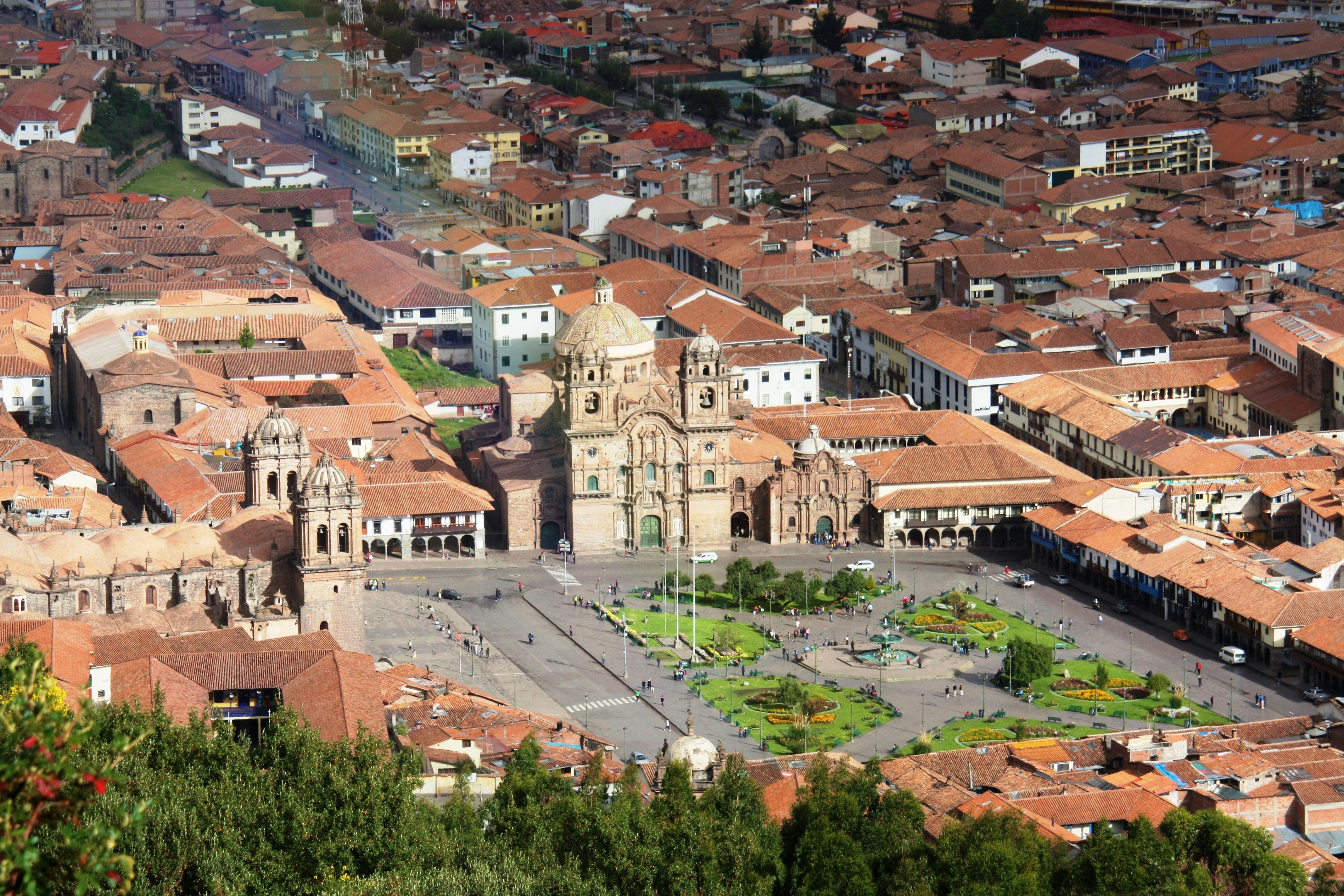
Cusco rewards slow exploration. The former capital of the Inca Empire is compact enough to cover on foot, dense with archaeology, and surrounded by countryside that stretches into the Sacred Valley. At 3,400 metres, give yourself a day to acclimatise before pushing hard - the city is not going anywhere, and altitude sickness is a real factor for most new arrivals. Once your legs feel normal, everything listed here is within reach.
Plaza de Armas
The heart of the city and the starting point for any visit. Cusco’s central square sits on the site of the original Inca Huacaypata, the gathering place for major ceremonies. Today it is flanked by the Cathedral on the northeast side and the Jesuit church La Compañía de Jesús on the southeast.
The Cusco Cathedral (entry approximately S/25 as of 2026, open daily 10:00–18:00) houses one of South America’s most significant collections of colonial religious art. The famous Marcos Zapata painting of the Last Supper - depicting cuy (guinea pig) as the centrepiece dish - hangs inside. Guided tours are available from the entrance for an additional fee. The square itself is free to visit at any hour; it is best at dusk when the cathedral lights come on and local families gather.
Qorikancha (Temple of the Sun)
Qorikancha was the most important religious site in the Inca Empire, the dwelling place of Inti, the sun god. Spanish colonists demolished much of it and built the Convent of Santo Domingo on the foundations - which you can now walk through to see both layers of history.
Entry costs approximately S/15 as of 2026, open daily 08:30–17:30. This is not included in the full Boleto Turístico, though the adjacent garden is. The inlaid stonework remaining from the Inca construction is extraordinarily precise - no mortar, no gaps, earthquake-resistant joints that have survived centuries while the Spanish additions above crack and shift.
Sacsayhuamán Fortress
The massive ceremonial fortress above the city is one of the most impressive archaeological sites in South America. Built with stones weighing up to 300 tonnes, fitted together without mortar using a technique still not fully understood. Entry is included in the Boleto Turístico (approximately S/130 full circuit, S/70 partial as of 2026). Open daily 07:00–18:00.
It is a 30-minute steep walk from Plaza de Armas, or a taxi for approximately S/10. Go in the morning to avoid the tour bus crowds. This is also the venue for Inti Raymi on 24 June - the Festival of the Sun, which is the largest Inca festival in South America. If you visit during that week, book accommodation months in advance. Search hotels in Cusco on Booking.com
San Blas Neighbourhood
The artisan quarter sits above the plaza along steep cobblestone lanes - a 10-minute uphill walk from the main square. The neighbourhood is characterised by white-washed walls, ceramic workshops, woodcarving studios, and small galleries. It is free to walk through. The San Blas Church contains a baroque wooden pulpit considered one of the finest in the Americas; entry is included in the full Boleto Turístico.
Mornings are quieter and the light on the whitewashed walls is better. The neighbourhood concentrates a high number of artisan workshops where you can watch craftspeople at work and buy directly. Prices are negotiable and generally fairer than the souvenir shops near Plaza de Armas.
Mercado de San Pedro
Cusco’s main market, two blocks west of Plaza de Armas. Entry is free and opening hours run approximately 06:00–20:00 daily. This is where Cusco feeds itself - fresh fruit, vegetables, dried herbs, prepared meals, juice stalls, and a textile section at the far end. The prepared food section is particularly good for a quick lunch: a full plate of trout, potatoes, and salad costs approximately S/10–S/15.
The juice stalls near the entrance make fresh combinations to order - request whatever fruit is in season. The market is also a reliable place to buy dried coca leaves, herbal teas, and local spices at prices far below tourist shops.
Cusco Cathedral and San Francisco Church
Beyond the Cathedral on Plaza de Armas, the Church and Convent of San Francisco (entry approximately S/10, open daily 09:00–12:00 and 15:00–17:30) contains a large canvas claimed to be one of the largest paintings in South America and a crypt beneath the church. The catacombs hold approximately 25,000 human remains - a sobering contrast to the ornate art upstairs.
Chocolate Museum and Workshops
Cusco has a small cluster of cacao-focused museums and hands-on chocolate-making workshops. The Choco Museo near the Plaza (entry approximately S/5, open daily) provides a brief walk-through of cacao history and production; the real draw is the workshop option (approximately S/40–S/65 per person as of 2026) where you grind cacao, add spices, and take home your own chocolate bar. Workshops last approximately 1.5 hours and require no advance booking for small groups, though reservations are recommended during peak season (June–August).
Cusco Cooking Schools
Several cooking schools in Cusco offer half-day classes focusing on traditional Andean cuisine. Prices range from approximately USD 35–USD 60 per person as of 2026. Classes typically cover market shopping at Mercado de San Pedro, then preparation of three to four dishes including ceviche, lomo saltado, and chicha morada drink. The Peruvian Cooking Experience and Cusco Cooking Class by SkyKitchen are two operators with consistent reviews.
Altitude Acclimatisation Tips
Cusco is at 3,400m. Almost every visitor from sea level experiences some effect: headache, fatigue, and occasional nausea are common in the first 24–48 hours. The standard advice - rest, hydrate, avoid alcohol on day one - genuinely works. Most visitors feel substantially better after 48 hours. Do not schedule Sacsayhuamán, Machu Picchu, or Rainbow Mountain until you have fully adjusted.
Coca leaf tea is freely available in hotels, cafés, and markets. It genuinely alleviates mild altitude symptoms and is legal throughout Peru. Diamox (acetazolamide) is available over the counter at pharmacies around the plaza - if symptoms are severe, seek advice at one of the clinics near the square.
When to Visit
The dry season runs May through October: clear skies, reliable weather, and ideal conditions for trekking and ruins visits. June and July are the busiest months. The Inti Raymi festival on 24 June is worth planning around - but understand accommodation prices double and the city is extremely crowded. April and November are shoulder months with fewer visitors and occasional afternoon rain but generally manageable conditions.
For a full plan covering how to structure your time, see our 3-day Cusco itinerary and the Cusco city guide for transport and accommodation overview. To skip the queue at Sacsayhuamán or join a morning guided walk of the historic centre, book a Cusco city tour in advance.
Cusco: More Resources
- Cusco Travel Guide - Getting to Cusco, where to stay, where to eat, and practical information.
- Where to Stay in Cusco - Neighbourhood guide covering San Blas, the Historic Centre, and San Cristobal with budget to luxury options.
- Cusco Food Guide: What to Try - Cuy, chicharrón, rocoto relleno, trucha, and where to find them at every price tier.
- Day Trips from Cusco - Sacred Valley, Maras salt pans, Rainbow Mountain, and Machu Picchu logistics.
- 3-Day Cusco Itinerary - A day-by-day plan covering the main sights with hotel and restaurant picks per budget.
- Sacsayhuamán and Cusco’s Historic Sites - The full archaeological background on Sacsayhuamán, Qorikancha, and the Inca sites around the city.
- Machu Picchu Tours from Cusco - Guided day trips and overnight packages from Cusco.
- Rainbow Mountain Trek Guide - The day trip to Vinicunca: altitude, operators, and realistic expectations.
- Altitude Sickness in Peru - At 3,400m, Cusco affects most visitors. Read this before your first full day.