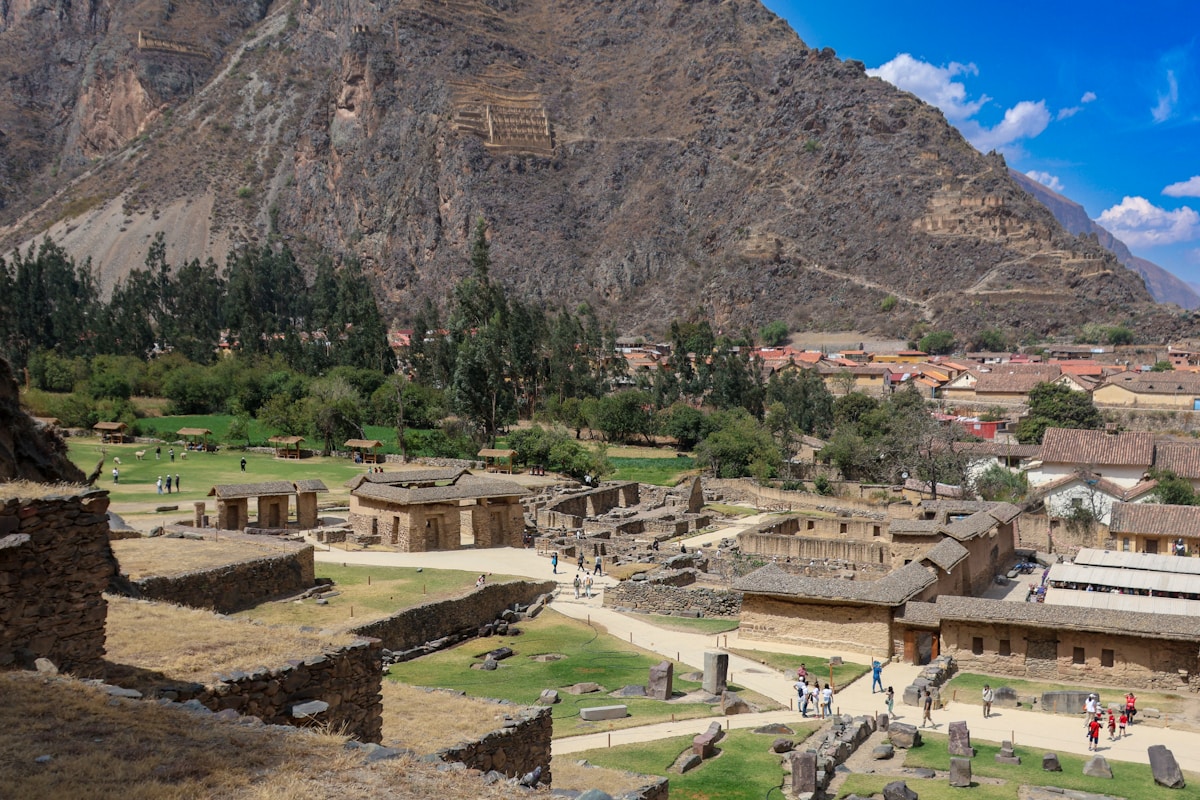
The Sacred Valley (Valle Sagrado) stretches northwest of Cusco along the Urubamba River, connecting Pisac in the east to Ollantaytambo in the west - a distance of roughly 60km. At around 2,800–2,900 metres, it sits noticeably lower than Cusco (3,400m), which makes it a gentler acclimatisation base and a calmer alternative to the city. The valley has the widest range of accommodation in Peru outside Cusco and Lima - from PEN 35 backpacker dorms in Ollantaytambo to multi-hundred-dollar luxury haciendas above the valley floor.
Why Stay in the Sacred Valley vs Cusco
Lower altitude. At 2,800–2,900m, most travellers sleep better and feel less headache pressure in the valley than in Cusco at 3,400m. If you are arriving directly from sea level, the valley gives your body an easier first night.
Proximity to Machu Picchu trains. Trains to Aguas Calientes depart from Ollantaytambo (and Poroy, outside Cusco). Staying in Ollantaytambo means a 3-minute walk to the station rather than a 90-minute drive from central Cusco in the early hours.
Calmer environment. Cusco is a busy city with active nightlife. The valley is quieter, more rural, and offers a different sense of the Andes - agricultural terraces, mountain views, small Quechua communities.
Easier access to valley ruins. Ollantaytambo fortress, Pisac ruins, Moray, and the Maras salt pans are all in the valley. Basing yourself here avoids driving the full 90km from Cusco to the western end each day.
Budget: Under PEN 100 / USD 27 per night
Hostal Valle Sagrado (Urubamba)
Central Urubamba guesthouse with private rooms approximately S/70–110 per night as of 2026. Reliable hot water and WiFi, popular with independent travellers. One of the most dependable budget options in the valley hub town.
K’uychi Rumi (Urubamba)
Family-run guesthouse with a small garden and kitchen access. Approximately S/65–100 per night as of 2026. One of the best budget options in Urubamba for a comfortable, quiet stay.
KB Tambo Hostel (Ollantaytambo)
One block from the train station and two blocks from the Ollantaytambo fortress ticket office, KB Tambo has 6- and 8-bed dorms at approximately PEN 38–48 per person and private rooms from approximately PEN 80 as of 2026. Free luggage storage for guests departing on early trains. The roof terrace has good views of the fortress terraces. Clean, sociable, and well-run.
Hostal Iskay (Ollantaytambo)
A family-run guesthouse on Calle Principal / Jr. Convención, Iskay has private rooms with shared bathrooms from approximately PEN 55–75 (approximately S/60–80) as of 2026. Breakfast is not included but a café nearby opens at 5:30am. Rooms are basic but clean; the family is helpful with transport and stores luggage between train trips. Good option for single nights before an early train.
Chaska Wasi Hostel (Ollantaytambo)
Family-run guesthouse near the plaza with private rooms approximately S/55–100 per night as of 2026. Clean, reliable hot water, and a helpful family who can arrange transport for early trains. One of the more established budget options in the town.
El Albergue Bunkhouse (Ollantaytambo)
The budget arm of the well-regarded El Albergue lodge, located on the railway platform itself - nothing is more convenient for a train the next morning. Dorms from approximately S/60–70 per person as of 2026. Book directly through El Albergue’s website.
Hostal Varayoc (Pisac)
Clean family guesthouse near the Plaza de Armas with a good breakfast. Approximately S/65–120 per night as of 2026. A reliable budget option in the centre of Pisac for market visitors.
Hotel Royal Inca Pisac
Approximately S/150–250 per night as of 2026. 14km outside Pisac on the highway - notable for its large grounds and pool. Better suited to visitors with private transport or those who prefer a quieter rural setting.
Hospedaje Samana Wasi (Pisac)
On the Plaza de Armas in Pisac, Samana Wasi has rooms above a craft shop from approximately PEN 60–85 per night as of 2026. The location is ideal for the Sunday market, and some rooms have balconies with plaza views. It fills quickly on Saturday nights before the market - book ahead.
Hospedaje Beho (Pisac)
Close to the market square. Basic, clean rooms from approximately S/50–80 per double as of 2026. Good budget base for the market and Pisac ruins.
Mid-Range: PEN 180–450 / USD 48–120 per night
Apu Lodge (Ollantaytambo)
Good mountain views, reliable service, and rooms from approximately S/200–300 per night as of 2026. A comfortable mid-range option without the Albergue’s station-side premium.
Hotel Sauce (Ollantaytambo)
Rooftop terrace with direct views of the Ollantaytambo ruins, one of the better-value mid-range options in town. Approximately S/180–280 per night as of 2026.
El Albergue (Ollantaytambo)
Built into a historic railway property beside the train station, El Albergue is an Ollantaytambo institution. Rooms in the converted heritage building start from approximately PEN 280–380 per night as of 2026, including breakfast. The organic garden supplies the in-house restaurant; the eucalyptus steam sauna is an excellent post-trek luxury. Book at least 2–3 weeks ahead in June–August.
Hotel Pakaritampu (Ollantaytambo)
A well-designed property on Ferrocarril street with mountain views from most rooms and a helpful English-speaking team. Doubles start at approximately PEN 240–320 per night (or approximately S/700–900) as of 2026 including breakfast. The hotel has a heated pool - unusual at this price point - and a competent kitchen. A practical choice for families. 15-minute walk to the fortress site.
Pisac Inn (Pisac)
Plaza Constitución 333. Comfortable colonial-style rooms around a courtyard. Some rooms have views toward the Pisac ruins. From approximately S/180–250 per double as of 2026. Restaurant on site is one of the better ones in town.
Paz y Luz (Pisac)
Calle Huanacaure 104. Boutique guesthouse with a strong wellness reputation. Yoga and meditation programmes available. From approximately S/200–280 per double as of 2026.
Sol y Luna Lodge (Urubamba)
A French-owned boutique resort 4km from Urubamba town on the valley floor, Sol y Luna has casitas (bungalows) with private terraces from approximately PEN 420–550 per night as of 2026. The property is beautifully landscaped, with a pool, spa, and one of the Sacred Valley’s best restaurants. They host the annual Sacred Valley Music Festival (June). Shuttle to Ollantaytambo train station is available for guests.
Aranwa Sacred Valley Hotel (Urubamba)
Set in a colonial hacienda near Urubamba town, the Aranwa has spacious rooms decorated with Andean textiles from approximately PEN 380–490 per night as of 2026. Multiple pools, a spa, and a museum of pre-Columbian artefacts on the property. Shuttle transfers to Cusco and Ollantaytambo can be arranged.
Luxury: PEN 900+ / USD 240+ per night
Inkaterra Hacienda Urubamba
A working organic farm on 100 hectares in the valley, Inkaterra has suites in traditional stone farm buildings from approximately USD 320–480 per night as of 2026. The property raises heritage crops, keeps a herd of Andean cattle, and offers exceptional farm-to-table dining. Activities include guided farm tours, bird-watching, and Andean-textile weaving sessions.
Tambo del Inka, a Luxury Collection Resort & Spa (Urubamba)
Av. Ferrocarril s/n, Urubamba. The flagship luxury property in the Sacred Valley - a Marriott Luxury Collection hotel set along the Urubamba River with its own private train station (Tambo del Inka station) on the Machu Picchu line. Features include a spa, outdoor pool, multiple restaurants, and large garden grounds. From approximately USD 350–600 per double as of 2026. For guests heading directly to Aguas Calientes, the private station eliminates the need to travel to Ollantaytambo.
Explora Valle Sagrado
The Chilean luxury operator Explora runs a high-end lodge between Urubamba and Ollantaytambo with all-inclusive rates from approximately USD 550–750 per person per night as of 2026 (minimum 2 nights). The rate covers guided treks and excursions, all meals, and transfers from Cusco. The excursion programme is genuinely excellent - the guides have deep knowledge of off-trail Inca sites not accessible on standard tours.
Hacienda del Valle
Above the valley near Huayllabamba, this intimate 16-room property charges approximately USD 200–380 per night as of 2026 and emphasises personalised service. Views from the terraced gardens take in the full breadth of the valley. The restaurant sources almost entirely from the kitchen garden and local farms. Private transfers and custom excursions are standard inclusions.
Transport Between Towns
| Route | Colectivo | Taxi | Time |
|---|---|---|---|
| Cusco → Pisac | S/4–6 | S/50–70 | 45 min |
| Pisac → Urubamba | S/3–5 | S/30–40 | 30 min |
| Urubamba → Ollantaytambo | S/4–6 | S/30–45 | 30 min |
| Cusco → Ollantaytambo | S/8–12 | S/80–120 | 90 min |
Colectivos run from Cusco’s Calle Puputi (near the stadium) throughout the day to Pisac and beyond. For Ollantaytambo direct from Cusco, colectivos depart from near the Paradero Ollantaytambo on Av. Grau. Services run from approximately 06:00–20:00; less frequent in the evening.
Maras Salt Pans and Moray Ruins
Both are day trips from anywhere in the valley. The Maras salt pans (Salineras de Maras) are approximately 40km from Cusco near Urubamba - terraced evaporation pools that have been harvested since pre-Inca times, cascading down the hillside. Entry approximately S/10 as of 2026.
Moray (experimental Inca agricultural terraces arranged in concentric circles, possibly used for crop acclimatisation experiments) is nearby. Entry included in the full Boleto Turístico or approximately S/10 standalone as of 2026. A taxi between Moray and Maras costs approximately S/20–30. Most valley hotels can arrange a combined half-day.
Practical Notes
- Train connections: If heading to Machu Picchu, confirm your hotel is in Ollantaytambo or within reliable taxi range of the station. Last-minute 5:00 am departures are stressful from Pisac or Urubamba.
- Heating: Nights in the valley drop to 5–10°C year-round. Confirm rooms have heaters or extra blankets - not all mid-range properties are well-heated.
- Wi-Fi: Reliable in mid-range and above; patchy in budget options.
- Airport transfers: Cusco’s new Chinchero Airport (when operational) will be 20km from the Sacred Valley - check the latest status as of your travel date.
For activities, see our Sacred Valley things to do guide.
Sacred Valley: More Resources
- Sacred Valley Things to Do - Pisac ruins, Ollantaytambo fortress, Moray, Chinchero, and river rafting.
- Sacred Valley Food Guide - Mil Centro, El Albergue, market food in Pisac and Urubamba.
- Cusco Travel Guide - The natural base for the Sacred Valley - 1 hour by bus from Pisac.
- Where to Stay in Cusco - Staying in Cusco vs the valley: pros and cons by budget tier.
- Machu Picchu Tickets - Essential advance booking; trains from Ollantaytambo connect to Aguas Calientes.
- Machu Picchu Tours - Tour options from Cusco and the Sacred Valley including private guide services.
- Salkantay Trek - Multi-day alternative to Machu Picchu passing through the Sacred Valley area.
- 2-Week Peru Itinerary - Placing the Sacred Valley in context of the full southern Peru loop.
- Browse Sacred Valley tours and day excursions - Pisac market, Ollantaytambo ruins, Moray terraces, and guided valley itineraries.