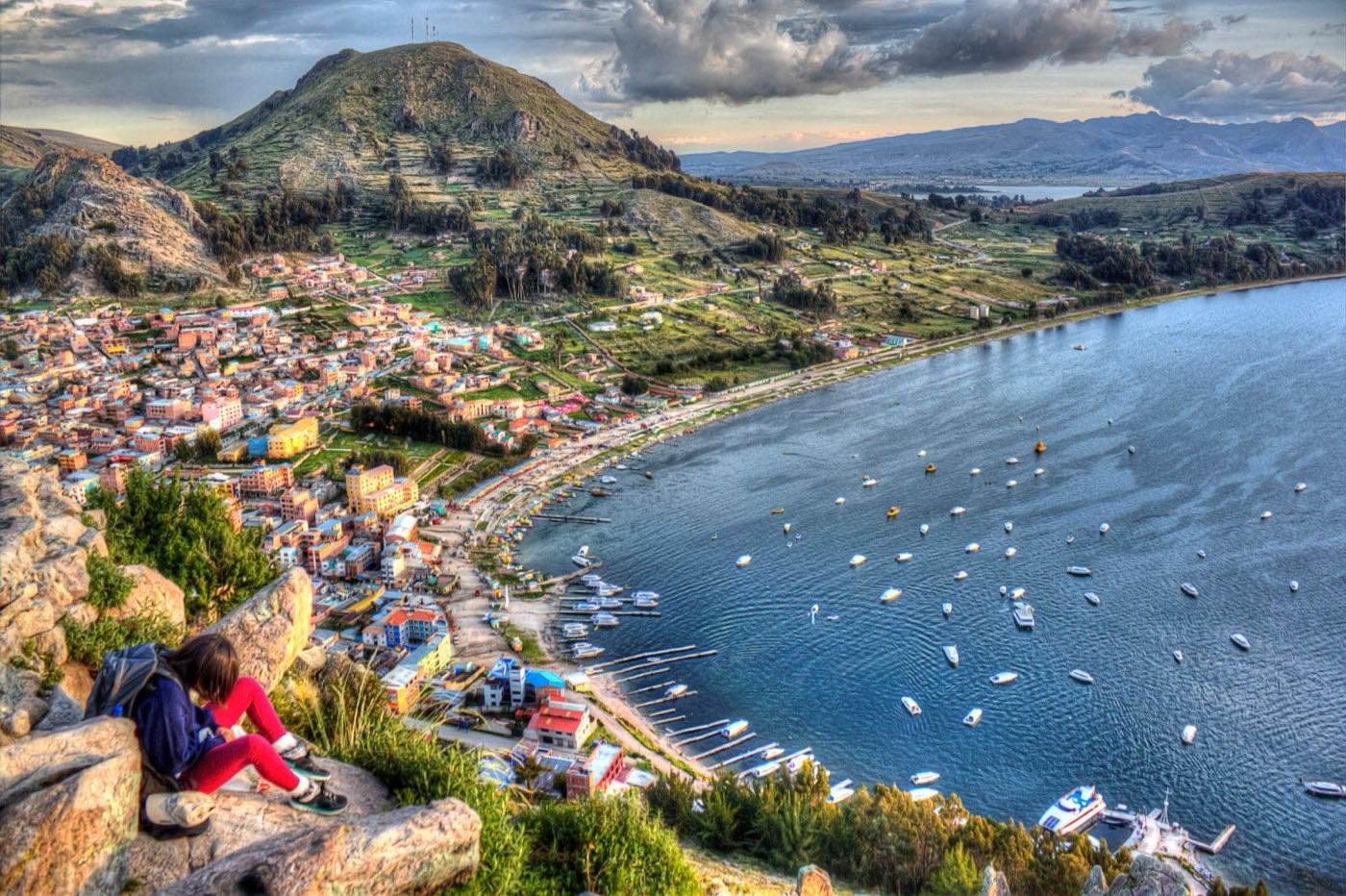
The classic overland link between southern Peru and Bolivia runs from Puno on the Peruvian shore of Lake Titicaca, across the border near Yunguyo, to the pilgrimage town of Copacabana, then on to La Paz. Done in one day, it is straightforward, scenic and cheap. Done carelessly, it can eat a morning at a border queue. This guide covers which crossing to use, how the exit and entry stamps work, how the Tiquina barge fits in, and what the journey realistically costs and takes.
Quick answer
- Best route for most travellers: Puno to Yunguyo (Peru), walk across to Kasani (Bolivia), continue to Copacabana, then bus to La Paz via Tiquina.
- Total time: roughly 7 to 9 hours Puno to La Paz, or about 3 to 4 hours Puno to Copacabana.
- Approximate cost (as of 2026): a Puno to Copacabana bus is roughly S/20-S/35 (USD 6-10); Copacabana to La Paz a further USD 3-8; combined through tickets from tourist operators typically run USD 25-45.
- Documents: passport valid for the trip, your Peruvian entry record (TAM), and any Bolivian visa required for your nationality (many travellers need one or a pre-arrival process, so check before you leave).
Yunguyo/Kasani vs Desaguadero
There are two road crossings between Puno region and Bolivia.
| Yunguyo (Peru) / Kasani (Bolivia) | Desaguadero | |
|---|---|---|
| Route | Lake road via Copacabana | Highway towards La Paz via Tiahuanaco |
| Puno to border | About 2 to 2.5 hours | About 2 hours |
| Atmosphere | Quiet, mostly travellers and locals | Busy market town, touts, money changers |
| Used by tourist buses | Yes, the standard route | Sometimes, for fast direct buses |
| Scenery | Lake views, Copacabana stop | Flat altiplano |
| Our pick | Yes | Only if you must reach La Paz fast |
Many reports describe Desaguadero as chaotic, with the border split across a bridge and a busy street market. The Yunguyo/Kasani post is smaller and calmer, and Peru has rebuilt its facility in recent years, which helps on busy days. Times can lengthen on weekends and around the Copacabana festival period. Always confirm hours with your operator or the Peruvian migration authority at gob.pe/migraciones, as posted hours have changed in the past and may differ by an hour between the two sides because Bolivia is one hour ahead of Peru.
Step by step: Puno to Copacabana
- Leave Puno. Tourist buses collect from hotels or the terminal; local colectivos and buses run from the terminal terrestre. Mornings (7 to 9 am) give you the most daylight margin.
- Peruvian exit at Yunguyo. Get off, go to the Peruvian migration window, and get your exit stamp. Queues are usually 20 to 60 minutes. Operator buses often wait for the group.
- Walk or ride to Kasani. The Bolivian post is a short distance away. Hand over your passport for the Bolivian entry stamp. Check the number of days granted before you walk away from the counter.
- Continue to Copacabana. It is about 10 to 15 minutes from the border. Stay a night if you can: boats leave for Isla del Sol in the morning.
Never hand your passport to an unofficial “helper”. Only use the immigration windows.
Copacabana to La Paz: the Tiquina barge
From Copacabana the road to La Paz takes roughly 3.5 to 4 hours. Halfway, at the Strait of Tiquina, the lake narrows and the road ends. Passengers get off the bus and cross separately in a small launch (a few bolivianos in cash, as of 2026), while the bus is driven onto a wooden barge. You reboard on the far shore in San Pablo or San Pedro de Tiquina. Allow 20 to 40 minutes including waiting. There are toilets and snack stalls on both banks.
Getting your ticket
- Tourist through-buses (such as the Bolivia Hop/PeruHop hop-on network) run Puno to Copacabana and La Paz with guides, and are the least stressful if you are new to border crossings. Our Peru bus travel guide compares the main companies.
- Local buses and colectivos are cheaper but you handle every step yourself, and you may need to change at the border.
- Direct private transfers are possible via pre-booked transfers in Peru if you are travelling as a group.
If you plan to continue from Cusco, the same crossing is covered in the Cusco to Puno guide. Weighing the two countries’ lake shores? See Peru vs Bolivia.
Practical tips
- Cash: change a small amount into bolivianos in Puno or at the border (rates are fairer in Copacabana), and keep soles for the Peruvian side. Cards are rarely accepted in Copacabana’s smaller shops.
- Altitude: Puno is at 3,830 m, Copacabana about 3,840 m and La Paz over 3,600 m, so there is no further climb, but you will already need to be acclimatised. See altitude sickness in Peru.
- Timing: avoid leaving after noon. Crossing delays and the Tiquina barge make a night arrival in La Paz tiring.
- Insurance: travel insurance for Peru and Bolivia is worth sorting before an overland trip.
- Data: a Peru eSIM will not cover Bolivia unless the plan says so, so check regional coverage first.
- Stays: hotels in Puno for the night before, and stays in Bolivia for Copacabana or La Paz.
Spending a day on the Peruvian side first? Book a Lake Titicaca tour from Puno to see the Uros and Taquile islands before you cross.
Details on hours, fees and entry rules change; confirm them with your operator and the official Peruvian and Bolivian migration authorities close to your travel date.