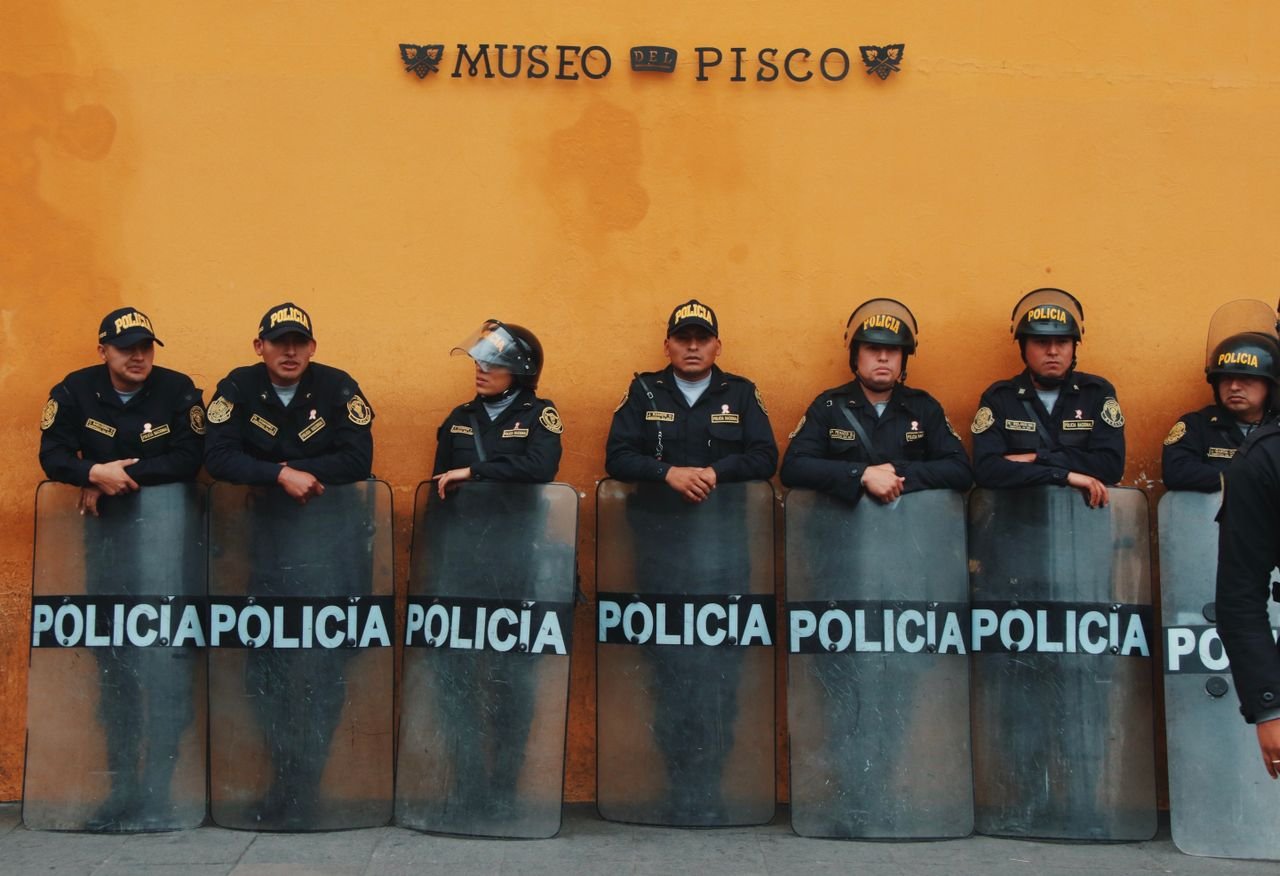
Peru has no single nationwide emergency number yet, so it helps to save three of them before you land: 105 for police, 106 for an ambulance and 116 for fire. The sections below cover what each line does, who to call outside Lima, how to reach tourist-specific help and what to do in the first hour. Numbers can change, so double-check them locally on arrival and again if something feels out of date.
Main emergency numbers in Peru
These are free to dial from any fixed or mobile phone in Peru.
| Service | Number | Use it for |
|---|---|---|
| Police (Policía Nacional) | 105 | Theft, assault, threats, missing persons |
| Ambulance (SAMU) | 106 | Life-threatening medical emergencies |
| Fire brigade (Bomberos) | 116 | Fires, rescues, some traffic collisions |
| Civil Defence (INDECI) | 115 | Floods, landslides, earthquake support |
| Highway police | 110 | Serious incidents on intercity roads |
| EsSalud emergency line | 117 | EsSalud-insured patients in Lima and Callao |
| Minsa Infosalud | 113 | Health advice only, not a dispatch line |
Sources do not fully agree on medical numbers. The US State Department and Ireland list 106 for an ambulance, while some sites list 116 or 117. We use 106 as the ambulance line and treat 117 as an insured-patient line. If one number fails, try the other, or ask a local to call. For official details, see INDECI, the national civil defence agency and the Ministry of Foreign Affairs.
A unified 911 system is being built, beginning in Lima and Callao, but it is not live nationwide. Stick to the legacy numbers above.
Tourist police and tourist help lines
- Tourist Police (POLTUR), Lima central: 01-460-1060 or WhatsApp 980 122 335. Operators are more likely to speak some English. This number appears in a Mincetur Tourist Protection Network notice and in recent guides, but not in a recent official source, so treat it as likely rather than guaranteed. Other cities have local POLTUR desks, including Cusco, but we could not confirm direct numbers.
- iPerú (PROMPERÚ tourist information): WhatsApp +51 944 492 314, listed as available around the clock on the official gob.pe page. The Lima switchboard (01) 574-8000 is also listed. iPerú can point you to the nearest office and help with procedures after a theft or lost document.
- Aló SUTRAN: 0800-12345 for reckless driving, roadblocks or bus irregularities on national highways.
For bus travel specifically, see our Peru bus travel guide.
What to do in the first hour
- Get safe. Move to a busy, lit place such as a hotel lobby or a restaurant.
- Call the right line. Police 105 for crime, 106 for injury or collapse, 116 for fire.
- Report theft in person. Ask for a copy of the police report (denuncia). Insurers and embassies both ask for it. In Lima, tourist police stations are the easiest place to file.
- Tell your hotel. Reception can call a doctor, taxi or local contact and often speaks English.
- Notify your insurer as soon as you can. Many policies need notice within 24 to 48 hours.
Express kidnapping, bag snatching and taxi-related crime are the main risks for visitors in Lima. Our Peru safety guide explains which neighbourhoods and habits matter.
Medical emergencies and hospitals
Public hospitals are crowded, and international visitors are usually steered towards private clinics. In Lima, Clínica Anglo Americana and Clínica Ricardo Palma are the ones travellers commonly use. In Cusco, EsSalud has a public emergency department, but private clinics are usually quicker for tourists. Expect to show a card or pay a deposit before treatment in a private clinic, so carry a credit card and your policy details.
Altitude is the most common medical problem for visitors. Mild headache, nausea and poor sleep in Cusco (3,400 m) can usually be handled with rest and fluids. Confusion, loss of balance or breathlessness at rest is an emergency: descend immediately and get to a clinic. Read our altitude sickness guide before you fly into Cusco.
Embassy help
Embassies cannot act as first responders, but they can issue emergency travel documents, contact family and give lists of doctors and lawyers. Most are in Lima, so outside the capital your first contact will usually be a phone call or email. Addresses, phone numbers and the lost-passport process are in our embassies and consulates guide. The US Embassy in Lima lists +51 1 618-2000 for 24/7 emergencies involving US citizens.
Travel insurance and evacuation
An ambulance ride in Lima is cheap compared with an evacuation from the Andes. Helicopter evacuation from a remote trail can cost thousands of dollars as of 2026, and air ambulance repatriation costs more still. Check that your policy covers high altitude (above 3,000 m or 4,000 m is a common exclusion line), trekking and emergency evacuation, and save the insurer’s 24-hour assistance number next to the Peruvian ones. We compare cover in our Peru travel insurance guide, or you can get a quote through VisitorsCoverage travel insurance.
Save these before you travel
- Screenshot the numbers table and the insurer’s helpline.
- Keep a photo of your passport and policy number on your phone and in cloud storage.
- Download an offline map of Lima or Cusco.
- Tell your hotel your plans if you are trekking or heading to remote areas.
If you are still choosing how to explore, a guided Lima tour or Cusco tour with a local operator keeps you with a group and a guide who has a local phone.