Puno is a city that most visitors pass through quickly - typically arriving overland from Cusco or crossing the border from Bolivia - but it rewards a slower visit. The city sits at 3,830 metres on the western shore of Lake Titicaca, the world’s highest navigable lake, and the islands of the lake offer some of the most distinctive cultural experiences in Peru. Altitude is the main complication. Give yourself time to acclimatise, and the lakes, islands, and surrounding archaeology will more than justify staying two or three days.
Lake Titicaca Boat Tours
The lake is the reason most people come to Puno. Three main destinations are accessible by boat, each with a different character.
Uros Floating Islands
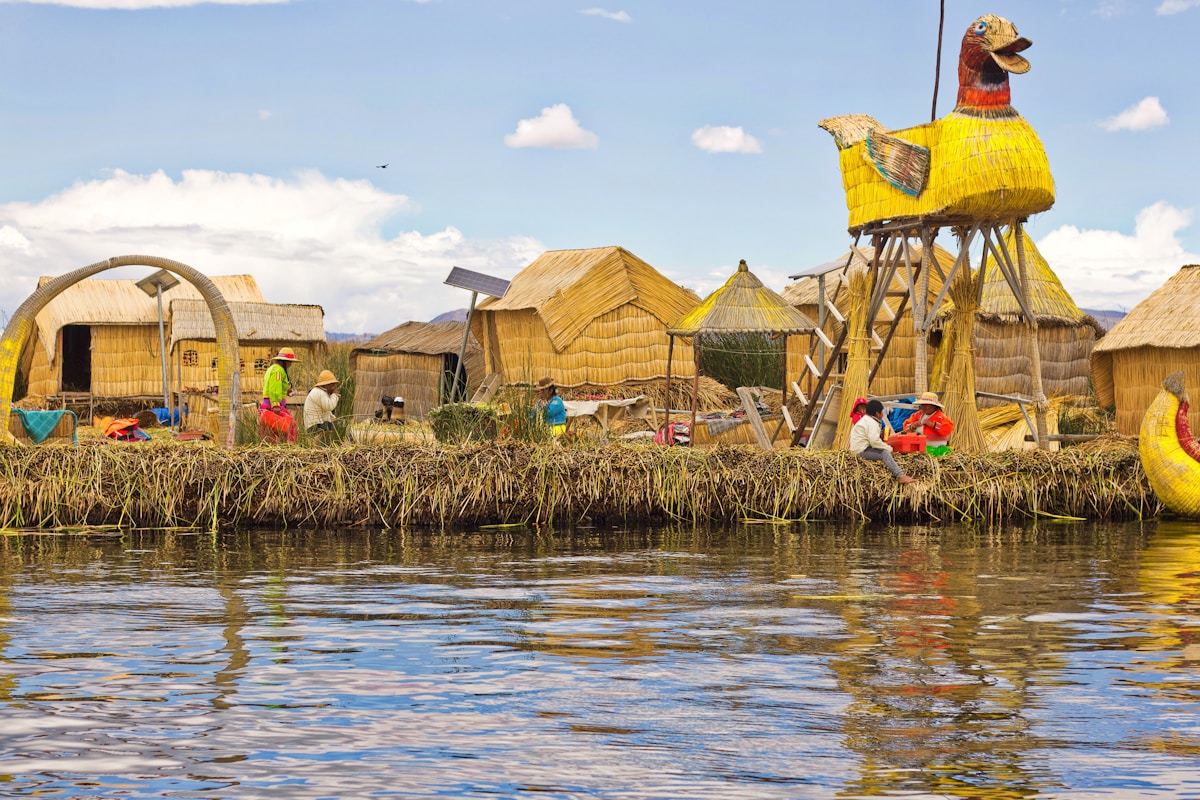
The Uros islands are man-made - constructed entirely from totora reeds that grow in the shallows of the lake. The Uros people have maintained floating communities here for centuries, originally as a way of living independently from the dominant Inca and later Spanish cultures. Today, approximately 60–70 islands are inhabited. The largest are firmly established with reed houses, solar panels, watchtower observation platforms, and small shops selling textiles.
The standard tour landing visits one or two of the larger islands for approximately 45–60 minutes. Residents will demonstrate how the islands are built and maintained (they require regular replenishment of fresh reeds), and totora reed boats are available for short rides for an additional fee (approximately S/5–S/10). The experience is highly organised and tourist-facing - understand that before you go. It is not a private community encounter; it is a functioning cottage economy.
Entry to the Uros sector requires paying the community fee, typically collected on the island: approximately S/10 per person as of 2026.
Getting there: Puerto de Puno, 30–40 minutes by motorboat.
Taquile Island
Taquile (3,950m) is a natural island with a permanent population of approximately 2,200 people, known throughout Peru for their distinctive textile tradition. Taquile weaving is recognised by UNESCO. The men knit while walking - an unusual reversal of the usual gender roles in Andean communities - and the garments produced here are among the finest in the region.
The standard visit involves a 30-minute uphill walk from the dock to the main plaza, lunch at a community restaurant (expect quinoa soup, trout, and rice for approximately S/25–S/35 as of 2026), and time to browse the textile cooperative. The views back over the lake toward the Bolivian Cordillera Real are excellent on clear days.
Getting there: Approximately 3 hours from Puno by motorboat.
Amantaní Island
Amantaní is the largest island in the Peruvian sector of the lake and receives fewer visitors than Taquile. The community runs a formal homestay programme - families open their homes to travellers, provide meals, and often invite guests to a traditional dance on the evening of arrival. The programme distributes visitors fairly between households.
A typical itinerary: arrive mid-afternoon, settle in, dinner with the host family, traditional dress for the evening dance, breakfast, hike to one of the island’s two hilltop temples (Pachamama and Pachatata, approximately 4,100m), then depart by boat via Taquile back to Puno.
Homestay fees (covering accommodation, dinner, and breakfast) run approximately S/30–S/50 per person as of 2026, paid directly to the family. Search hotels in Puno on Booking.com
Recommended Boat Tour Operators
Tours to the islands are easy to arrange from Puno. Most guesthouses and hostels can book directly.
All Ways Travel (Jr. Tacna 234, Puno) - Established operator with good guides. Day tours to Uros and Taquile from approximately S/45–S/60 per person as of 2026; 2-day Uros/Amantaní/Taquile from approximately S/90–S/120 per person including homestay. Their guides speak English and provide solid historical context.
Edgar Adventures (Jr. Lima 328, Puno) - Well-regarded for small-group departures and responsive English-language booking. Similar prices. Known for arranging genuine community encounters beyond the most touristy landings.
Independent hire at Puerto de Puno - For small groups or families, hiring a boat directly at the port for Uros alone makes sense (approximately S/15–S/20 per person each way). For Taquile and Amantaní, an organised tour is better value and more efficient given the distances involved.
Browse Lake Titicaca boat tours and experiences to compare full itineraries and pickup options.
Puno Town
The city itself is worth a half-day once you have done the islands.
Plaza de Armas and Cathedral - Puno’s main square is a good orientation point. The Catedral de San Carlos Borromeo (free entry, approximately 08:00–12:00 and 15:00–18:00 daily) is a fine example of mestizo baroque architecture, mixing Spanish colonial forms with local Andean motifs. The carved facade features pumas, condors, and local flora alongside traditional Christian imagery.
Mercado Bellavista - Puno’s main market runs daily and is several blocks of food stalls, textiles, and household goods. The prepared food section on the upper floor is a good spot for a cheap lunch: a set meal of soup, main, and drink runs approximately S/7–S/12 as of 2026. Trout from the lake appears on almost every menu - try it fried with rice and salad.
Yavari Steamship - A 19th-century iron steamship, originally built in Britain and transported to the lake in pieces over the Andes. Now moored near the port as a floating museum. Entry approximately S/10 as of 2026. Hours vary; check locally.
Sillustani Ruins
Sillustani is a pre-Inca and Inca funeral tower complex located approximately 35km from Puno on the shore of Laguna Umayo (3,890m). The chullpas (burial towers) here are the most impressive in Peru - some reaching 12 metres high, built by the Colla people (a rival kingdom absorbed by the Inca) between the 11th and 15th centuries.
Entry costs approximately S/10 as of 2026. A taxi from Puno costs approximately S/30–S/40 for the return trip; most agencies offer an afternoon tour for approximately S/25–S/35 per person. Allow 1.5–2 hours at the site. The approach road offers views over the altiplano and lake that are worth the trip even without the ruins.
Bolivian Border Crossing
Puno is a gateway for the overland border crossing to Bolivia. The most common route is Puno → Copacabana → La Paz, either by direct tourist bus (approximately USD 12–USD 20 as of 2026) or by colectivo to the border at Yunguyo. Tourist buses typically include a brief stop at the Bolivian side of Lake Titicaca and a Copacabana visit. Onward connection to La Paz takes a further 3–4 hours.
Getting to Puno
From Cusco: Tourist buses (approximately S/30–S/50, 6–7 hours) with scenic route via Raqchi, Pukara, and the altiplano. Direct buses run daily; most depart 07:30–08:30. The PeruRail Titicaca train (approximately USD 200–USD 230 as of 2026) is a luxury option covering the same route with observation carriages and onboard dining.
From Lima: No practical direct land option. Fly to Juliaca (45km from Puno, approximately S/15 taxi); flights from Lima take approximately 90 minutes and cost from approximately USD 60–USD 120 one-way as of 2026.
For further context on the southern Peru circuit, see the Cusco city guide and our Colca Canyon trek guide.
Puno: More Resources
- Puno Travel Guide - How to get to Puno, where to stay, where to eat, and altitude tips.
- Puno Food Guide - Lake trout, quinoa dishes, and the best restaurants in Puno’s centre.
- Where to Stay in Puno - Lake shore hotels vs city centre options at every budget tier.
- Lake Titicaca Tours - Guided tours to the Uros floating islands, Taquile, and Amantaní with operator comparisons.
- Lake Titicaca Islands: History and Visitor Guide - The Uros, Taquile, and Amantaní communities - cultural background and what to expect on each island.
- Altitude Sickness in Peru - Puno at 3,830m is higher than Cusco; read this before arriving.
- Cusco Travel Guide - Most travellers combine Cusco and Puno on the southern Peru circuit.
- Arequipa Travel Guide - The other southern hub, with Colca Canyon access and a 5-hour bus connection to Puno.
- 2-Week Peru Itinerary - How to structure the full southern Peru loop including Puno.