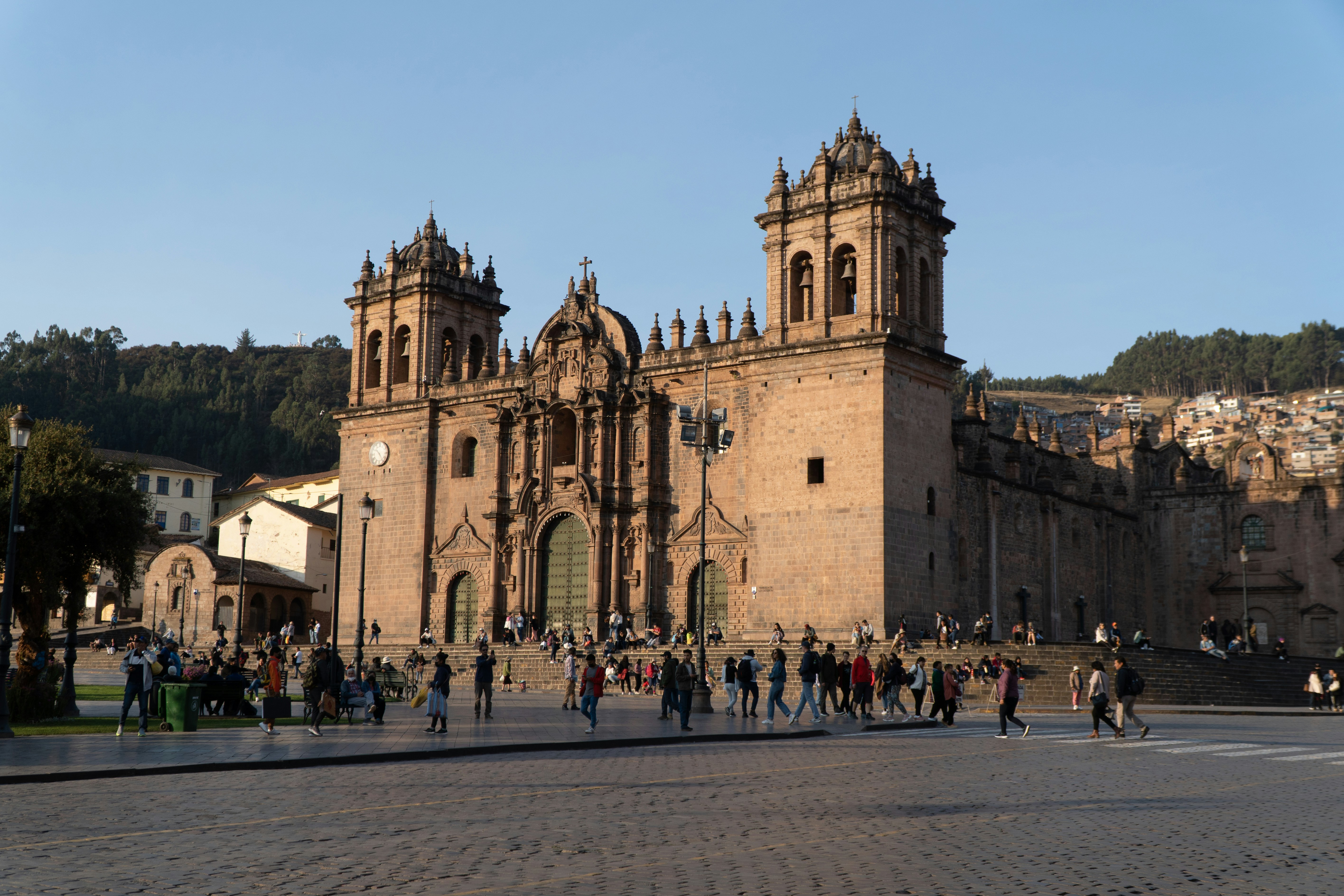
Two cities, two completely different versions of Peru. Cusco is the ancient Inca capital perched at 3,400 m in the Andes - cobblestone streets, crumbling colonial churches built on Inca foundations, and the gateway to Machu Picchu. Lima is the sprawling Pacific coast capital of 11 million people, home to Peru’s finest restaurants, colonial Old Town, and a relentless urban energy.
Most visitors to Peru end up in both. But if your time is limited, or you’re trying to decide where to spend more nights, this comparison breaks down what each city does best.
Overview
Cusco was the heart of the Inca Empire and it still feels it. The historic centre is a UNESCO World Heritage Site. You’ll walk past Inca stone walls fused with Spanish colonial architecture at every turn, and the whole city exists as a base for Machu Picchu, the Sacred Valley, and high-altitude trekking. Altitude is the single biggest practical factor - at 3,400 m, most visitors need 24–48 hours to acclimatise before doing anything strenuous.
Lima is the entry point for most international flights and the cultural and culinary capital of South America. Neighbourhoods like Miraflores and Barranco are polished, walkable, and filled with world-class restaurants. The Old Town (Centro Histórico) has spectacular colonial architecture, though it’s rougher around the edges than the tourist zones. Lima’s grey sky (from the garúa coastal mist) is famous - don’t arrive expecting sunshine. The climate is mild year-round: 15–22°C.
Getting There
Lima to Cusco by air: 1 hour 20 minutes. LATAM, Sky Airline, and JetSmart all fly the route. Fares range from approximately USD 40–120 one-way depending on how far in advance you book. This is by far the most practical connection - the overland alternative takes 22+ hours.
Lima to Cusco by bus: Companies like Cruz del Sur and Oltursa run overnight routes via Nazca and Arequipa, taking 20–22 hours. Fares run approximately PEN 120–250 (USD 30–65). Only worth it if you’re combining stops en route.
Within each city: Lima has a metropolitan bus network (Metropolitano) and extensive taxi/Uber access. Cusco’s historic centre is compact and walkable; taxis are cheap (PEN 5–10 for most short trips, roughly USD 1.30–2.60).
Things to Do
Cusco leads for historical depth. The Qorikancha (Sun Temple) combined with the Dominican convent built on top is the defining Cusco experience - entry approximately PEN 40 (USD 10). The Cusco Tourist Ticket (Boleto Turístico) covers 16 sites including Sacsayhuamán, Tambomachay, and Q’enqo for approximately PEN 130 (USD 34). For most visitors, Cusco is also the base for day trips to the Sacred Valley and for the Machu Picchu train journey to Aguas Calientes.
Beyond the ruins, Cusco has artisan markets (San Pedro Market is the most authentic), San Blas neighbourhood with ceramics workshops, and a growing café and craft beer scene around Plateros and Procuradores streets.
Lima has a different kind of depth. The Larco Museum - one of the best pre-Columbian collections in the world, approximately USD 15 entry - is a half-day commitment. The Huaca Pucllana pyramid sits in the middle of Miraflores, open daily, approximately PEN 20 (USD 5). The Historic Centre has the Plaza Mayor, the Cathedral of Lima (approximately PEN 30 / USD 8), and the Monastery of San Francisco with its famous catacombs (approximately PEN 30 / USD 8).
Barranco is Lima’s arts and nightlife neighbourhood - street art, galleries, the Bridge of Sighs, and bars packed on weekends. Surfers hit the breaks at Miraflores and Barranco year-round.
Food and Drink
This is Lima’s strongest argument. Lima is arguably the world’s best food city right now, with four restaurants consistently in the global top 50. Central (currently ranked in the global top 5, tasting menus from USD 200+), Maido (Nikkei-Peruvian, from USD 120 for the tasting menu), and Astrid & Gastón (from USD 80) are all in Lima. For less rarefied budgets, cevicherías in Lima are exceptional - La Mar in Miraflores (around PEN 80–150 per person, roughly USD 20–40), Punto Azul (PEN 40–70, around USD 10–18). A plate of ceviche at a local market runs PEN 15–25 (USD 4–6).
Cusco’s food scene is solid but different. The city has improved dramatically over the last decade. Cicciolina on Triunfo street is consistently excellent (PEN 60–100 per person, around USD 15–26). The Central Market on Cascaparo serves huge lunch menus for PEN 8–15 (USD 2–4). Chicha, the upscale regional restaurant from Gastón Acurio, focuses on Andean ingredients (PEN 60–90 per person, around USD 15–23).
See our Cusco food guide and Lima food guide for deeper recommendations.
Where to Stay
Lima accommodation spans all budgets. In Miraflores, a solid 4-star hotel like the Casa Andina Select runs approximately USD 90–130/night. Boutique options in Barranco like Noche de Fuego or Second Home go for USD 80–140/night. For budget travellers, hostel dorms in Miraflores start at approximately USD 15–20/night, and decent private rooms at USD 35–55/night.
Cusco is generally cheaper once you account for the Andean location. The historic centre has excellent mid-range options: El Mercado Hotel (around USD 80–120/night), Palacio del Inka by Luxury Collection (USD 180–280/night) for a splurge. Mid-range centrally located hotels like Rumi Punku run approximately USD 55–90/night. Hostels near the Plaza de Armas start at around USD 10–15/night for dorms.
See our full guides on where to stay in Cusco and where to stay in Lima.
Budget
Lima is Peru’s most expensive city but still extremely affordable by international standards. A comfortable mid-range day (decent hotel, two restaurant meals, a museum) runs approximately USD 70–100. Budget travel is possible at USD 30–45/day. Fine dining can push a day to USD 150–200+ if you’re hitting the top restaurants.
Cusco is slightly cheaper than Lima for accommodation and local food, but costs add up quickly if you’re doing tours, the Boleto Turístico, and the Machu Picchu train (tickets from USD 54–100 one way to Aguas Calientes). Budget USD 50–80/day for a mid-range Cusco experience, excluding tours and day trips which can add another USD 30–80/day.
The Verdict
Choose Cusco if: you’re here primarily for Inca history, Machu Picchu, or trekking. Cusco is one of the most remarkable cities in the Americas and the access point to Peru’s most important archaeological sites. Most people visiting Peru for the first time should spend at least 3–4 nights here.
Choose Lima if: you’re a food lover, short on time and want a single-city urban experience, or you’re using it as a transit point. Lima’s culinary scene alone justifies 2–3 nights. It’s also the best place to recover from a long-haul flight before heading to altitude.
The honest answer: do both. A typical Peru itinerary runs Lima (2–3 nights) → Cusco + Sacred Valley (4–5 nights) → Machu Picchu (1–2 nights). That gives you the colonial history, the world-class food, and the Inca heartland without having to choose. Book Lima tours or Cusco tours in advance to secure availability during the peak June–August season.
Further Reading
- Cusco Travel Guide - Full city overview: accommodation, altitude advice, day trips, and what to prioritise.
- Lima Travel Guide - Miraflores, Barranco, the food scene, and day trips from the capital.
- Lima to Cusco Guide - Domestic flights versus overnight bus; how to connect the two cities.
- 2-Week Peru Itinerary - How to structure Lima, Cusco, Machu Picchu, and more into a single two-week trip.
- 3-Day Lima Itinerary - Making the most of a short Lima stay before heading to the highlands.