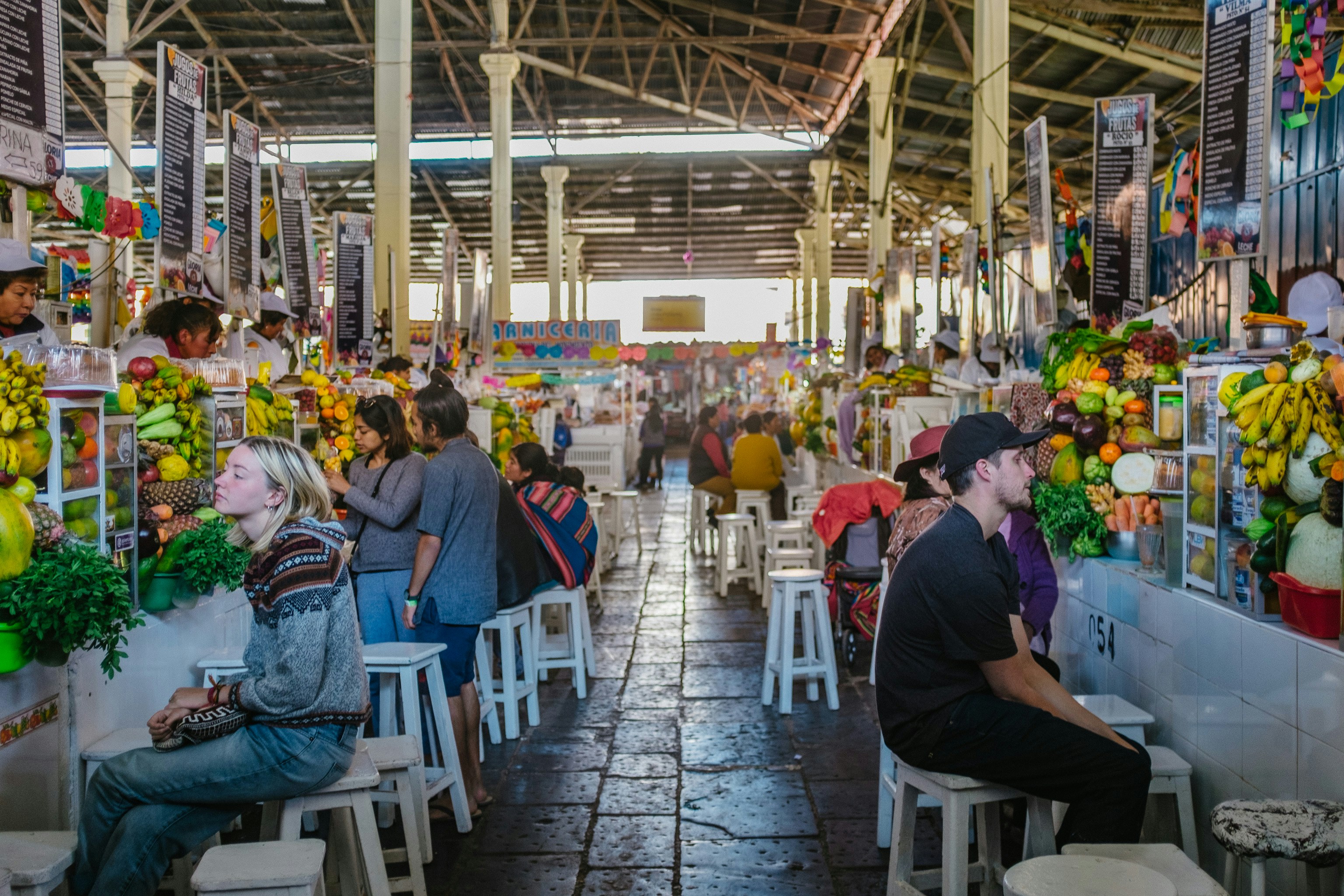
Cusco’s food scene is shaped by altitude, history, and the Andean agricultural tradition. The city sits in a valley at 3,400m where potatoes come in hundreds of varieties, corn grows in colours you won’t find elsewhere, and guinea pig has been a dietary staple for over 5,000 years. The restaurant scene ranges from market stalls serving S/12 plates of fried pork to internationally regarded restaurants where the Inca culinary heritage meets modern technique.
Cuy - Guinea Pig
Cuy is the most iconic dish in Cusco and the broader Andean region. It has been eaten here since pre-Inca times and remains a centrepiece of traditional celebrations. The animal is typically roasted whole on a spit or fried, then served with potatoes (often the purple-skinned native variety) and choclo (large-kernel Andean corn).
The texture is closer to rabbit than chicken: lean, dark, and slightly gamey. A whole portion costs approximately S/35–S/60 at mid-range restaurants as of 2026. Pachapapa restaurant in San Blas (courtyard seating, open noon–22:00, mains approximately S/35–S/65) serves a reliable version and is one of the more atmospheric spots to try it. The market at Mercado de San Pedro also sells cuy, usually fried, at lower prices.
Chicharrón
Fried pork is a Cusco staple, found at breakfast markets, chicharrón specialists, and local restaurants throughout the day. The best versions are slow-fried until the skin is fully crispy while the meat stays moist inside, served with mote (boiled hominy corn) and salsa criolla (fresh onion and tomato relish). Prices at local restaurants run approximately S/12–S/18 per plate as of 2026. The market near Mercado de San Pedro has several dedicated chicharrón stalls open from 07:00–13:00.
Trucha - Lake Trout
Trout is not native to Peru but has been farmed in the Lake Titicaca basin since the 1940s and is now a staple fish throughout the Andean highlands. Cusco sits on the supply chain from Puno and Titicaca, so fresh trucha is consistently available. It is served grilled, fried, or a la macho (in a spicy tomato and chilli sauce). Prices at mid-range restaurants run approximately S/20–S/30 per main as of 2026. The market food stalls do an excellent fried trucha plate for approximately S/12–S/15.
Sopa de Maní - Peanut Soup
A thick, warming peanut soup, specific to the Cusco region. Made with ground peanuts, vegetables, and typically a piece of beef or chicken, it has a deep, earthy flavour that works particularly well at altitude where your body craves dense calories. Found at local restaurants and market food stalls for approximately S/8–S/12.
Rocoto Relleno - Stuffed Pepper
Common across the Andes but done particularly well in Cusco. The rocoto is a medium-hot chilli stuffed with ground beef, onion, olives, and cheese, then baked. The pepper itself has a fruity heat rather than a sharp burn. Available at traditional restaurants and many market stalls for approximately S/10–S/18.
Markets vs Restaurants
Mercado de San Pedro is the most central and most visited. The prepared food section (inner left corridor) has roughly 30 stalls serving full plates of trout, chicharrón, soup, and fresh juices. A full lunch here costs approximately S/10–S/18. The market is open daily from approximately 06:00–20:00.
Mercado Central (also called Mercado Modelo) is a short walk north of San Pedro and significantly less touristy. Prices are fractionally lower and the produce section is larger, but the prepared food section is smaller.
The key difference between markets and tourist-strip restaurants is price - not significantly quality. Markets are not rough or unsafe; they are where Cusco locals eat. A full plate from a well-run market stall is a legitimate meal, not a budget compromise.
Restaurants - Mid-Range
Pachapapa - San Blas, open daily noon–22:00. Traditional Andean cuisine in a stone courtyard setting. The wood-fired dishes (cuy, pork ribs) and soups are excellent. Mains approximately S/35–S/65. No reservation needed for lunch; booking recommended for dinner on weekends.
Limo - Near Plaza de Armas. Nikkei-Andean fusion (Japanese-Peruvian technique applied to local ingredients). Ceviche with local trout, tiradito with Andean chillies. Mains approximately S/35–S/55 as of 2026. One of the better mid-range restaurants in the city.
Marcelo Batata - Plazoleta Regocijo, near the plaza. A long-running local favourite. Classic Cusqueño cooking - rocoto relleno, lomo saltado, chaufa. Mains approximately S/30–S/50. Known for generous portions and reliable quality.
Restaurants - Upscale
Chicha por Gastón Acurio - Celebrity chef Gastón Acurio’s Cusco outpost, in a colonial building near the plaza. Focuses on elevated Andean cuisine: native potato causes, highland lamb, cuy preparations unfamiliar to most visitors. Expect approximately USD 25–USD 40 per person as of 2026 for a full meal with drinks. Reservation recommended.
MAP Café - Inside the Pre-Columbian Art Museum on Plazoleta Nazarenas. Contemporary Peruvian cuisine in a glass-and-steel structure inside a colonial courtyard. Lunch is more accessible than dinner (approximately USD 30–USD 50 per person for a three-course set). The museum’s location means the setting is genuinely different from anything else in the city.
Chicha de Jora
The fermented Andean corn beer, made from germinated yellow maize. Unlike chicha morada (which is a sweet non-alcoholic drink), chicha de jora is the traditional pre-Columbian alcoholic fermentation still made by small producers throughout the Andes. It has a sour, slightly yeasty flavour - different from any commercial beer. Look for houses with a red plastic bag or bunch of flowers hung over the door - traditional signs that chicha is available inside. Not a tourist experience, but genuinely the oldest local drink in continuous production.
For restaurants specialising in Cusco’s wider dining scene, see our Cusco restaurant guide and the Cusco city hub for full accommodation and transport information. For a more immersive introduction to local food, book a Cusco food or cooking tour that includes a market visit and hands-on preparation.
More on Cusco
- Things to Do in Cusco - Qorikancha, San Blas neighbourhood, Sacsayhuamán, and the Plaza de Armas with opening hours and entry fees.
- Where to Stay in Cusco - Hotels and hostals from budget dorms to boutique properties in the historic centre.
- Day Trips from Cusco - Sacred Valley, Maras salt mines, Rainbow Mountain, and Machu Picchu logistics from the city.
- Vegan Cusco - Plant-based restaurants and market stalls for travellers eating vegan in the Inca capital.
- Altitude Sickness in Peru - Cusco sits at 3,400m; what to expect and how to acclimatise before eating the heavier dishes on this list.