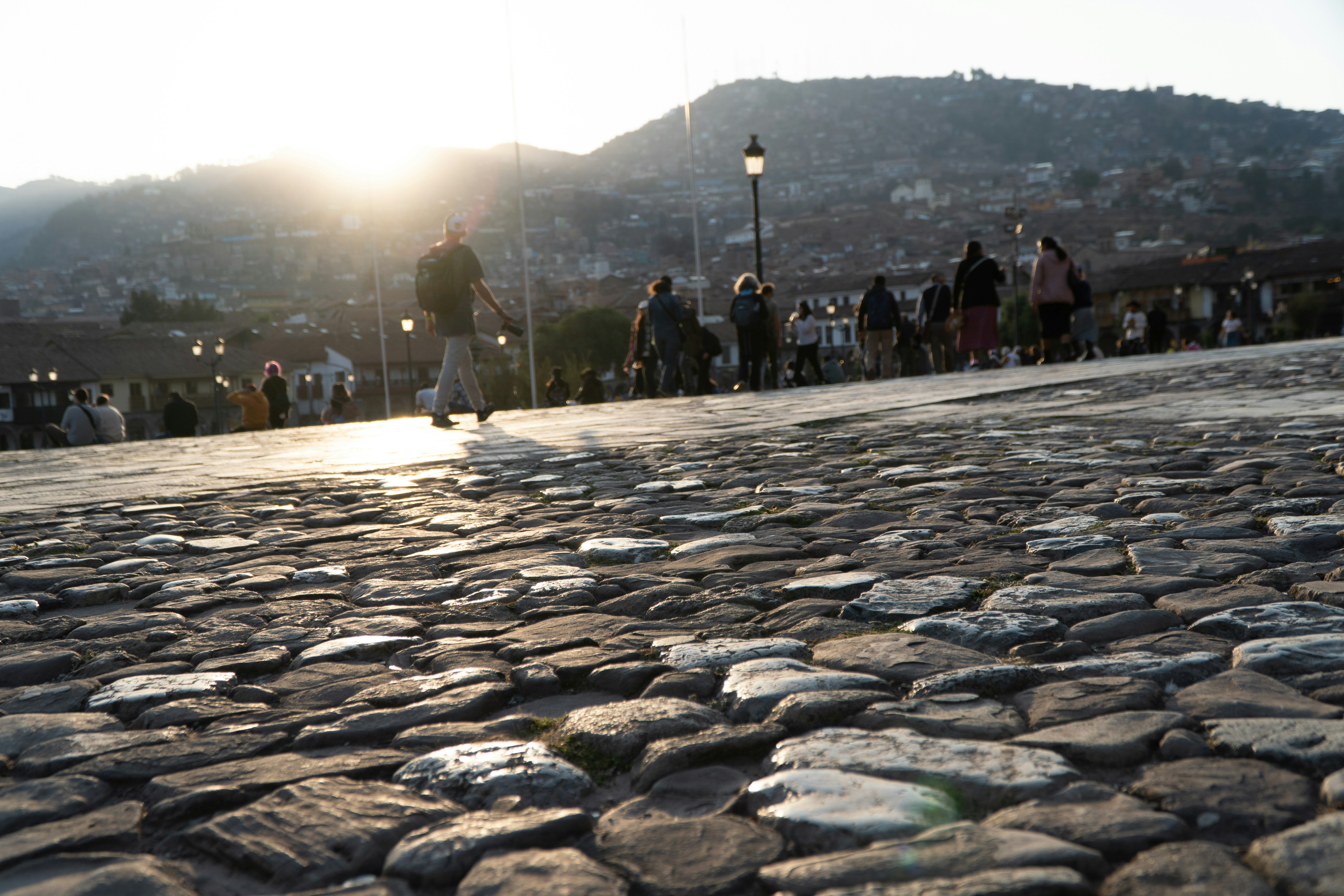
Both cities sit in the Andes and both are steeped in colonial history - but Cusco and Arequipa offer very different experiences. Cusco is the Inca heartland, a UNESCO city at 3,400 m with direct access to Machu Picchu. Arequipa, Peru’s second city, sits at a more manageable 2,335 m, has better year-round weather, and serves as the gateway to Colca Canyon - one of the deepest canyons on earth.
For travellers doing a southern Peru loop, the question is often how many nights to give each city, rather than choosing one over the other. But if your schedule is tight, here’s what each city does best.
Overview
Cusco is unavoidable for most Peru visitors. The Inca presence is overwhelming - Inca stone walls underpin Spanish colonial churches, the Plaza de Armas is one of the most striking squares in Latin America, and the city exists as the launch point for the Sacred Valley, Machu Picchu, and the Inca Trail. At 3,400 m, altitude sickness is a real consideration: plan for at least one full rest day on arrival.
Arequipa is called “La Ciudad Blanca” (The White City) because the historic centre is built from sillar - a bright white volcanic stone quarried from the nearby Misti volcano. The Cathedral on the Plaza de Armas, the Santa Catalina Monastery, and the Yanahuara viewpoint are Arequipa’s visual icons. The altitude here (2,335 m) is easier for most people, and the city has a calmer, more liveable pace than Cusco.
Getting There
Cusco from Lima: 1 hour 20 minutes by air with LATAM, Sky Airline, or JetSmart - fares from approximately USD 40–120 one-way. Bus via Nazca takes 20+ hours on Cruz del Sur or similar operators (from approximately USD 30–65).
Arequipa from Lima: 1 hour 25 minutes by air with the same carriers, fares similarly USD 40–110 one-way. By bus, Cruz del Sur and Oltursa run an overnight route (approximately 10–12 hours, from PEN 100–200 / USD 26–52).
Cusco to Arequipa: No direct flight. The two cities are connected by overnight bus (Cruz del Sur, Civa) in approximately 9–11 hours - fares from PEN 80–180 (USD 21–47). This route via Juliaca is popular with travellers doing the southern circuit. A shared taxi or minibus via Puno takes a similar time but with more flexibility.
Things to Do
Cusco is all about layered history and Inca archaeology. Start with Qorikancha (Sun Temple, approximately PEN 40 / USD 10), then tackle the Cusco Tourist Ticket (Boleto Turístico, approximately PEN 130 / USD 34) which covers Sacsayhuamán, Q’enqo, Tambomachay, and 13 other sites. San Blas neighbourhood has ceramic workshops and market stalls worth a few hours. The city is also the departure point for Sacred Valley tours (approximately USD 20–40 for a day trip) and the Machu Picchu train journey.
Beyond day trips, Cusco has a growing craft beer scene, good live music in bars around Procuradores street, and a night market in the Plaza Regocijo area.
Arequipa centres on two major sights: the Santa Catalina Monastery (approximately PEN 55 / USD 14, open daily) is a 16th-century convent that occupies an entire city block - plan 2–3 hours. The Plaza de Armas Cathedral (free entry) has a museum inside for approximately PEN 10 (USD 2.60). The Juanita Mummy Museum (Museo Santuarios Andinos) holds one of the world’s best-preserved Inca mummies - entry approximately PEN 30 (USD 8).
The main draw outside the city is Colca Canyon: a 2-day tour from Arequipa runs approximately USD 40–70 including transport, accommodation, and guided visits to Cruz del Cóndor viewpoint. Independent travellers can do it for less by taking the public bus to Chivay (approximately PEN 30 / USD 8, 3.5 hours) and organising locally.
See our Arequipa things to do guide for full site details.
Food and Drink
Arequipa has a distinct regional cuisine - arguably Peru’s strongest after Lima. Rocoto relleno (stuffed hot pepper), adobo (pork stew), and queso helado (frozen cheese dessert) are local classics. La Trattoria del Monastero near Santa Catalina is excellent (approximately PEN 50–80 / USD 13–21 per person). Chicha (the upscale Acurio restaurant) has a Cusco branch but Arequipa has its own strong mid-range options. The Mercado San Camilo is the best place to eat local food cheaply - breakfast and lunch menus from PEN 8–15 (USD 2–4).
Cusco’s food scene has improved significantly. Cicciolina on Triunfo is the reliable high-end pick (approximately PEN 60–100 / USD 15–26 per person). For Andean specialties at lower prices, the Central Market on Cascaparo is unbeatable. See our Cusco food guide for named spots and prices.
Where to Stay
Cusco lodging options cluster around the historic centre. Palacio del Inka by Luxury Collection (approximately USD 180–280/night) is the prestige option. Mid-range travellers do well at Rumi Punku or El Mercado Hotel (approximately USD 55–120/night). Budget hostels near the Plaza de Armas start at approximately USD 10–15 for dorms, USD 35–55 for private rooms.
Arequipa is slightly cheaper than Cusco for equivalent quality. Casa Andina Select Arequipa runs approximately USD 70–110/night. The boutique La Gruta Hotel offers colonial-style rooms from approximately USD 60–90/night. Hostel options in the historic centre start at approximately USD 9–14/night for dorms. See our Arequipa things to do guide for accommodation context.
Budget
Both cities are similarly priced for mid-range travel. Expect approximately USD 60–90/day in Cusco (excluding Machu Picchu excursions which add USD 60–150+). Arequipa runs slightly cheaper at approximately USD 50–80/day, with the Colca Canyon tour adding USD 40–70 if you go that route.
The Verdict
Choose Cusco if: Machu Picchu, the Sacred Valley, or the Inca Trail are on your list - they are non-negotiable reasons to be in Cusco. The city also has more historical complexity and is better for multi-day Andean immersion.
Choose Arequipa if: you want an Andean city with better altitude tolerance, excellent food, and a gateway to Colca Canyon. Arequipa is quieter, less tourist-saturated, and gives you access to one of the genuinely spectacular natural features in South America.
In practice: most southern Peru itineraries include both. A classic route runs Lima → Arequipa (2–3 nights) → Puno/Titicaca (2 nights) → Cusco (3–4 nights) → Machu Picchu (1–2 nights) → Lima. Cusco and Arequipa complement each other rather than competing. Browse Cusco tours and Arequipa tours to plan each leg before you arrive.