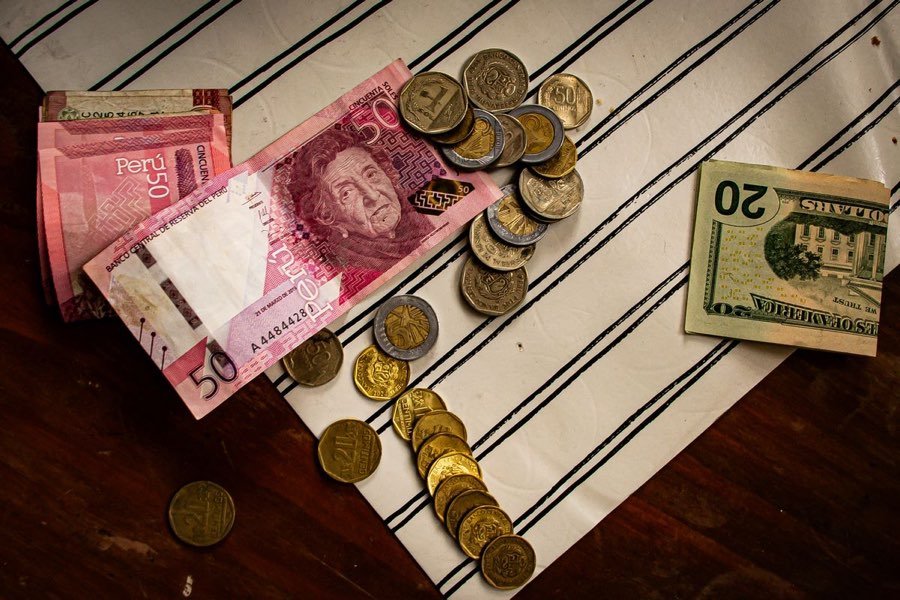
Tipping in Peru sits in an interesting middle ground. It is not the cultural obligation it is in the United States, but workers in tourism and hospitality do appreciate it — and in some cases, such as guided treks and porter-supported hikes, tips make up a meaningful part of take-home pay. Understanding where tips land, and where they are simply not expected, will make your trip smoother and ensure your money reaches the right people.
The Basics: Cash is King
Always carry Peruvian soles (PEN) for tips. Card tipping is rare and, even in restaurants that accept it, there is no guarantee the amount reaches the server. ATMs are widely available in Lima, Cusco, Arequipa, and other major towns — withdraw small notes (S/10 and S/20) specifically for tipping. US dollars are accepted in some tourist-heavy spots, but soles are always the better option and avoid any exchange-rate haggling.
The exchange rate fluctuates, but as of 2026 sits around S/3.75 to S/1 USD. The USD equivalents in this guide use that rate. For wider budgeting, see Peru money and currency and Peru travel costs. A Peru eSIM also lets you check live exchange rates and bank apps on arrival.
Restaurants and Cafes
What to expect on the bill: Many mid-range and upscale restaurants automatically add a 10% service charge (listed as “servicio” or “servicio incluido”). Check before you add more. A 19% IGV (sales tax) is also standard.
How much to tip:
- Local huariques, market stalls, and casual lunch spots: no tip expected
- Mid-range restaurants (S/30 to S/80 mains): S/5 to S/15 ($1.50 to $4 USD) per person, or round up the bill generously
- Upscale and fine-dining restaurants: 10% on top of the service charge, left in cash, is generous — the automatic service charge may not reach your server
- Cafes and coffee shops: no tip expected for counter service; S/2 to S/5 ($0.50 to $1.50 USD) for table service
A practical habit: pay the bill total by card and leave the tip in cash directly on the table.
Tour Guides and Trekking Staff
Tips for guides and porters are the most impactful of any you will give in Peru. Guiding income varies enormously; tips frequently represent 20 to 40% of a guide’s daily earnings on tourist routes. For route and permit detail, see Salkantay Trek vs Inca Trail. If you have not yet booked a guide, Cusco day tours and treks list the group size and what is included, which helps you budget the tip.
City and half-day tour guides:
- Group tour (10+ people): S/10 to S/20 ($3 to $5 USD) per person
- Small group (4 to 9 people): S/15 to S/30 ($4 to $8 USD) per person
- Private half-day guide: S/40 to S/75 ($10 to $20 USD) total
Full-day private guides:
- S/75 to S/150 ($20 to $40 USD) per group for an excellent experience
Multi-day trekking (Inca Trail, Salkantay, Ausangate, etc.):
- Lead guide: S/150 to S/300 ($40 to $80 USD) for a 4-day trek
- Porters: S/50 to S/100 ($13 to $27 USD) each — do not skip this; porters carry heavy loads in thin air for long days
- Cook: S/50 to S/75 ($13 to $20 USD)
Tipping trekking crews at the final camp dinner is the standard approach. Many agencies include tip envelopes in their pre-trek briefing packs. Confirm the group size and tip collectively to avoid shortchanging anyone.
Taxis and Rideshares
Standard metered or negotiated taxis: no tip expected. The fare is the fare.
Uber, InDrive, and Cabify are active in Lima and increasingly in Cusco. Tips through the app are accepted but not expected.
If a driver helps with heavy luggage, navigates complicated traffic for you, or goes out of their way, S/5 to S/10 ($1.50 to $3 USD) as a gesture is appreciated. For long intercity private transfers, S/20 to S/40 ($5 to $10 USD) depending on distance and service quality is reasonable.
Hotels and Accommodation
Bellhops and porters: S/5 to S/10 ($1.50 to $3 USD) per bag or trip is standard.
Housekeeping: S/5 to S/15 ($1.50 to $4 USD) per night for mid-range and upscale hotels. Leave it daily in an obvious spot with a note — not at checkout, where it may not reach the right person.
Concierge: If they go beyond the obvious and arrange something genuinely useful — a hard-to-book restaurant, a last-minute trek permit lead, a private driver — S/20 to S/50 ($5 to $13 USD) is appropriate.
Hostels: no tip expected for routine check-in service, though a small amount for a genuinely helpful staff member is always welcome.
Spas and Salons
Tipping is less common in salons than in North America, but S/5 to S/20 ($1.50 to $5 USD) for a good haircut or treatment is a kind gesture. For hotel spa treatments, 10% is appropriate and usually expected. Leave in cash directly with the therapist.
Common Mistakes to Avoid
Tipping before the experience: For treks and tours, tip at the end — after you have assessed the service.
Assuming the service charge reaches staff: In Peru it often does not, or is split unevenly. If you want your waiter to benefit, leave cash on the table.
Neglecting porters: Tourists frequently tip guides generously and forget porters entirely. Porter tips are the most impactful use of your tipping budget on a multi-day trek.
Tipping in US cents or small coins: Rounding up by S/1 or leaving loose change reads as an insult rather than gratitude. If you tip, make it meaningful.
Over-tipping in local non-tourist contexts: In local markets, street food stalls, and neighbourhood shops, tipping is not part of the culture and can cause awkwardness. Save it for service-industry contexts.
A Note on Local Attitudes
Peru does not have the mandatory-gratuity culture of the US. Locals eating out typically do not leave a tip beyond rounding up slightly. The expectation of tipping exists largely in the tourist economy, and most Peruvian service workers understand this. You will not cause offence by not tipping at a casual lunch spot; you will make someone’s week by leaving a generous amount after an excellent guided tour.