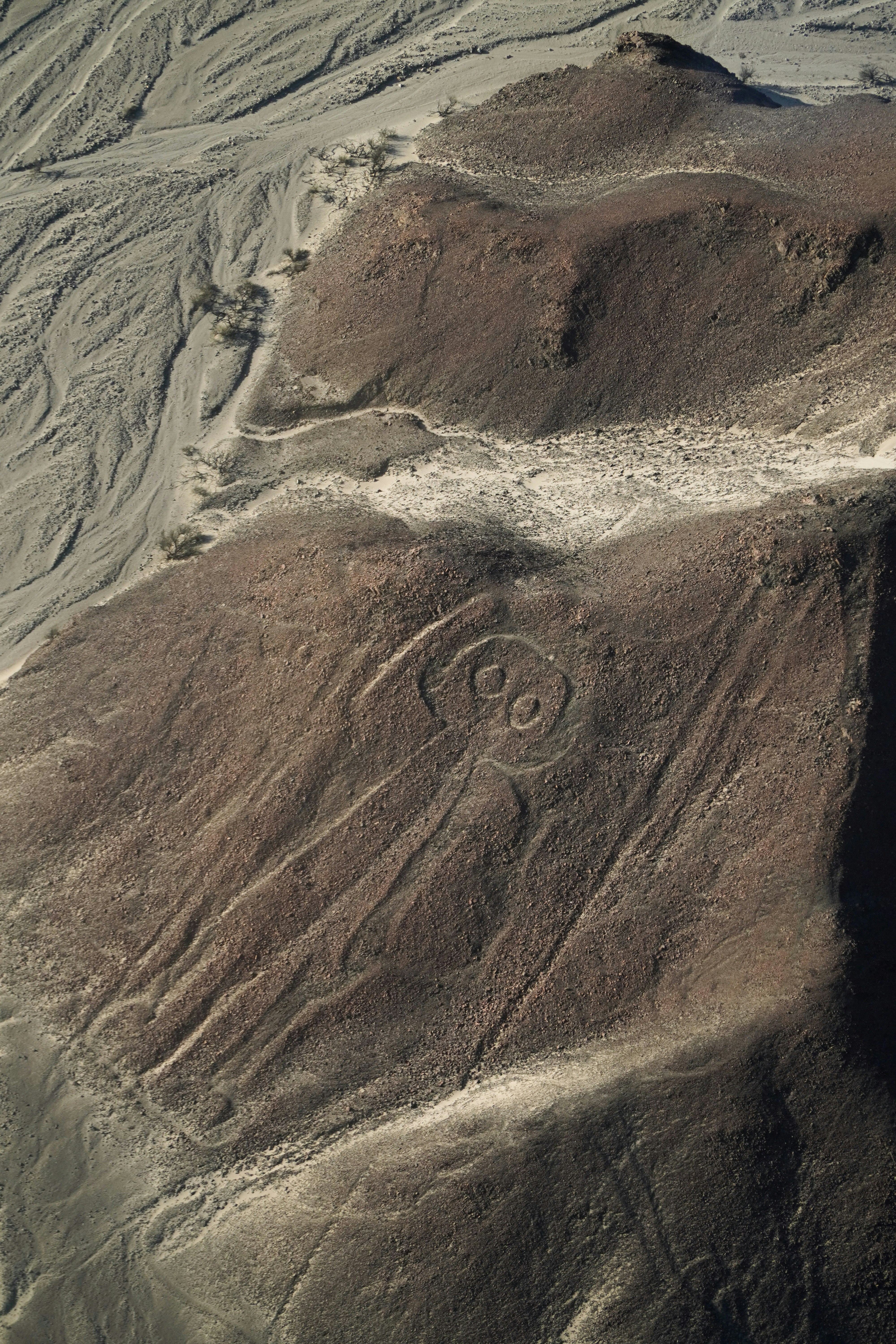
The Nazca Lines are one of the most debated archaeological puzzles in the world. Scratched into the coastal desert plateau by the Nazca culture between approximately 100 BCE and 800 CE, the geoglyphs depict animals, plants, and geometric forms - some stretching over 370 metres. From the ground, they look like cleared paths in the reddish-brown desert. From 300 metres in the air, they resolve into a hummingbird, a condor, a spider, a monkey with a spiralling tail. The viewing experience is the flight itself.
The Overflight: How It Works
From Nazca Airport (the main option)
The Nazca aerodrome (Aeródromo María Reiche Neuman) is the primary departure point. Flights last approximately 30 minutes and cover the main figures: the Hummingbird, the Monkey, the Condor, the Spider, the Lizard, the Dog, the Astronaut (or “Owl Man”), and the hands. The route varies by operator but follows a standard circuit over the pampa.
Light aircraft (typically 5–8 passenger Cessna or Piper models) bank left and right so passengers on both sides can photograph the geoglyphs. Motion sickness is common - nearly every flight briefing mentions it. Eat lightly beforehand, bring ginger chews, and take a window seat in the front row if possible (the nose of the aircraft pitches less than the rear).
Standard vs Extended Overflights
Most operators offer two circuit options:
Standard circuit (approx. 30 minutes): Covers the core figures - Hummingbird, Condor, Spider, Monkey, Astronaut (Owl Man), Lizard, and Hands. Prices from approximately 80–100 USD per person as of 2026. This is the right choice for most visitors.
Extended circuit (approx. 60 minutes): Adds the larger geometric forms, the whale, the pelican, and some of the long straight lines and trapezoidal clearings that are thought to have served as astronomical or ceremonial markers. Prices from approximately 120–150 USD per person as of 2026. Worth considering if you have a serious interest in the archaeology or want more time over the pampa with less rushing.
Certified operators based in Nazca (as of 2026):
- AeroNasca: competitive pricing on both standard and extended circuits; verify current DGAC certification status before booking
- Nasca Flights: offers 30- and 60-minute options; well-regarded for briefing quality and modern Cessna fleet
- Alas Peruanas: long-established, DGAC certified; one of the older operators with consistent schedules
- Aero Paracas: larger operation with a modern fleet; strong safety record; departs from Nazca aerodrome
Booking in advance: In peak season (June–August and December–January), morning slots at licensed operators sell out several days ahead. Book online or via your accommodation at least 2–3 days ahead during these months. Shoulder season (April–May, September–November) is easier to book on arrival.
You can also book a Nazca Lines overflight tour online in advance and compare operators before arriving in town.
Airport tax is approximately 25 soles per person and is paid separately at the terminal, regardless of your operator.
From Ica (60km north of Nazca)
Some operators offer overflights from Pisco Airport near Ica, covering the same figures but with a longer flight time (~50 minutes) and correspondingly higher prices. Useful if you are already based in Paracas or Huacachina and do not want to travel the extra hour to Nazca.
Best Time of Day for an Overflight
Morning flights before noon are strongly recommended. Two reasons:
-
Turbulence: The Nazca pampa heats quickly under the desert sun. By midday and early afternoon, thermal updrafts create significant turbulence - uncomfortable at best, nauseating for many passengers. Morning air is calmer and the flight is smoother.
-
Light quality: Morning light (before 10am) gives better shadow definition on the geoglyphs, making them sharper from the air. Midday light is flat.
Most operators start flights from 7:00am. Aim for the first or second slot of the day.
Weather: The Nazca plateau has one of the driest climates on earth. Cloud and rain are rare - the season matters less here than it does in the Andes. The main weather-related cancellations occur during the wet season (December–March) when coastal fog (garúa) occasionally grounds flights.
Ground Alternatives
El Mirador Observation Tower
Located approximately 20km north of Nazca on the Pan-American Highway (Km 420). The 12-metre metal tower offers views of the Lizard, Tree, and Hands geoglyphs where they cross the highway. Entry approximately 2–3 USD as of 2026. A useful stop if you are passing through by bus, but insufficient as a standalone experience - the figures are not recognisable as animals from this height.
Maria Reiche Museum (Casa Museo Maria Reiche)
Located approximately 40km north of Nazca. Dedicated to the German mathematician who spent 50 years mapping and studying the Nazca Lines, and who is credited with bringing them to international attention. Entry approximately 10–15 soles as of 2026. A modest but worthwhile museum for understanding the scale of the research and the theories around the lines’ construction methods and purposes.
Cahuachi Ceremonial Centre
A large Nazca ceremonial complex approximately 28km west of Nazca city, currently under excavation. Day tours from Nazca visit the adobe pyramid mounds and burial sites. Recommended if you want archaeological depth beyond the overflight experience. Check current access with local operators as excavation areas are periodically restricted.
Getting to Nazca
From Lima (450km south) The standard route is overnight bus. Operators Cruz del Sur, Oltursa, and TEPSA depart from Terminal Terrestre Plaza Norte (north Lima) or terminals near Javier Prado. Journey time: approximately 7–8 hours. Premium bus class (“suite” seats) starts from approximately 50–60 USD as of 2026; regular reclining bus from approximately 30–40 USD. Night buses depart around 10pm–11pm and arrive in Nazca by dawn - ideal for an early overflight.
From Ica (60km north) Ica is a larger city and transport hub on the Pan-American Highway. Shared minivans (colectivos) run between Ica and Nazca frequently throughout the day. Journey approximately 1.5 hours, cost approximately 10–15 soles as of 2026. Most travellers combine Nazca with Ica and Huacachina on a south coast itinerary.
From Arequipa (560km south-east) Less common but possible by overnight bus (approximately 8–9 hours). Several operators serve the Arequipa–Nazca route. Useful if combining Colca Canyon with the south coast in a single southbound or northbound journey through Peru.
From Cusco (approx. 900km by road) There is no direct service from Cusco to Nazca. The most practical route is: Cusco → Arequipa (overnight bus, approximately 10 hours, from approximately 25–40 USD), then Arequipa → Nazca (overnight bus, approximately 8–9 hours). This two-night journey is feasible but demanding - allow at least one rest day in Arequipa to break the trip. Alternatively, Cusco → Lima by overnight bus (approximately 20–22 hours) and then Lima → Nazca the following night, which passes through more of the south coast corridor and allows you to add Paracas and Ica. A Cusco–Lima flight (approximately 1.5 hours, from around 60–120 USD depending on timing) followed by an overnight Lima–Nazca bus is a better option if time is short.
Combining Nazca with Other South Coast Attractions
Nazca sits in the middle of Peru’s south coast corridor. A typical 3–5 day south coast itinerary from Lima includes:
- Paracas National Reserve: dramatic red desert cliffs meeting the Pacific; flamingos and sea lions in the lagoons
- Ballestas Islands: boat tour to see Humboldt penguins, sea lions, and thousands of seabirds - often called the “poor man’s Galápagos”
- Huacachina: sand dune oasis with dune buggy and sandboarding tours
- Nazca: overflight plus Maria Reiche Museum
- Arequipa: colonial city and gateway to Colca Canyon (onward south)
The Pan-American Highway connects all of these points. Buses run frequently between them. Allow approximately 3 nights minimum to see Paracas, Huacachina, and Nazca comfortably without rushed early departures each day.
Plan Your Nazca Visit
- Nazca Travel Guide - The full city guide: overflight operators, accommodation, restaurants, and what else to do beyond the Lines.
- Nazca Lines: History and Archaeology - The culture that made the geoglyphs, how they were constructed, and the competing theories about their purpose.
- Paracas Travel Guide - 3 hours north. The Ballestas Islands wildlife tour and Paracas National Reserve are the natural complement to a Nazca stop.
- Ballestas Islands Tour Guide - Sea lions, penguins, and the Candelabra geoglyph from a boat - the coastal counterpart to the desert Lines.
- Ica and Huacachina Guide - 2.5 hours north. Sand dunes, the Pisco Route bodegas, and the Ica Regional Museum with Nazca and Paracas artefacts.
- 2-Week Peru Itinerary - South coast routing: Lima → Paracas → Ica → Nazca → Arequipa with day-by-day planning.
- Arequipa Travel Guide - 9–10 hours south. The White City and Colca Canyon make it the most popular onward destination from Nazca.
For overflight slots available in the next few days, see our last-minute tours page - Nazca Lines flights sometimes release last-minute availability at reduced rates.