Nazca: Overflight of the Lines and Desert Archaeology
Plan your visit to Nazca - overflight operators, the Lines viewing tower, Chauchilla Cemetery, and transport from Lima or Paracas. Full guide.
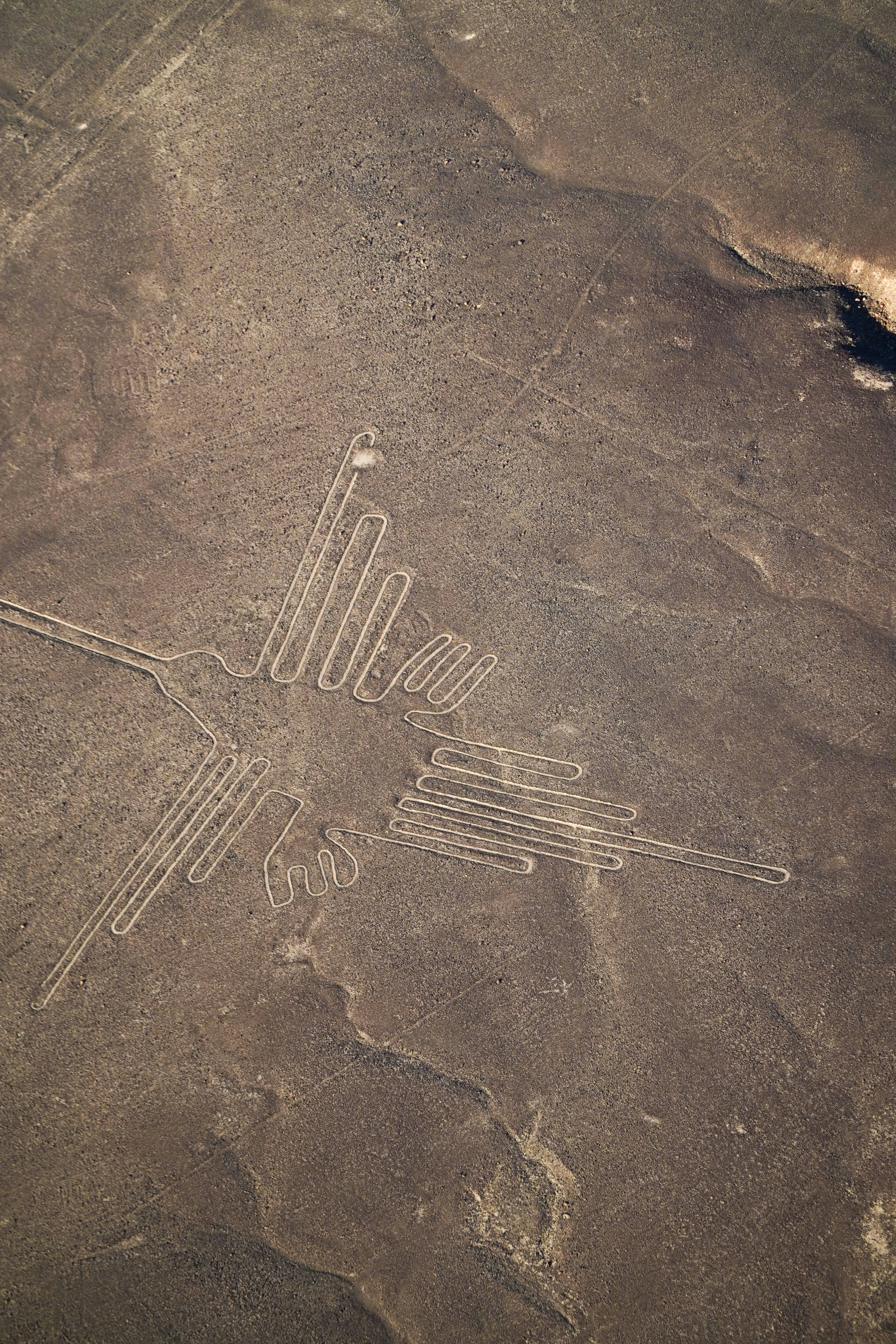
The Nazca Lines are one of South America’s most discussed and least understood archaeological features: hundreds of geometric shapes and animal figures etched into the desert pampa between roughly 200 BC and 700 AD by the Nazca culture, many of them visible in full only from altitude. The town of Nazca itself is a functional desert stop - not a destination in its own right - but the surrounding region holds genuine depth beyond the Lines: mummified burials, an enormous adobe ceremonial complex, and a museum dedicated to the German mathematician who spent decades mapping the figures. Most travellers pass through for one to two nights, fly the Lines, and continue south to Arequipa or back north to Lima.
Getting There
From Lima by bus: The main overland route. Cruz del Sur, Oltursa, and Flores operate overnight and daytime services from Lima’s bus terminals on Javier Prado. Journey time is approximately 7–8 hours depending on traffic. Semi-cama and cama seats run approximately S/50–S/80 one-way as of 2026. Overnight buses are efficient - you arrive at dawn and can head straight to a morning flight.
From Paracas/Ica by bus or shared taxi: Buses connecting Ica and Nazca depart roughly hourly; journey time is approximately 2 hours, fares approximately S/15–S/25 as of 2026. Shared taxis (colectivos) are faster at approximately 1.5 hours and cost approximately S/20–S/30, though they leave when full. This is the standard connection for travellers doing the south coast route.
From Arequipa by bus: Approximately 9–10 hours on overnight services. Cruz del Sur and Flores cover this route; fares approximately S/50–S/90 as of 2026.
The Nazca Lines Overflight
The overflight is the reason most people come to Nazca. Small aircraft - typically 5- or 6-seat Cessna 172s or 206s - depart from Nazca’s María Reiche Neuman Airport and circle the pampa at low altitude for approximately 30–40 minutes. The pilot announces each figure over the intercom and banks left and right to give both sides of the cabin a view. Standard figures on the circuit include the Hummingbird, the Spider, the Monkey, the Astronaut (also called the Owl Man), the Condor, the Whale, and several dozen geometric lines and trapezoids.
Operators: Two of the most established are AeroNazca and Alas Peruanas, both operating from the Nazca airport. Both offer similar circuits and comparable safety records. Alas Peruanas is often slightly cheaper; AeroNazca markets itself on newer aircraft. Independent comparison is difficult - book directly at their airport offices or through a reputable Nazca tour agency rather than through hotel touts, who add commission.
Prices: Approximately USD 80–USD 120 per person for the standard Nazca-based circuit as of 2026. Operators in Ica and Paracas charge approximately USD 130–USD 150 because the flight to and from Nazca adds time. Morning flights have calmer air and better visibility.
Motion sickness warning: The steep banking manoeuvres are uncomfortable for many passengers. Take motion sickness medication (e.g. meclizine or dimenhydrinate) 30–60 minutes before the flight if you are susceptible. Eat lightly beforehand. The airport has sick bags but limited sympathy. Book your Nazca Lines overflight online to confirm your preferred morning time slot before arrival.
Safety: Nazca overflight accidents have occurred historically, typically due to mechanical failure or poor weather. The Peruvian aviation authority (DGAC) requires operators to meet minimum standards - stick to licensed companies that show you their operating certificate. Do not fly with unlicensed operators offering significantly lower prices.
Other Sites
Viewing tower (La Torre Mirador) - Located on the Panamericana Sur highway approximately 20km from Nazca, the tower overlooks the Hands, Lizard, and Tree figures. Free to access from the road; the tower itself costs approximately S/2 as of 2026. Useful context before or instead of a flight for budget travellers.
Chauchilla Cemetery - Approximately 28km south of Nazca. A pre-Inca burial ground excavated from the 1990s onward where mummified remains, textiles, and ceramics are displayed in situ within adobe tomb chambers. Entry approximately S/15 as of 2026. Open daily 08:00–17:00. Most visitors combine it with a Nazca Lines overflight on the same day; taxis from Nazca town charge approximately S/50–S/70 for a return trip with waiting time.
Maria Reiche Museum - Small museum at the house where German researcher Maria Reiche lived and worked from the 1940s until her death in 1998. Covers her methods of mapping and measuring the Lines and the theories she proposed about their astronomical function. Entry approximately S/5 as of 2026. Located approximately 3km north of Nazca on the Panamericana.
Cahuachi - The largest known adobe site in South America, 15km west of Nazca town. Served as a ceremonial centre for the Nazca culture. Ongoing excavation by Italian archaeologists means access is limited and variable - check current opening status before visiting. Guided tours from Nazca town cost approximately S/50–S/80 per person as of 2026.
Where to Stay
Casa Andina Standard Nasca - The most reliable mid-range option in the city. Rooms from approximately USD 90–USD 130 per night as of 2026. Pool, restaurant, and tour booking desk. Located a few blocks from the main plaza.
Hotel Majoro - Comfortable mid-range hotel on the outskirts of Nazca with a pool and gardens. Rates from approximately USD 70–USD 110 per night as of 2026. Quieter than central options. Often books flight tours through its own desk.
Hospedaje Yemayá - Budget-friendly guesthouse in the central area. Private rooms from approximately USD 25–USD 45 per night as of 2026. Basic facilities; reliable wi-fi. Good for travellers who are in town for one night only.
Hotel La Maison Suisse - Small Swiss-Peruvian-run hotel with a pool and garden. Rooms from approximately USD 55–USD 85 per night as of 2026. Quieter and more personal than the larger options.
Where to Eat
La Taberna - The best-regarded restaurant in central Nazca, serving Peruvian classics - ceviche, lomo saltado, ají de gallina - alongside grilled meats. Mains approximately S/35–S/65 per person as of 2026. The restaurant doubles as a bar in the evenings and displays Line diagrams on the walls.
El Huarango - Mid-range restaurant near the plaza popular with tour groups and independent travellers. Reliable set lunches (menú del día) for approximately S/20–S/30 as of 2026. Full à la carte menu available.
Cevichería La Mar del Sur - Casual spot serving decent ceviche and fried fish at lower prices than the tourist-facing restaurants. Mains approximately S/20–S/35 as of 2026. Local clientele.
Market food stalls - The covered Mercado Central on Calle Arica serves cooked lunches from approximately S/8–S/15 as of 2026. Best option for budget travellers; limited to midday hours.
Practical Information
Altitude: Nazca sits at approximately 520m above sea level - no altitude issues here.
Currency: Soles. ATMs are available on the main plaza. Withdraw cash before arrival if travelling overnight - some machines run dry on busy weekends.
Weather: Hot and dry year-round. Daytime temperatures of 25–35°C are normal. Mornings are cooler and better for flights. Strong sun - sunscreen and a hat are essential for outdoor sites.
Tour touts: Taxi drivers and hostel staff will push flight bookings aggressively in Nazca. Compare prices between at least two operators at the airport before committing. The airport-direct price is usually lower than hotel-arranged alternatives.
Combining with Paracas and Huacachina: The standard south coast loop from Lima runs: Paracas (Ballestas Islands) → Huacachina (sandboarding, oasis) → Nazca (Lines overflight) → onward. This covers approximately 550km of Panamericana and takes 3–4 days at a comfortable pace. Ica is a natural overnight stop between Paracas and Nazca - see the Ica guide for accommodation and bodega options.
For tour operators, flight circuit options, and pricing for Nazca Lines overflights, see our dedicated Nazca Lines tours guide.
Nazca and the South Coast Circuit
Nazca fits naturally into a south coast route from Lima or a detour from Arequipa:
- Nazca Lines: History and What You’re Looking At - The full archaeological background on the geoglyphs: who made them, why, and what the current scholarly theories say.
- Nazca Lines Tours - Operator comparisons, circuit options, prices, and motion sickness preparation for the overflight.
- Paracas Travel Guide - 3 hours north on the Panamericana. Ballestas Islands wildlife and the Paracas National Reserve make it the natural north bookend to Nazca on the south coast route.
- Ica and Huacachina - 2.5 hours north. The oasis, sand dunes, and Pisco Route bodegas are a standard Nazca–Lima connection stop.
- 2-Week Peru Itinerary - How to structure Lima → Paracas → Ica → Nazca → Arequipa as a south coast leg.
- Arequipa Travel Guide - 9–10 hours south. The White City and Colca Canyon are the most popular onward destination from Nazca.
Book an experience
Top experiences in Nazca
Explore the best tours and activities in Nazca , with instant confirmation and free cancellation on most bookings.