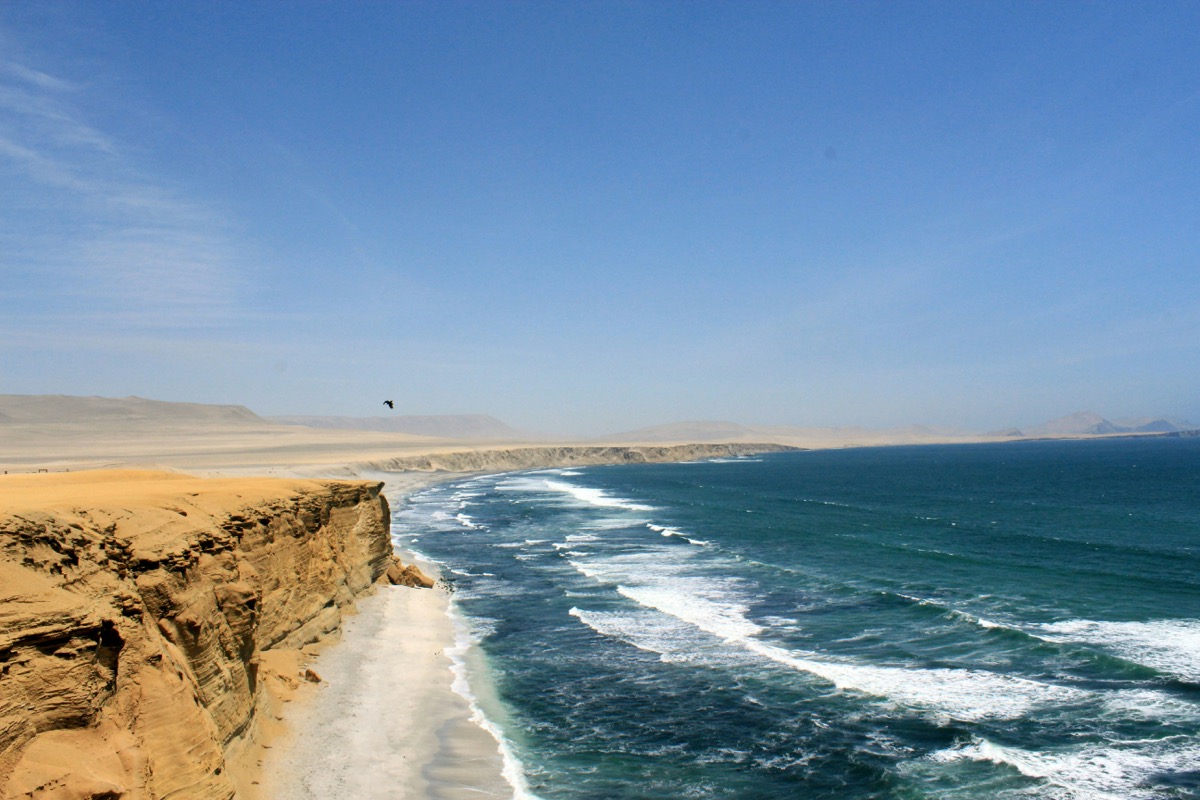
The Ballestas Islands, sitting approximately 12km off the Paracas Peninsula coast, are one of the most accessible wildlife spectacles in South America. The cold, nutrient-rich Humboldt Current that runs along Peru’s Pacific coast creates extraordinarily productive feeding grounds - the islands are home to hundreds of thousands of seabirds and large colonies of sea lions and Humboldt penguins. Combined with the Paracas National Reserve (a desert peninsula of dramatic red-rock cliffs and turquoise bays), the area makes an excellent 1–2 day trip from Lima.
The Ballestas Islands Boat Tour
What it is: A 2-hour boat tour that circles the Ballestas Islands at close range without landing. The three main islands are covered by boat; the wildlife density is extraordinary.
Departure point: El Chaco jetty, Paracas town. Boats typically depart at 08:00 and 10:00 (times may vary by operator; confirm locally).
Duration: Approximately 2 hours (30 minutes transit each way, 1 hour circling the islands).
Cost: Approximately S/30–S/50 per person for the boat tour as of 2026. A separate Paracas National Reserve entry fee (approximately S/11 as of 2026) is collected on or near the jetty.
Booking: Tickets available directly at the El Chaco jetty from approximately 06:30 onward. No advance booking required for most of the year. In January–March (Peruvian summer), slightly more demand from local tourists; arriving at the jetty by 07:30 ensures a place.
Wildlife You’ll See
Sea lions (lobos marinos): Year-round, in large numbers. The colonies bask on rocky ledges and swim around the boat, often coming very close. Counts vary; hundreds to several thousand sea lions are typically visible.
Humboldt penguins: Year-round residents, though numbers vary. The Humboldt penguin is listed as vulnerable by the IUCN. The Ballestas Islands are the most accessible place in Peru to see them in the wild.
Seabirds: The bird life is remarkable. Peruvian boobies (the world’s most numerous booby species) nest in massive colonies. Inca terns (striking grey birds with red bills and white “moustaches”) are present year-round. Cormorants, pelicans, and gulls in large numbers.
The Candelabro: On the approach to the islands, the boat passes a large geoglyph carved into the cliff face of the Paracas Peninsula - a candelabra-shaped figure approximately 180m tall. Dating and purpose are uncertain (pre-Columbian, but not Nazca-era based on current research). The boat slows for viewing.
Dolphins and other marine life: Chilean dolphins and occasional Bottlenose dolphins follow the boat. Condors are sometimes seen along the peninsula cliffs (from the Paracas Reserve rather than the islands).
Paracas National Reserve
The Paracas National Reserve covers approximately 335,000 hectares of desert peninsula and Pacific Ocean. The landscape is stark - red rock cliffs meeting turquoise water, with almost zero rainfall throughout the year. Key sites within the reserve:
La Catedral (The Cathedral): A dramatic natural rock arch that collapsed in the 2007 earthquake; the remaining rock formations are still impressive. Accessible by taxi or organised tour within the reserve (reserve entry required, approximately S/11).
Red Beach (Playa Roja): A small beach with distinctively red sand (from volcanic minerals in the cliffs). Approximately 15 minutes inside the reserve. Good for a short walk; no swimming due to rough surf and currents.
Lagunillas: A sheltered bay within the reserve with calmer water and a small restaurant serving fresh ceviche (mains approximately S/25–S/45 as of 2026). Popular with local visitors for a seafood lunch.
Reserve tour: A taxi tour of the main reserve sites (excluding the islands) takes approximately 2–3 hours and costs approximately S/60–S/100 from Paracas town as of 2026.
Getting to Paracas
From Lima: The main route. Panamericana Sur road, approximately 250km (3.5–4 hours).
By bus: Cruz del Sur operates Lima–Pisco/Paracas from the Javier Prado bus terminal (approximately S/40–S/70 as of 2026). Several departures throughout the morning. The Soyuz company also serves this route more cheaply (approximately S/20–S/30) but with less comfort.
By Paracas Express: A premium minivan service from Lima’s Miraflores hotel strip direct to Paracas, door-to-door. Approximately S/60–S/80 per person each way as of 2026. Comfortable, reliable, and convenient for those based in Miraflores.
Day trip from Lima: Several Lima operators offer 1-day Ballestas Islands and Paracas Reserve tours departing Lima at approximately 06:00 and returning by evening. Cost approximately USD 50–USD 80 per person as of 2026 including transport and boat tour but excluding reserve fees and meals. You can compare Paracas and Ballestas Islands tours on GetYourGuide to find departure dates and read recent reviews.
Where to Stay in Paracas
The Luxury Collection Paracas (Libertador Paracas) - The finest hotel in Paracas, on the bay with direct water access. Rooms from approximately USD 200–USD 300 per night as of 2026. Pool, restaurant, water sports available.
Hotel Paracas (Doubletree Hilton) - Well-regarded mid-range hotel on the beach in Paracas, with good facilities and a reliable restaurant. Rooms from approximately USD 100–USD 160 per night as of 2026.
El Mirador Hotel - Simple, clean budget hotel near the El Chaco jetty. Rooms from approximately USD 35–USD 65 per night as of 2026. Good for a single overnight before an early morning boat.
Combining Paracas with Nazca
Paracas is 170km north of Nazca (approximately 2–2.5 hours by bus along the Panamericana Sur). Many travellers combine both on a Lima-south circuit: Lima → Paracas (Ballestas) → Ica (sand dunes, pisco bodegas) → Nazca Lines overflight → return to Lima or continue to Arequipa. This 3–4 day coastal route is one of Peru’s most underrated itineraries.
Ica: Between Paracas and Nazca, approximately 70km south of Paracas. The sand dunes of Huacachina (an oasis surrounded by 100m dunes, excellent for sandboarding and buggies, approximately S/40–S/80 for a tour as of 2026) and pisco bodega visits are the main attractions.
Practical Tips
Go early: The 08:00 departure is recommended - morning light is better for photography and the wind picks up in the afternoon, making the return boat trip rougher.
Motion sickness: The boat crossing can be choppy. Take seasickness medication (dimenhydrinate/Dramamine) 1 hour before if you are prone.
Sun protection: The coastal desert has intense UV. Apply sunscreen before boarding and bring a hat - shade on the boat is limited.
Camera: Bring a zoom or telephoto lens for bird photography; the boat approaches closely but a 200mm+ lens gives much better results for individual bird shots.
What not to expect: You cannot land on the islands. Feeding wildlife is prohibited. Touching sea lions (occasionally they board the boats) is discouraged.
More Resources: Paracas and the South Coast
- Paracas Travel Guide - Town overview, getting here from Lima, and what to pack for the desert coast.
- Paracas Things to Do - Ballestas Islands plus the national reserve, flamingo lagoon, and Julio C. Tello museum.
- Paracas Food Guide - Fresh Pacific ceviche, pier stalls, and waterfront dining.
- Nazca Lines - The geoglyphs 170 km south - a natural addition to a Paracas trip.
- Nazca Lines Tours - Overflight options from Pisco (near Paracas) and Nazca.
- Huacachina Dune Buggy Tours - Sand dunes and pisco bodegas in Ica, 1 hour from Paracas.
- Day Trips from Lima - Combining Paracas with other south coast destinations as a Lima day trip or overnight.
For same-day or next-day boat tours, check our last-minute tours page for Ballestas Islands departures with immediate availability.