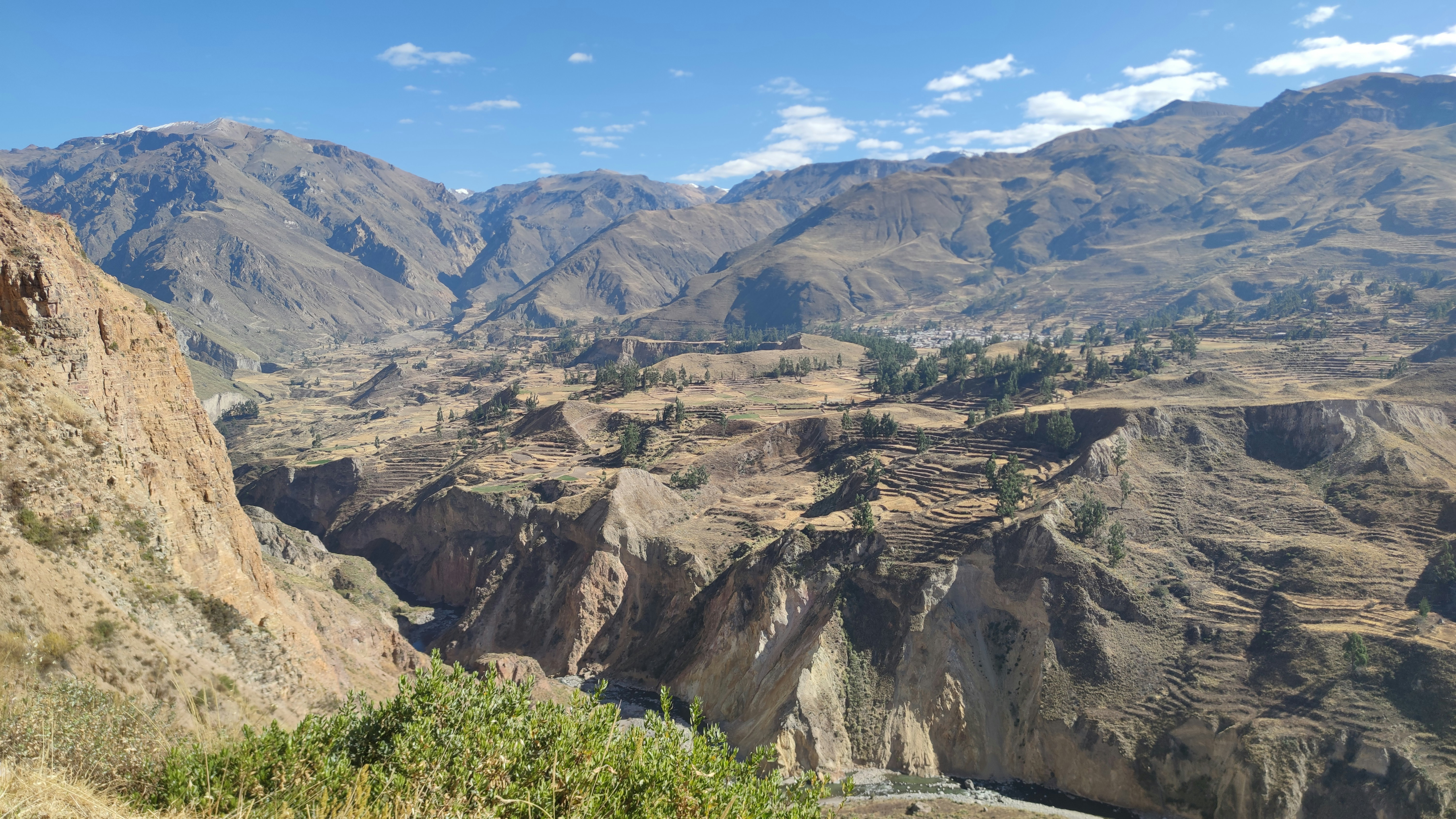
Colca Canyon is one of the deepest canyons on earth. At its maximum depth - measured from the rim at Cruz Cabra down to the Colca River - the canyon reaches approximately 3,400m. That is more than twice the depth of the Grand Canyon. The scale is difficult to comprehend until you are standing at the viewpoint watching Andean condors, with a wingspan up to 3.2 metres, ride thermals at eye level while the canyon floor remains invisible below.
The canyon lies approximately 160km north of Arequipa, Peru’s second city, through dramatic high-altitude puna and volcanic landscapes. Most visitors do a day trip or 2-day overnight tour from Arequipa.
Day Trip from Arequipa
A standard day tour to Colca Canyon departs Arequipa at 3:00am–4:00am to reach Cruz del Condor before the 8:00am–10:00am condor flying window. The long early departure is unavoidable - the drive takes approximately 3.5–4 hours.
Route and highlights:
- Reserva Nacional de Salinas y Aguada Blanca: High puna plateau with vicuñas, alpacas, and dramatic volcanic peaks (including El Misti, Chachani, and Sabancaya volcano). A scenic rest stop en route.
- Chivay: The main town in the Colca Valley, at 3,635m. A 30-minute stop for breakfast before continuing to the canyon.
- Cruz del Condor viewpoint: The primary condor-watching site. A promontory with views down both sides of the canyon and directly over the thermal updraft column that the condors use. Viewing time is typically 30–60 minutes.
- Return via Yanque church and village: Some tours stop at this beautifully restored colonial church and allow time in the local villages.
- Chivay hot springs (La Calera): On the return journey, most day tours include a stop at La Calera geothermal pools - entry approximately 15 soles as of 2026. Hot mineral water pools with canyon views; an excellent way to end the day after an early start.
Day trip cost: From approximately 30–50 USD per person as of 2026 including transport, guide, and canyon entrance fee (currently approximately 70 soles/20 USD for the Colca tourism circuit). Lunch and hot springs entry may or may not be included - check before booking. Browse and compare Colca Canyon tours before arriving in Arequipa, as morning departures fill quickly in peak season.
Day trip verdict: Covers Cruz del Condor and the main scenic highlights efficiently. The main limitation is the 3:00am departure, which means you are unlikely to feel the canyon’s scale and silence - you see it, then you leave.
2-Day Trekking Tour
The 2-day overnight format transforms the experience from sightseeing to immersion. You descend into the canyon, sleep at the floor, and ascend the next morning - experiencing the canyon in early light and late afternoon that day-trippers never see.
Day 1: Depart Arequipa approximately 3:00am. Stop at Cruz del Condor at 8:00am for condor viewing. Begin descent from the trailhead (approximately 3,300m rim) down to the canyon floor. The descent to Sangalle Oasis takes approximately 2–4 hours depending on fitness. Sangalle (also called “the oasis”) is a cluster of basic lodges with swimming pools at approximately 2,100m, surrounded by cacti and terraced hillsides. Overnight in Sangalle.
Day 2: Early departure (typically 4:00am–5:00am) to begin the ascent before the heat builds. The climb back to the rim takes approximately 3–5 hours. Return to Arequipa by afternoon.
2-day tour cost: From approximately 60–100 USD per person as of 2026 including transport, guide, accommodation in Sangalle, meals, and entrance fees. The cost varies with accommodation standard at Sangalle - most are basic shared bathrooms in adobe bungalows; a few offer private rooms with better facilities.
What to bring for the trek: Hiking poles (useful on the steep descent), a headlamp for the pre-dawn ascent, at least 2–3 litres of water, snacks for the trail, a light sleeping bag or warm layer (Sangalle can be cold at night despite the lower altitude), and cash in soles for additional meals and drinks at the lodges.
Cruz del Condor: Making the Most of the Viewpoint
Best viewing time: 8:00am–10:00am. Condors leave their overnight roosts on the canyon walls and use the first thermals of the day to gain altitude. By mid-morning, they soar at the level of the viewpoint - sometimes within 10–20 metres. After 11:00am, thermal activity increases and the condors fly higher and move away.
Photography tips: The condors move fast at close range. Set your camera to a high shutter speed (1/1000s or faster). A telephoto lens is helpful but not essential - when the condors are close, even a phone camera captures them well. Stand near the inner rail rather than the outer edge for a cleaner sky background.
Crowd management: Day tours from Arequipa arrive in a convoy, meaning the viewpoint is busy from approximately 8:00am–10:30am. If you are on the 2-day trek, you arrive before most day-trip buses and often have the viewpoint nearly to yourself for the first 30–45 minutes.
Getting There from Arequipa
All tours depart from central Arequipa hotels. The road to Colca passes through several villages and climbs to approximately 4,800m at the Patapampa Pass before descending into the canyon valley. The altitude gain on the journey can cause mild headaches - most operators carry oxygen bottles for passengers who need them.
For independent travellers: public buses run from Arequipa Terminal Terrestre to Chivay (approximately 2.5 hours, approximately 15–20 soles as of 2026). From Chivay, shared taxis and colectivos run to the Cruz del Condor viewpoint. This requires coordinating your own arrival time to reach the viewpoint before 9:00am, which means taking the first bus of the day (departures from approximately 3:00am in Arequipa). Most travellers find the organised tour easier and more reliable.
Altitude at Colca Canyon
The canyon rim sits at approximately 3,200–3,600m. Arequipa itself is at 2,335m. If you have been in Arequipa for 2+ days, you should be adequately acclimatised for the canyon day trip. The Patapampa Pass at 4,800m is the high point - you pass through it on the bus and the exposure time is short. The canyon floor at Sangalle (2,100m) is actually lower than Arequipa, meaning the overnight descent brings altitude relief rather than additional stress.
Coming directly from Lima to Arequipa to Colca Canyon within 48 hours can cause altitude problems, particularly at Patapampa. Allow at least 2 nights in Arequipa (good food, excellent city to explore) before heading to the canyon.
Top Colca Canyon Tours on GetYourGuide
The table below covers the main options currently available. Prices are starting rates from verified GYG listings as of 2026 and include the canyon entrance fee (approx. 70 soles) unless noted.
| Tour | Duration | What’s included | From |
|---|---|---|---|
| Full-Day Colca Canyon Tour from Arequipa | 14 hrs | Transport, guide, canyon entrance fee, Chivay hot springs stop | $30 per person |
| 2-Day Classic Colca Canyon Tour | 2 days | Transport, guide, accommodation in Sangalle, meals, canyon entrance fee | $77 per person |
| 2-Day Colca Canyon Trekking Tour | 2 days | Certified guide, trekking support, accommodation, 3 meals, canyon entry | $84 per person |
| 2-Day Colca Canyon Tour ending in Puno | 2 days | Transport, guide, overnight in Sangalle, meals, canyon entry, drop-off in Puno | $90 per person |
Booking tips: Morning condor viewing slots fill fast in June–August — book at least 3–4 days in advance. The Puno-drop-off option saves significant backtracking if Lake Titicaca is your next stop.
Plan Your Colca Canyon Visit
- Arequipa Travel Guide - Base city for all Colca Canyon tours. Hotels, what to do while acclimatising, and transport from Lima or Cusco.
- Things to Do in Arequipa - Santa Catalina Monastery, Yanahuara viewpoint, and the Museo Santuarios Andinos - all worthwhile before or after the canyon trip.
- Colca Canyon Trek Guide - Detailed multi-day trekking routes for walkers who want more than the standard tour: the full canyon descent to Cabanaconde, multi-day circuit options, and independent route planning.
- Where to Stay in Arequipa - Hotels in the historic centre to the suburb of Yanahuara; options at every price point for the night before your early departure.
- Altitude Sickness in Peru - The Patapampa Pass at 4,800m catches many travellers off-guard. How to prepare, what medication helps, and when to skip the canyon if you’re symptomatic.
- Arequipa vs Puno - How to decide between Colca Canyon and Lake Titicaca if you have limited time in southern Peru.
For tours departing soon, check our last-minute tours page for Colca Canyon day trips and 2-day options with same-week availability.