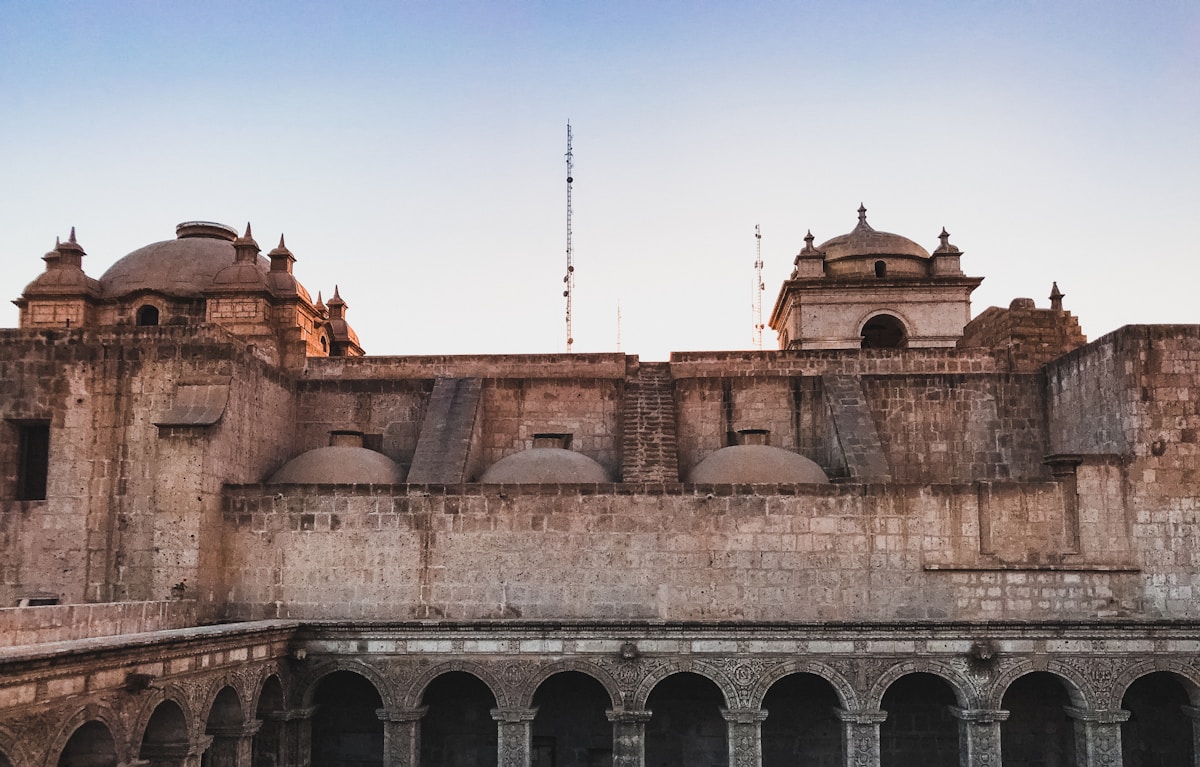
Arequipa is the most underrated city in Peru. Built almost entirely from white sillar volcanic stone cut from the El Misti volcano above it, the city centre is a UNESCO World Heritage site that rivals Cusco in architectural quality while drawing a fraction of the visitors. The pace is slower, the food scene more distinctive, and the surrounding landscape - volcanoes, high-altitude lakes, and the world’s second-deepest canyon - puts serious outdoor options within a day’s reach. At 2,335 metres, altitude is rarely an issue for most visitors arriving from sea level.
Monasterio de Santa Catalina
The single unmissable sight in Arequipa. Santa Catalina was founded in 1579 as a Dominican convent and grew into a walled city that housed up to 450 nuns, servants, and residents at its peak. The nuns - many from wealthy Spanish families - lived in comfortable individual cells, employed personal servants, and had almost no contact with the outside world. The convent operated in total isolation until 1970.
Entry costs approximately S/45 as of 2026; open daily 09:00–17:00 (last entry 16:00). Night tours run on specific evenings for approximately S/60 - worth it for the dramatically lit streets and plazas when the complex is far quieter. Allow 2–2.5 hours for a thorough visit. The colour-washed streets (Calle Roja in terracotta, Calle Azul in deep blue) and the scale of the complex are genuinely impressive. A guide inside the monastery costs approximately S/20 extra and adds considerable context.
Plaza de Armas
Arequipa’s main square is one of the most attractive in Peru. The Cathedral stretches the full length of the north side - an unusual design for a Peruvian cathedral - flanked by symmetrical arcaded walkways of cut sillar stone. Construction of the current Cathedral began in 1621 and was completed after a series of earthquakes and fires; what you see today dates largely from the 19th-century reconstruction.
The Cathedral interior is free to visit during religious hours (approximately 07:00–11:30 and 17:00–19:00). A paid museum section (approximately S/10, open 10:00–17:00) contains a Belgian pipe organ, colonial artwork, and cathedral treasury. The square itself is active throughout the day: shoe shiners, vendors selling anticuchos in the evening, and a consistent flow of local families at dusk. The view of El Misti volcano rising directly behind the city is best from the north end of the plaza on a clear morning.
Mirador de Yanahuara
The most rewarding viewpoint in Arequipa: a small plaza on a hill in the residential Yanahuara district, approximately 20 minutes on foot or S/5–S/8 by taxi from the centre. The arcade of sillar arches frames the view of the city and El Misti directly behind it - the classic Arequipa photograph. The plaza also contains the Yanahuara church (San Juan Bautista), a fine example of mestizo baroque architecture with an intricately carved sillar facade.
The mirador is best at dawn or late afternoon when the light is on the volcano and the city below. The surrounding Yanahuara district is a pleasant neighbourhood to walk through - several good café and restaurant options within two blocks of the plaza.
El Misti Volcano
The 5,822m dormant volcano directly above Arequipa is visually present from almost every point in the city. Climbing it is a legitimate two-day undertaking for fit visitors with proper acclimatisation - not a casual day hike, but also not requiring technical climbing skills. The standard route involves camping at approximately 4,600m and a 3–5 hour pre-dawn summit push.
All climbers require a permit (included in agency packages) and must register before ascending. Agencies in Arequipa running the two-day climb include Carlos Zarate Expeditions (established operator, consistently recommended) and Pablo Tour, with packages from approximately USD 70–USD 120 per person as of 2026, including guide, equipment, transport, and camping. Do not attempt this without at least two days of acclimatisation in Arequipa first.
For those who want the views without the climb: the road to the Aguada Blanca reserve reaches approximately 4,000m and gives clear views of both El Misti and Chachani (6,057m) from a vehicle. Tour agencies run half-day 4WD excursions for approximately USD 25–USD 40 per person.
Mercado San Camilo
Arequipa’s central market, four blocks from Plaza de Armas. Open daily approximately 06:00–18:00; free to enter. This is where the city feeds itself. The prepared food section serves filling set lunches (menú del día) for approximately S/8–S/15: soup, main course with rice and potatoes, and a drink. The chupe de camarones (Arequipa’s signature shrimp soup) and adobo (pork stew) appear on stall menus most mornings.
The produce section is worth walking through for the variety of Andean dried goods - quinoa, kiwicha, dried chillies, freeze-dried chuño potatoes - that are difficult to find in tourist markets. The cheese section stocks sillar-aged cheeses from the Arequipa countryside.
Museo Santuarios Andinos (The Frozen Mummies)
One of the most remarkable museum exhibits in South America. The museum houses Juanita, a 12–14-year-old Inca girl whose mummified remains were discovered on the summit of Ampato volcano (6,288m) in 1995 by archaeologist Johan Reinhard. The preservation - achieved naturally by the extreme cold and dry conditions - is extraordinary; she has been described as the best-preserved pre-Columbian mummy in the world.
Entry costs approximately S/30 as of 2026; guided tours only (in English and Spanish), departing every 30 minutes. Open Monday–Saturday 09:00–18:00. The guided format is actually appropriate - the exhibit includes supporting artefacts (textiles, ceramics, food offerings found at the summit), and the context significantly adds to what you see. Allow 1–1.5 hours.
Molino de Sabandia
A restored 17th-century water mill in the Sabandia valley, 8km southeast of the city centre. The rural surroundings - irrigated farmland, sillar stone walls, and the volcanoes above - provide a complete contrast to the city. Entry approximately S/10 as of 2026; open daily 09:00–17:00. The mill still functions and grinds grain during visits.
Combined trips to Sabandia typically include the Mansión del Fundador (a 16th-century colonial house, entry approximately S/15) and the Mirador de Sachaca with views over the Chili river canyon. Taxis from the centre to Sabandia run approximately S/20 return if you negotiate to wait.
When to Visit
Arequipa’s dry season runs May through December - clear skies, cold nights, and ideal conditions for outdoor excursions and volcano views. June and July are the coolest months with nights dropping to 5–8°C; days remain sunny and warm (18–22°C). The wet season from January through March brings afternoon rain, mist on the volcanoes, and green hillsides, but most attractions remain fully accessible.
For Colca Canyon excursions, May through October is the recommended window - clearest conditions for condor sightings and canyon views. See our day trips from Arequipa guide for transport options and what to expect at Colca. For where to stay, the Arequipa accommodation guide covers all neighbourhood options. To book city tours, Colca day trips, or guided monastery visits in advance, browse Arequipa tours. Search hotels in Arequipa on Booking.com
Arequipa: More Resources
- Arequipa Travel Guide - Transport to Arequipa, altitude overview, and the full city introduction.
- Arequipa Food Guide: What to Eat - Rocoto relleno, chupe de camarones, picanterías, and queso helado with prices and where to find them.
- Day Trips from Arequipa - Colca Canyon, Toro Muerto petroglyphs, and El Misti volcano logistics.
- Colca Canyon Trek Guide - The 2-day descent to the canyon oasis, condor spotting at Cruz del Cóndor, and how to book a guided tour.
- Colca Canyon Tours from Arequipa - Guided 2-day tours, what’s included, and operator comparisons.
- Cusco vs Arequipa - How the two Andean cities compare if you are deciding how to divide your highland time.