Peru is a big country with extraordinary geography - coastal desert, high Andes, and Amazon jungle - and no single transport mode works for every journey. Here’s a practical breakdown of every option, what it costs, and when to use it.
Domestic Flights
For long hops - especially Lima to Cusco, Lima to Arequipa, or Lima to Iquitos - flying is almost always worth it. The Lima–Cusco route takes roughly 1 hour 20 minutes by air versus 20+ hours overland.
Airlines operating domestic routes (as of 2026):
- LATAM Peru - largest network, most reliable on-time record, Lima–Cusco fares from approximately $50–100 one-way depending on season and advance booking
- Sky Airline - budget carrier, similar routes, often slightly cheaper but less legroom
- JetSmart - newest entrant, ultra-low fares but strict on baggage; budget $15–25 extra each way for a checked bag
Booking tips:
- Book at least 2–3 weeks ahead for peak season (June–August, Christmas, Semana Santa)
- Fares spike sharply in the final week - we’ve seen Lima–Cusco hit $200+ on last-minute purchases
- JetSmart and Sky often have sale fares of $30–40 if you’re flexible; sign up for their email alerts
- Always reconfirm the flight the day before - domestic cancellations due to Andean weather are not uncommon
For full detail on flying into Peru and connecting flights, see our flights to Peru guide.
Long-Distance Buses
Peru’s bus network is extensive and, on reputable carriers, surprisingly comfortable. For routes where the scenery is part of the experience - the Lima–Arequipa coastal highway at sunset, for example - a premium overnight bus can be a genuine pleasure.
Recommended operators:
- Cruz del Sur - the benchmark, Ejecutivo class has wide reclining seats and meals included; Lima–Cusco approximately $40–70 as of 2026, Lima–Arequipa from $30
- Oltursa - strong on Lima–Arequipa and Lima–Trujillo, similar quality to Cruz del Sur, often slightly cheaper
- Civa - good mid-range option, serves more provincial routes
- Tepsa - reliable for northern coastal routes (Lima–Chiclayo, Lima–Piura)
Service tiers (pricing varies by operator):
- Económico - standard reclining seat, fine for daytime journeys under 5 hours
- Semi-cama - ~140° recline, footrest, best value for overnight
- Cama/Suite - 180° flat bed on double-decker coaches; worth the extra $10–20 for journeys over 10 hours
Booking: Buy directly on operator websites or at the terminal. The Central Bus Terminal in Lima (Javier Prado) consolidates most services but individual company offices nearby have the same fares without the commission touts. Book at least a day ahead for weekends; 1–2 weeks ahead for high season.
For a full rundown of overnight bus routes, tiers, and safety notes, see our Peru bus travel guide.
Colectivos
Shared taxis or minivans running fixed routes between towns. Ubiquitous throughout Peru, colectivos leave when full (typically 4–6 passengers) and cost a fraction of private taxi fares.
Best for: Short to medium regional hops - Sacred Valley to Pisac, Cusco to Urubamba, Arequipa to Chivay (Colca Canyon). Also common for cross-border routes.
Costs: Typically $1–5 for journeys under 2 hours as of 2026.
Limitations: No fixed timetable, luggage space is minimal, driving standards on mountain roads vary. For long routes with passes above 4,000m, the risk profile is higher than a reputable bus company.
Trains: The Machu Picchu Route
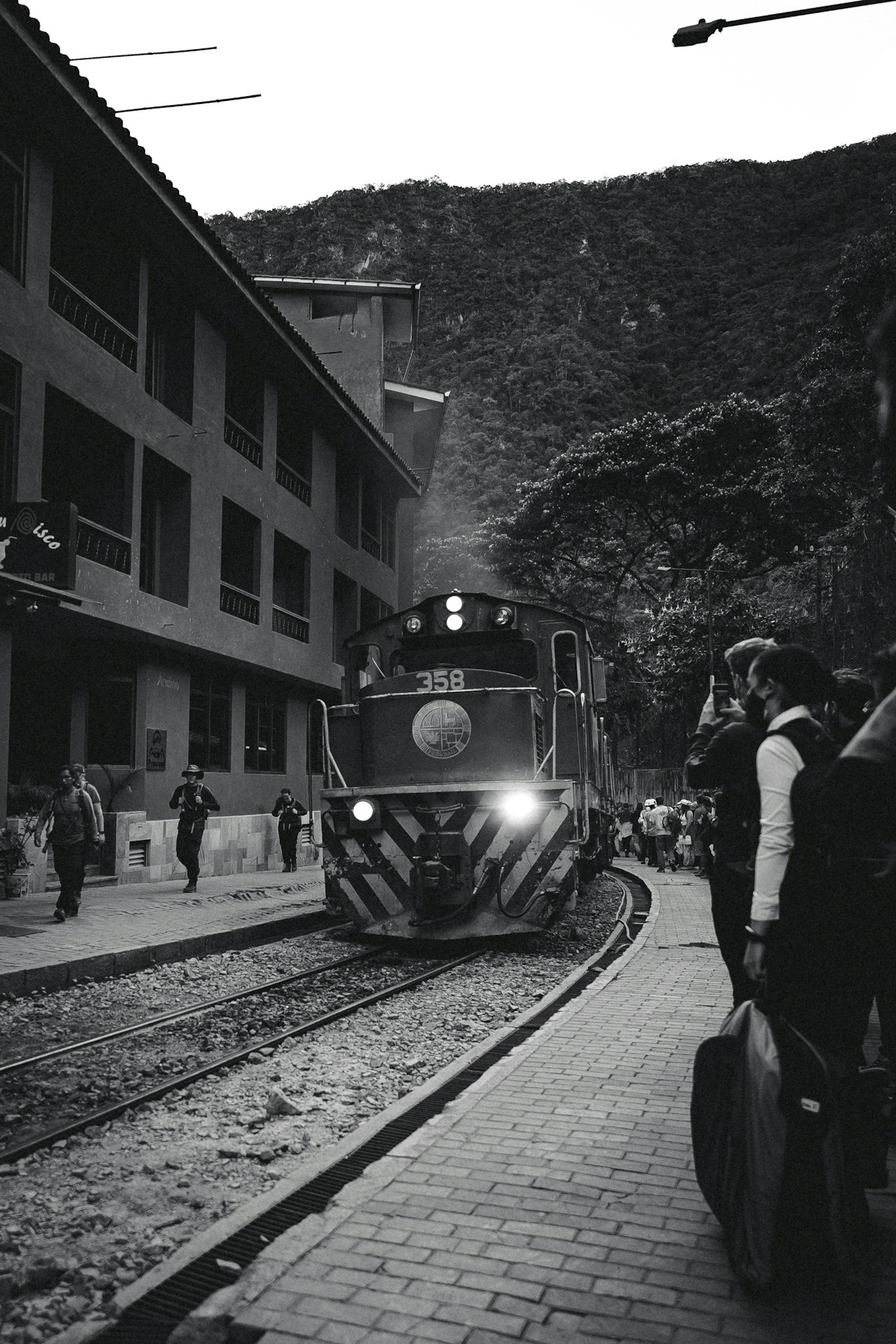
The only passenger rail network of significance in Peru serves the Sacred Valley - specifically the Cusco–Aguas Calientes route that gets you to Machu Picchu. There are no through trains between Lima and Cusco; the domestic aviation and bus network covers everything else.
Operators:
- PeruRail - multiple service classes: Expedition (budget, from approximately $60 one-way), Vistadome (panoramic windows, from ~$80), and Belmond Hiram Bingham (luxury, from ~$200, includes meals and entertainment)
- Inca Rail - competitor with similar tiers, often slightly cheaper than PeruRail’s equivalent classes; Primera class from approximately $55 as of 2026
Key facts:
- Trains depart from Poroy (30 min from Cusco by taxi), Ollantaytambo, or Urubamba depending on service
- Journey from Ollantaytambo to Aguas Calientes: approximately 1.5 hours through spectacular mountain scenery
- Book early - trains sell out weeks ahead in high season. We recommend booking the moment your Cusco dates are confirmed
For a complete guide including current timetables, platform tips, and the bus from Aguas Calientes to the Machu Picchu gate, see our Cusco to Machu Picchu guide. For the Lima–Cusco leg, see our Lima to Cusco guide.
Taxis
Taxis in Peru are unmetered outside Lima and Cusco’s official taxi services. Always agree the price before getting in.
Lima:
- Official radio taxis (Taxi Seguro, CMV) have fixed fares and are the safest option - Miraflores to Barranco approximately S/15–20 (about $4–5) as of 2026
- Street taxis (yellow-and-black) are cheaper but carry higher theft risk; if using them, confirm the fare, lock the doors, and don’t share with strangers
- Miraflores airport taxi to central Lima: officially around S/60–80 ($16–21); avoid the aggressive airport taxi touts and book through the official desk inside arrivals. For a pre-booked fixed-price pickup with a named driver, Kiwitaxi is a solid option for first arrivals or late-night flights. GetTransfer’s bid model can surface cheaper rates, particularly for off-peak journeys.
Cusco:
- Most short journeys around the centre are S/5–10 (approximately $1.50–3)
- Fixed-fare taxi stands outside the Plaza de Armas are reliable
Safety note: Use official radio taxis or app-based rides for night journeys. Pirate taxis (unmarked cars flagging down passengers) are associated with express kidnapping in Lima - this is not a rare event.
Rideshare: Uber and InDrive
Uber operates in Lima and has been expanding - reliable in Miraflores, San Isidro, Barranco, and Surco. Surge pricing applies during rush hour; fares are broadly comparable to radio taxis. Uber is the safest option for solo travellers after dark in Lima.
InDrive is popular across Peru including Cusco, Arequipa, and mid-sized cities. Passengers propose a fare and drivers accept or counter-offer - it consistently runs cheaper than Uber on the same routes. Works well once you understand the negotiation mechanic.
Cabify - available in Lima, generally higher-end vehicles, slightly pricier.
Neither Uber nor InDrive operates reliably outside major cities. For transfers between towns, colectivos or private taxis arranged through your accommodation are the practical options.
Tuk-Tuks (Mototaxis)
Three-wheeled auto-rickshaws are everywhere in smaller Peruvian cities: Iquitos, Tarapoto, Pucallpa, Puerto Maldonado, and dozens of provincial towns. They’re the default short-distance transport where there’s no Uber.
Costs: S/2–5 for a short town journey as of 2026; negotiate before boarding.
What to know: Useful for getting from a bus terminal to your hotel in a small town. In jungle cities like Iquitos they’re practically the only in-town option. Not recommended for night journeys in unfamiliar areas - agree the fare, keep valuables out of sight.
Renting a Car
Renting a car in Peru is practical in a narrow set of circumstances: exploring the Colca Canyon from Arequipa, or the Sechín archaeological sites near Casma. It is not recommended for Lima (traffic, aggressive driving, parking theft) or the Cusco–Sacred Valley circuit (altitude, narrow mountain roads, and the convenience of colectivos and taxis).
Major international companies (Hertz, Avis, Budget) operate at Lima airport. An international driving licence is technically required; your home country licence is accepted in practice but keep the international permit for police stops. Fuel costs approximately S/18–20 per litre for regular as of 2026.
Quick Reference: Costs and Journey Times
| Route | Mode | Approx. Cost (2026) | Journey Time |
|---|---|---|---|
| Lima → Cusco | Flight (LATAM/Sky) | $50–100 | ~1h 20min |
| Lima → Arequipa | Bus (Cruz del Sur Cama) | $35–50 | ~15–16h |
| Lima → Arequipa | Flight | $50–90 | ~1h 15min |
| Cusco → Aguas Calientes | Train (PeruRail Expedition) | ~$60 | ~3.5h from Cusco |
| Cusco → Aguas Calientes | Train (Inca Rail Primera) | ~$55 | ~3.5h from Cusco |
| Cusco → Pisac | Colectivo | ~$1.50 | ~45min |
| Lima city journey | Uber/InDrive | $3–8 | varies |
All prices are approximate as of 2026 and can change with fuel costs and seasonal demand.
Plan Your Trip
✈️ Book your flights to Peru 🛡️ Get travel insurance 📱 Stay connected with an eSIM 🚗 Rent a car