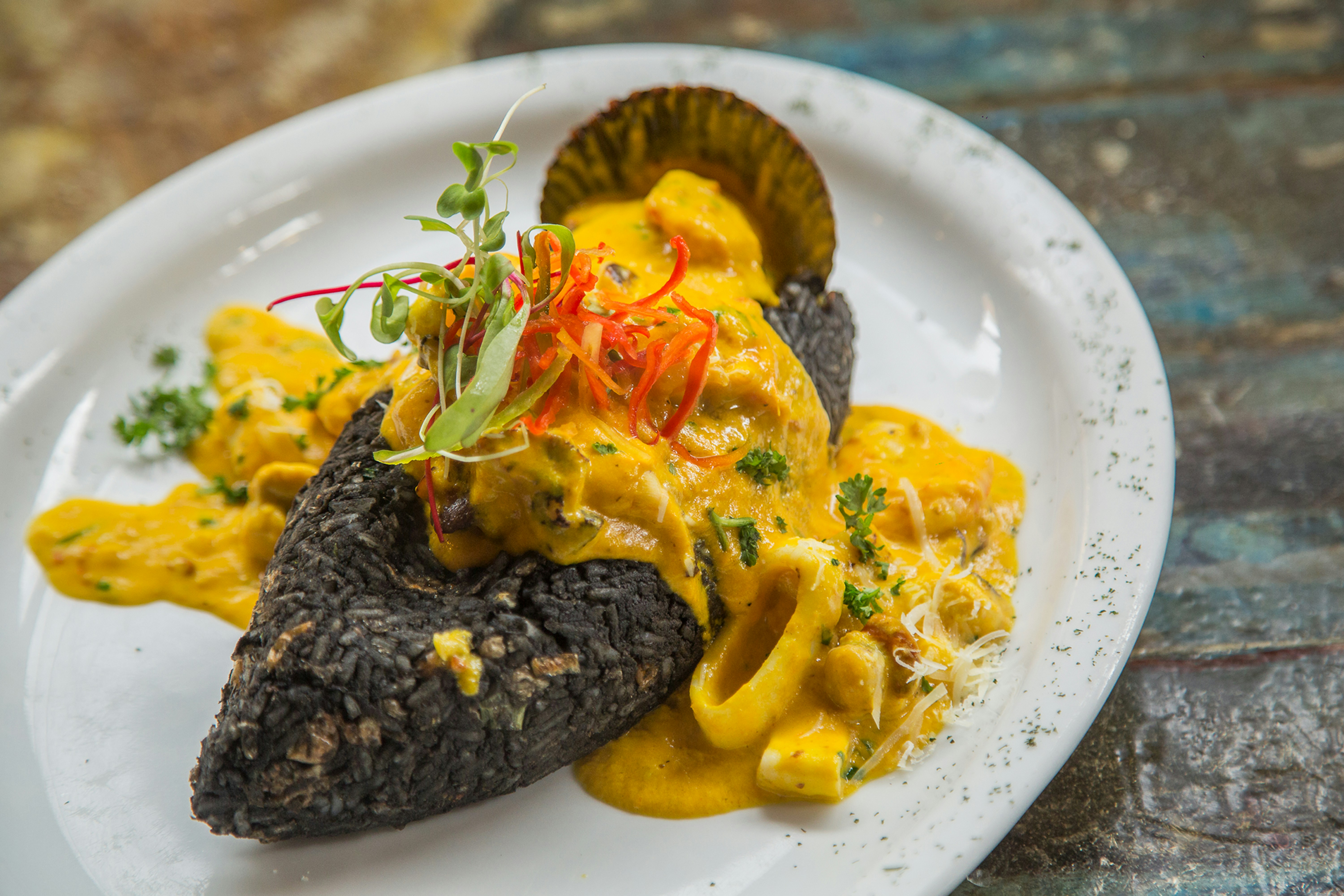
Arequipa has a stronger claim to being Peru’s culinary capital than Lima. The city’s cooking tradition is older, more rooted in the Andean agricultural landscape, and almost entirely distinct from coastal Peruvian cuisine. Dishes here are defined by local chillies, highland herbs, slow-cooked proteins, and fermented corn - a tradition maintained in picanterías that have operated on the same recipes for generations. Lima gets the international attention, but Arequipa is where Peruvian food is most itself.
Rocoto Relleno
The signature dish of Arequipa and one of the most distinctive things to eat in all of Peru. The rocoto is a medium-to-large Andean chilli with thick walls that holds its shape when stuffed and baked. It is filled with ground beef sautéed with onion, garlic, and local spices, layered with black olives, hard-boiled egg, and a generous amount of melted cheese. The stuffed pepper is typically served alongside papas al gratin (potato gratin) on the same plate.
The heat level varies considerably between picanterías. Traditional preparation involves soaking the pepper in boiling water and sugar to mellow the capsaicin - if you are sensitive to spice, ask for it suavizado. The dish at its best has a fruity, persistent warmth rather than a sharp burn. At Mercado San Camilo, market stalls serve portions for approximately S/12–S/18. Picanterías charge approximately S/20–S/35 as of 2026.
Chupe de Camarones
Arequipa’s most celebrated soup, and one of the most complex dishes in the Andean kitchen. Made from local river shrimp (camarones del río Chili), potatoes, broad beans, corn, milk, eggs, and the local highland chilli ají mirasol, the result is thick, rich, and deeply flavoured - closer to a bisque than a broth. The shrimp come from the Río Chili and Río Majes tributaries that run through the region.
This is a morning and midday dish - most picanterías serve it from 11:00 until it runs out, which is often before 14:00. Finding it at dinner is unusual. Prices at picanterías run approximately S/25–S/45 per bowl as of 2026; the quality gap between a proper picantería version and a tourist restaurant imitation is significant. La Nueva Palomino (Calle Leoncio Prado, open daily 11:00–17:00) is the most reliable version in the city.
Adobo Arequipeño
A slow-cooked pork stew made from pork ribs or shoulder marinated and braised in chicha de guiñapo (fermented purple corn beer) with dried chillies, garlic, cumin, and oregano, then served in a clay pot with bread for soaking the sauce. Unlike adobo from other regions of Peru, the Arequipa version uses chicha as the primary braising liquid, giving it a distinctive sour, malty depth.
Adobo is a breakfast dish in Arequipa - eaten between 07:00 and 10:00 - which surprises most visitors expecting it at lunch or dinner. Markets and picanterías serve it in the morning; by midday it is typically sold out. Find it at Mercado San Camilo (approximately S/12–S/18 per clay pot) or at dedicated picanterías that open early. Eat it with pan de tres puntas (the local three-pointed bread) if available.
Ocopa Arequipeña
A cold sauce and potato dish specific to Arequipa. Boiled yellow potatoes are topped with a sauce made from ají mirasol chilli blended with roasted peanuts, huacatay (Andean black mint), evaporated milk, fried onion, and crumbled fresh cheese. The result is nutty, mildly spicy, and herbal - unlike any sauce found elsewhere in Peru. Huacatay has a distinctive flavour that reads as a cross between mint, marigold, and basil; there is no direct substitute.
Ocopa appears as an entree (starter) at most picanterías and traditional restaurants. A portion costs approximately S/12–S/20 as of 2026. The variant called causa Arequipeña uses the same sauce on layered potato terrine instead of whole boiled potatoes.
Picanterías - How They Work
A picantería is not quite a restaurant in the conventional sense. Most are family homes that open their main room for the midday meal (roughly 11:00–16:00), serve a fixed sequence of dishes, and close when the food runs out. There is no printed menu - you get what was made that day. The format: you are seated, chicha de guiñapo arrives (the traditional fermented corn beer that has been made in Arequipa since pre-Inca times), then soup, then a main course of one of the classic dishes.
La Nueva Palomino (Calle Leoncio Prado 122, open daily 11:00–17:00) is the most famous and consistently well-reviewed picantería in Arequipa. The chupe de camarones and rocoto relleno are both excellent. Expect to wait 20–30 minutes for a table at peak times on weekends. A full lunch with chicha costs approximately S/35–S/55 per person as of 2026.
Tradición Arequipeña (Calle Pierce 111, open daily 11:00–17:00) is a larger operation but maintains quality. Known particularly for its adobo and queso helado dessert. Slightly more tourist-oriented than La Nueva Palomino but with reliable output.
El Buen Gusto (Calle Consuelo, near Mercado San Camilo) is a smaller, less-known option that locals use - cheaper, no written menu, and the kind of place where the morning’s soup is always the local seasonal version. Prices approximately S/10–S/20 per plate as of 2026.
Queso Helado
Arequipa’s own ice cream, sold everywhere and worth seeking out specifically. The name is misleading - it contains no cheese. Queso helado is made from evaporated milk mixed with coconut milk, sugar, vanilla, and cinnamon, then frozen and served dusted with additional cinnamon powder. The texture is dense and creamy, closer to semifreddo than churned ice cream, with a mild sweetness and a pronounced coconut note.
Find it at Mercado San Camilo (approximately S/3–S/5 per portion), from street vendors around Plaza de Armas in the evenings, and at dedicated dessert shops in the Yanahuara and Vallecito neighbourhoods. It is the standard end to a picantería lunch.
Chicha de Guiñapo
The fermented purple corn beer that is the traditional drink of Arequipa. Unlike chicha de jora (made from yellow germinated corn), chicha de guiñapo uses a specific variety of purple maize (maíz negro) that has been grown in the Arequipa valleys since pre-Inca times. The result is darker, slightly fruitier, and less sour than chicha de jora. Most picanterías produce their own; quality varies considerably, with the best versions having a live, slightly effervescent quality.
It is served in large glasses (a portion called a vaso or cuartillo) as the opening drink at any traditional picantería. It is low in alcohol (approximately 2–4% by volume depending on fermentation). Street vendors selling chicha by the glass near Mercado San Camilo charge approximately S/2–S/4. Houses with a white flag or bunch of herbs hung outside traditionally indicate chicha is available inside.
Restaurants Beyond Picanterías
For evenings, or for visitors who prefer a restaurant format:
Zig Zag (Calle Zela 210, open daily 12:00–23:00) is Arequipa’s most established upscale restaurant, specialising in Andean proteins - alpaca, lamb, and river shrimp - cooked over volcanic stone grills. Mains approximately USD 18–USD 30 as of 2026. A reliable choice for a special meal; the volcanic grill presentation is distinctive.
Chicha por Gastón Acurio (Santa Catalina 210, open daily 12:00–22:00) is the Arequipa outpost of Lima’s most celebrated chef. The focus is elevated versions of classic Andean dishes, using Arequipa’s native ingredients. Mains approximately USD 20–USD 35 as of 2026. Reservation recommended for dinner.
Mercado San Camilo food hall - for budget eating the prepared food section on the market’s upper level offers complete Arequipeño meals from approximately S/10–S/20. The set lunch plates here are not tourist approximations; they are what the city’s working population eats at midday.
For a full restaurant guide covering every price tier, see our Arequipa city hub. For planning your time in the city, see things to do in Arequipa. To pair a food tour with a city walking tour, browse guided Arequipa experiences that combine the market, picanterías, and historic centre in a single morning.
Arequipa: More Resources
- Arequipa Travel Guide - Transport, accommodation overview, and the city’s top sights.
- Things to Do in Arequipa - Santa Catalina Monastery, Yanahuara viewpoint, the ice mummy museum, and what to prioritise on each day.
- Day Trips from Arequipa - Colca Canyon tours, Toro Muerto petroglyphs, and El Misti volcano.
- Where to Stay in Arequipa - Hotels by neighbourhood: historic centre vs suburbs, budget to luxury.
- Colca Canyon Trek Guide - The 2-day descent, condor sightings at Cruz del Cóndor, and tour logistics from Arequipa.
- Arequipa vs Puno - How Arequipa and Puno compare as stops on the southern Peru circuit.