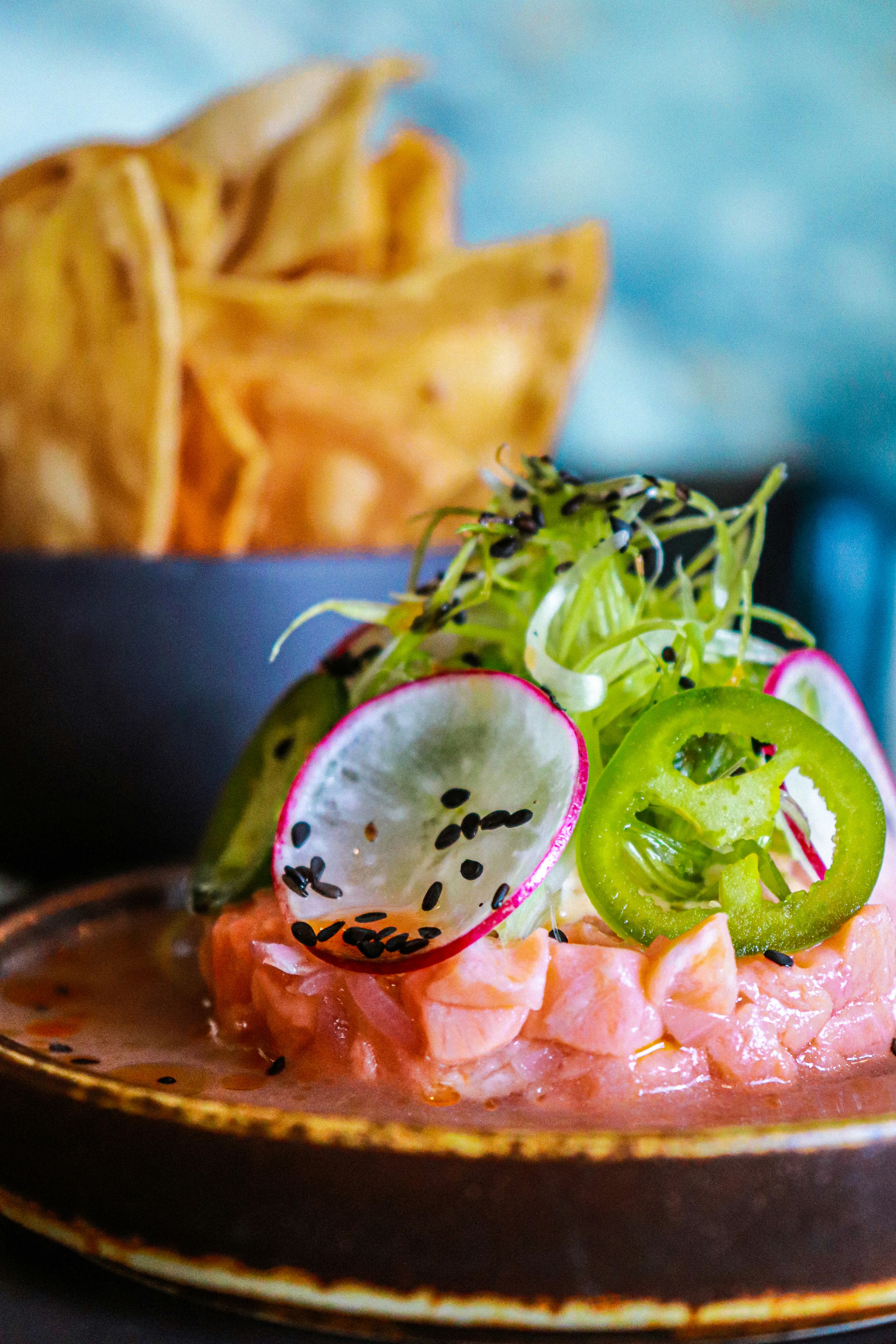
Lima’s global standing as a food city is genuine, not a PR exercise. Multiple restaurants have ranked in the World’s 50 Best for over a decade; the city’s ceviche is copied on menus from London to Tokyo; Peruvian food has become one of the most replicated international cuisines of the past twenty years. Understanding why this happened requires understanding Lima’s geographic position and its history of immigration - because Lima’s cuisine did not arrive fully formed. It was built slowly, by successive waves of people who arrived, could not reproduce what they knew, and created something new instead.
The Geographic Foundation
Lima sits at sea level on Peru’s Pacific coast, at a point where three ingredient ecosystems converge: the Pacific Ocean to the west (delivering extraordinary seafood via the Humboldt Current), the Andean highlands 150km to the east (providing potatoes, quinoa, chillies, and altitude-farmed produce), and the Amazon basin beyond the Andes (adding tropical fruits, jungle herbs, and freshwater fish).
No other capital city in South America occupies this position. The convergence produces an ingredient diversity that would be difficult to replicate elsewhere: fresh Pacific fish and shellfish, 3,000+ native potato varieties from the Andes, ají amarillo and huacatay herb from highland farms, lucuma, cherimoya, and maracuyá from coastal valleys and jungle. A single Mercado de Surquillo shopping run can collect ingredients from all three ecosystems on the same morning.
The Humboldt Current is the specific reason Lima’s ceviche matters. The current runs up the South American coast from Antarctica, keeping the water cold and nutrient-rich. Cold Pacific waters produce denser, firmer fish with cleaner fat - particularly corvina (Peruvian sea bass) and lenguado (flounder), the two fish most associated with Lima ceviche. The acid denaturation technique that “cooks” ceviche works best on this type of fish, in this ocean, at this latitude.
The Nikkei Story: Japan Meets Peru
In 1899, the Sakura Maru arrived in Callao carrying 790 Japanese contract workers - the first wave of what would become one of the largest Japanese communities outside Asia. They came to work in sugar plantations and farming cooperatives; many eventually settled in Lima.
Japanese immigrants opened food stalls and small restaurants but could not source the ingredients of traditional Japanese cooking. There was no dashi kombu, no mirin, no miso. There was, however, excellent raw fish - and there was Peru’s native ingredient palette.
The adaptation was not a creative exercise: it was a necessity. Japanese cooks began using ají amarillo where they had used shichimi. They dressed raw fish with lime and chilli instead of soy sauce. They applied the Japanese technique of thin-slicing fish (sashimi) to the Peruvian tradition of dressing it in acid. The result was tiradito: raw fish sliced carpaccio-thin, dressed with a chilli and citrus sauce - a Japanese form with entirely Peruvian flavour.
Nikkei cuisine expanded from there. Japanese-influenced ceviches, leche de tigre variations using ponzu-style citrus, wok-cooked rice dishes with Andean ingredients, and a cooking philosophy that prized precision and technique produced a tradition now represented at the highest level by Maido (Chef Mitsuharu Tsumura, consistently in the global top ten) and dozens of Nikkei restaurants across Miraflores, San Isidro, and Barranco.
The Chifa Story: China Meets Peru
A generation before the Japanese arrivals, Chinese immigrants came to Peru under far harsher circumstances. Between 1849 and 1874, approximately 100,000 Cantonese laborers were brought to Peru as indentured workers - to build railways, work guano mining operations, and harvest sugar. After their contracts ended, many settled in Lima, establishing what became Barrio Chino (Calle Capón), one of the oldest Chinatowns in South America.
Cantonese cooking in Peru underwent a transformation similar to what happened with Japanese cooking: the technique remained, the ingredients shifted. Cantonese cooks had woks, soy sauce, and the principle of high-heat stir-frying. In Peru, they applied this to local meats, chillies, and vegetables. Lomo saltado - beef strips, onion, tomato, ají amarillo, and potato stir-fried in a wok with soy sauce and vinegar, served with rice and chips - is the direct product of this fusion. It is now so embedded in Peruvian food culture that it appears on menus nationwide and is eaten daily across all social classes. Most Peruvians do not think of lomo saltado as fusion food; it is simply food.
Chifa restaurants (from the Cantonese 吃饭, chī fàn, meaning “eat rice”) operate across Lima and throughout Peru. The most concentrated cluster remains around Barrio Chino, where several restaurants have served dim sum and chifa dishes in a neighbourhood that has operated continuously since the 19th century.
African Influence: The Street Food Tradition
Spanish colonizers brought enslaved Africans to Lima from the 16th century onward. Enslaved workers received the cheapest cuts of meat: offal, tripe, heart, and intestines. Rather than treating this as a limitation, cooks developed preparations that made these cuts into something excellent.
Anticuchos - skewered beef heart, marinated in vinegar, ají panca, garlic, and cumin, then grilled over charcoal - originated in this tradition. The marinade tenderises the heart and balances its iron-rich flavour; the charcoal grill adds smoke and char. Today, anticucheras set up grills throughout Miraflores and Barranco from approximately 19:00 onward. The dish that began as the food of the enslaved is now Lima’s most democratic street food - eaten by everyone from market workers to diners leaving a tasting menu.
Picarones (Peruvian doughnuts made from squash and sweet potato, served with chancaca molasses) and ají de gallina’s thick peanut-bread sauce also carry traces of Afro-Peruvian cooking tradition, though both evolved substantially over centuries of adaptation.
Spanish Colonial Food and the Peruvian Kitchen
Spanish colonial cooking shaped Lima’s food through ingredient introduction and technique. Olive oil, wheat flour, dairy products, and European livestock (cattle, pigs, chickens) arrived with the Spanish and were absorbed into the existing coastal and Andean food tradition.
Causa - cold potato terrine layered with chicken or tuna salad - uses a Spanish salad form applied to the Andean potato. Ají de gallina - shredded chicken in a sauce of ají amarillo, bread, walnuts, and Parmesan - reads like a blanquette de volaille seen through a Peruvian lens. Arroz con leche and mazamorra morada (purple corn pudding) are both Spanish-origin desserts adapted to local sweeteners and starches. These dishes are now so embedded in the Peruvian food repertoire that their colonial origins are rarely considered.
The Novoandina Movement and Global Recognition
By the late 1980s, a generation of Peruvian chefs - trained in Europe but working in Lima - began a deliberate project to return to Andean ingredients. Quinoa, kiwicha, purple corn, lucuma, and cañihua had been associated with poverty food and rural subsistence; Novoandina (New Andean) cooking reframed them as premium, culturally significant ingredients worth treating with the same seriousness applied to European produce.
Gastón Acurio, whose flagship Astrid y Gastón opened in 1994, was central to making this project internationally visible. His network of restaurants made Peruvian cuisine a recognisable global category rather than a regional unknown. Virgilio Martínez at Central took it further: the tasting menu is organised by ecosystem altitude - each course represents a specific elevation zone, from the Pacific floor to the high-altitude puna - using ingredients sourced from across Peru’s biodiversity. The concept is entirely specific to Lima’s position between ocean, mountains, and jungle: no other city could serve this menu.
The Leche de Tigre Technique
Leche de tigre (tiger’s milk) is the acidic marinade that defines Lima ceviche: lime juice combined with the juices released by the fish during marination, salt, ají amarillo, and sometimes ginger, garlic, or coriander. The acid denatures the fish proteins in the same way heat does - changing their structure, firming the flesh, and turning it opaque - without applying any temperature. The result is what Peruvians call “cooking in acid.”
The timing matters: most white fish needs 5–15 minutes in leche de tigre to reach the correct texture. Under-marinated fish is still raw in the centre; over-marinated fish becomes mealy and loses its flavour. At better Lima cevicherías, the fish is marinated to order and served within minutes. The marinade itself - sharp, saline, intensely flavoured - is served separately as a shot, where it functions as a palate cleanser or, as tradition holds, a hangover cure.
Mercado de Surquillo: The Ingredient Foundation
Mercado N°1 de Surquillo (Avenida Paseo de la República, Surquillo - around 10 minutes by taxi from Miraflores) is where Lima’s professional cooks shop. The ground floor sells produce: ají amarillo and ají panca by the kilo, purple corn, fresh Pacific fish, Andean potato varieties, Amazon fruits (lucuma, cherimoya, maracuyá), fresh coriander, and huacatay. A walk through the market provides a physical demonstration of the three-ecosystem ingredient diversity that underlies everything from the anticucho cart to a Central tasting menu.
For restaurant recommendations across all price tiers - from S/10 market ceviche to Maido and Central - see our Lima food guide. The Lima city guide covers transport, accommodation, and how to navigate Miraflores, Barranco, and San Isidro.
Take a Guided Food Tour of Lima
Lima’s food culture is layered enough that a guided tour rewards even experienced travellers. The best Lima food tours take in Mercado de Surquillo — where professional cooks shop in the morning and market ceviche counters serve lunch — a Miraflores cevichería, anticuchera stalls in Barranco, and a pisco tasting, all with a guide who can explain the Nikkei and Chifa traditions, identify which preparations are authentic versus tourist-adapted, and navigate between neighbourhoods efficiently. For visitors with only one or two days in Lima, a morning food tour is one of the most effective ways to experience the full arc of the city’s cuisine — from the three-ecosystem market ingredients to the finished restaurant dishes that made Lima globally famous.
Related Guides
- Lima Food Guide - Where to eat: restaurants by tier, neighbourhood guide, market eating, and practical reservation notes.
- Lima City Guide - Miraflores, Barranco, San Isidro: districts, transport, and getting around.
- Peruvian Food Guide - National dishes beyond Lima: ceviche, lomo saltado, cuy, anticuchos, and regional variations.
- Vegan Lima - Plant-based restaurants across Miraflores and Barranco.
- 3-Day Lima Itinerary - How to structure meals across a Lima visit by neighbourhood and budget tier.
Plan Your Visit to Lima
- Lima food tours & cultural experiences — Mercado de Surquillo morning visits, Miraflores cevicherías, Barranco street food, and pisco tastings
- Travel insurance for Peru — recommended before arriving; EKTA covers medical and trip disruption
- Peru eSIM — Airalo data active from Lima’s Jorge Chávez Airport on arrival