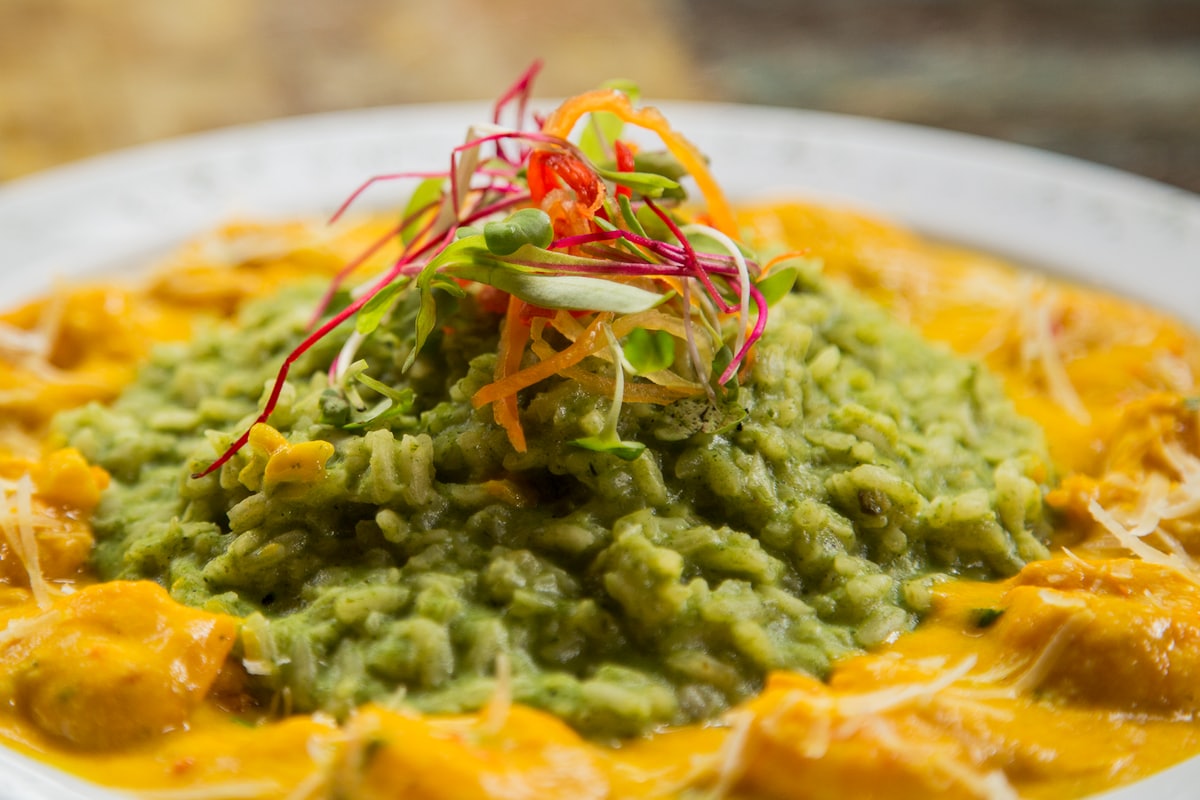
Arequipa has a stronger claim to being Peru’s culinary capital than Lima. The city’s cooking tradition is older, more rooted in the Andean agricultural landscape, and almost entirely distinct from coastal Peruvian cuisine. While Lima drives Peru’s global culinary reputation and its restaurants appear in international rankings, Arequipa’s picanterías represent an older institution: informal restaurants serving food that has changed little in three centuries, built on the same rocoto pepper that grows in the Colca Valley, the same river prawns from the Río Chili, and the same chicha de guiñapo brewed from a purple maize variety found nowhere else.
Why Arequipa’s Cuisine Is Distinct
Geographic isolation shaped Arequipa’s food culture. Sitting at 2,328m between the Pacific coast and the high Andes, with the volcanic Misti, Chachani, and Pichu Pichu peaks as its backdrop, Arequipa developed an agricultural and food tradition that did not follow Lima’s coastal patterns or Cusco’s high-altitude Inca model. The Colca Valley to the northwest, the Río Chili and its tributaries running through the city, and the volcanic soil of the region’s farmland produced specific crops and animals that shaped a cuisine impossible to replicate elsewhere.
The rocoto pepper - Arequipa’s most iconic ingredient - grows particularly well in the valley’s volcanic soil at 2,000–3,000m altitude. It is a specific variety of Capsicum pubescens with thick walls that hold their shape during baking, a fruity heat that builds slowly rather than burning immediately, and a flavour profile that milder chillies cannot substitute. The river shrimp (camarones del río) from the Río Chili and Río Majes are a freshwater species adapted to fast-flowing, cold Andean rivers - different from both ocean prawns and the river shrimp of lowland Peru. Maíz negro (black maize), the specific variety used in Arequipa’s chicha de guiñapo, grows in the valley micro-climate and has been cultivated continuously since pre-Inca times. These are not interchangeable ingredients; they define the cuisine.
The Picantería Institution
A picantería is not quite a restaurant in the conventional sense. It is a traditional Arequipa eating house - most originally operated out of family homes that opened their main room for the midday meal. The model has persisted for generations: open at noon, serve a fixed sequence of dishes from whatever was made that morning, close when the food runs out (typically by 3–4pm). No printed menus, no reservations, no modified preparations.
The format follows a traditional sequence: you arrive, chicha de guiñapo is brought in a clay cup (this is the traditional opening of every picantería lunch), then soup, then a main course from the daily selection - typically one or two options, announced verbally or written on a chalkboard. The food is cooked in large batches early in the morning using the day’s market ingredients; this is why the chupe de camarones at a good picantería is excellent but the same dish at 3pm may be inferior (the camarones dry out by the afternoon).
The picantería tradition in Arequipa has been recognized by Peru’s Ministry of Culture as cultural heritage. It is one of the few food institutions in South America where the format, recipes, and even the specific dishes on offer have remained essentially unchanged across centuries.
The Signature Dishes of Arequipa
Rocoto Relleno
Rocoto relleno is Arequipa’s most iconic dish - a whole rocoto pepper stuffed with a filling of minced beef, onion, tomato, raisins, black olives, egg, and spices, then baked until the pepper softens. It is typically served with pastel de papa - a potato gratin baked with milk, eggs, and cheese - which provides both a cooling effect and a starchy counterweight to the pepper’s heat.
The heat level of rocoto relleno varies by preparation. Traditional picanterías make no accommodation for heat preference - this is an authentic dish from a chilli-cultivating region, not a tourist adaptation. Some picanterías soak the rocoto in boiling water and sugar before stuffing to mellow the capsaicin; ask for it suavizado if you want the mildest version available. Even suavizado, it retains more heat than most Peruvian chilli preparations. The dish at its best has a fruity, persistent warmth rather than a sharp burn.
Chupe de Camarones
Chupe de camarones is Arequipa’s signature soup - a rich bisque made with river prawns (camarones) from the Río Chili, ají panca chilli, tomato, milk, cream, egg, and potato. The prawns are whole, in-shell, and considerable in size. The soup is both a first course and a substantial meal. At its best - at a picantería using same-day camarones from the morning market - it is one of the truly distinctive dishes of Peru.
Seasonal availability: Camarones from the Río Chili are subject to seasonal catch restrictions. From January to March (the breeding season), authentic chupe de camarones may not be available or will use preserved prawns. The best season for fresh camarones is April–December. A soup made with frozen prawns is a significantly different dish.
Adobo Arequipeño
Adobo is a pork stew marinated in chicha de guiñapo (Arequipa’s fermented purple corn beer), ají panca, garlic, cumin, and oregano, slow-cooked overnight until the meat falls apart and the sauce reduces to something deep and slightly sour. In Arequipa, it is eaten at breakfast on Saturday and Sunday mornings - the dish is prepared the night before and cooked overnight, ready from 7–8am. The cooking vessel is traditionally a clay pot (olla de barro), which the locals believe contributes to the flavour.
This is a breakfast dish by tradition and timing, not because it is light. A bowl of adobo with bread for dipping is a substantial, warming meal - the meal Arequipeños have historically eaten before a full day of physical work. The custom of eating adobo at dawn is one of the most specific food traditions in any Peruvian city.
Ocopa Arequipeña
Ocopa is Arequipa’s signature cold sauce and potato dish - sliced boiled yellow potatoes topped with a sauce made from mirasol chilli (dried), toasted peanuts, huacatay (black mint herb), evaporated milk, feta-style cheese, and garlic, blended together cold. The result is a thick, olive-coloured sauce with a herbal, nutty, mildly spicy flavour unlike anything else in Peruvian cooking.
Huacatay is the defining ingredient - an Andean herb with a flavour that crosses mint, marigold, and basil, with a slightly sour, earthy finish. It has no direct substitute in cuisines outside the Andes. Ocopa arequipeña serves as an entrante (starter) at most picanterías and traditional restaurants, at approximately S/12–S/20 per serving as of 2026.
Solterito
Solterito is Arequipa’s fresh salad - the one light dish in a repertoire that is otherwise rich, slow-cooked, and warming. It combines chopped fresh cheese (queso fresco), broad beans (habas), corn (choclo), olive, roasted chilli, and tomato, dressed simply with olive oil and vinegar. Served cold as a starter or side. It is the antidote to the heat of everything else on the table.
Queso Helado
Queso helado is Arequipa’s signature dessert - a milk-based sorbet made from evaporated milk, coconut, cinnamon, cloves, and vanilla, frozen in cylindrical moulds and sliced to serve. The name (frozen cheese) refers to its appearance rather than its content: there is no cheese in the recipe. Served with a dusting of cinnamon. The dessert is a colonial-era confection - the combination of evaporated milk (introduced by Spanish colonizers) and tropical coconut with local cinnamon is characteristic of the Pacific-Andean food blending that happened throughout western South America in the 16th–18th centuries.
Chicha de Guiñapo
Chicha de guiñapo is Arequipa’s specific fermented corn beer - distinct from the chicha de jora (made from yellow germinated maize) found in Cusco and other highland regions. Guiñapo refers to a specific variety of purple maize (maíz negro) grown in the Arequipa valleys since pre-Inca times. The fermentation produces a drink that is darker, slightly fruitier, and less aggressively sour than chicha de jora. It is low in alcohol (approximately 2–4% ABV depending on fermentation length) and served in large clay cups.
Chicha de guiñapo is more than a drink - it is a structural element of the picantería format. It arrives first, before any food, as both welcome and aperitif. It is also a cooking ingredient: adobo uses chicha de guiñapo as the primary braising liquid, giving the stew its distinctive malty sourness. Houses with a white flag or bunch of herbs hung outside traditionally indicate that homemade chicha is available inside.
The Culinary Geography of Arequipa
The city’s eating patterns are distributed across several distinct neighbourhoods:
Yanahuara - A quieter district across the valley from the historic centre, known for its mirador overlooking the city. Several well-regarded picanterías operate here, serving a quieter, less tourist-oriented version of the traditional format.
Centro Histórico - The Plaza de Armas area has both upscale restaurants (including Chicha por Gastón Acurio’s homage to Arequipeño cooking) and mid-range options within walking distance of the main sights.
Mercado San Camilo - The central market is one of the best single places to eat lunch on a budget. The upper floor has a row of picanterías serving full two-course lunches (soup + main + chicha) for S/12–S/20. This is also the place to find queso helado, buy rocoto peppers, and observe Arequipa’s ingredient supply chain in person.
For specific restaurant recommendations - picanterías, mid-range options, and upscale cooking - across all price tiers, see what to eat in Arequipa. For transport, accommodation, and the city’s main sights, see the Arequipa city guide.
Take a Food Tour of Arequipa’s Picanterías
Arequipa’s picantería tradition is one of the hardest food cultures to navigate independently: these are informal, family-run establishments with no printed menus, no reservations, and limited tourist-facing signage. A guided food tour navigates this — taking you through Mercado San Camilo, into Yanahuara picanterías, and through the logic of how a traditional Arequipeño meal sequences (chicha de guiñapo first, then soup, then the main). Guides can identify which rocoto relleno preparations use suavizado chillies versus the full-heat version, explain why chupe de camarones is unavailable in January, and find the stalls serving queso helado that close by early afternoon. This is the kind of context that makes the difference between eating well in Arequipa and missing its best food entirely. Browse Arequipa food and picantería tours on GetYourGuide.
Related Guides
- What to Eat in Arequipa - Specific restaurants and picanterías across all price tiers, with addresses and practical notes.
- Arequipa City Guide - Transport, accommodation overview, and the city’s top sights.
- Things to Do in Arequipa - Santa Catalina Monastery, Yanahuara viewpoint, and what to prioritise.
- Day Trips from Arequipa - Colca Canyon tours and El Misti volcano.
- Peruvian Food Guide - National dishes and how Arequipa’s cuisine relates to the broader Peruvian food tradition.
Plan Your Visit to Arequipa
- Hotels in Arequipa — accommodation across the historic centre, Yanahuara, and the suburbs, at every price tier