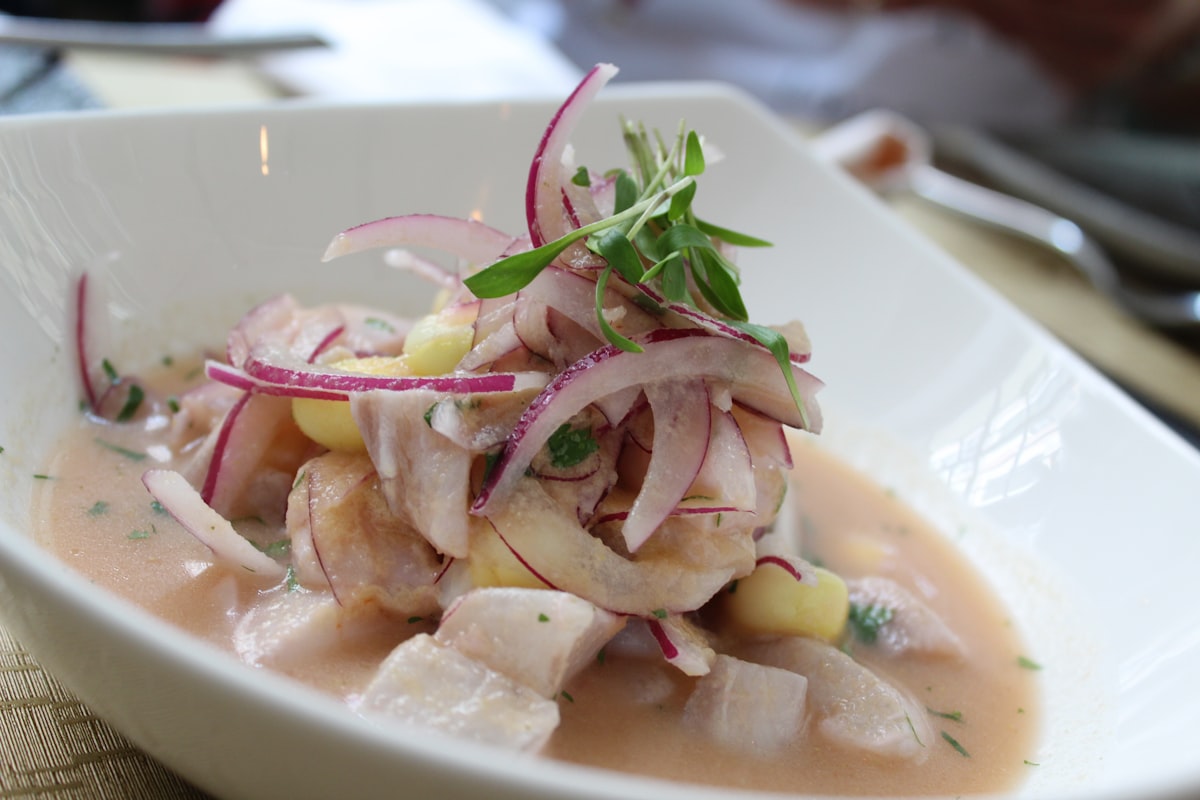
Ceviche is Peru’s national dish, its most exported food, and - in the opinion of most serious eaters - one of the great dishes of the world. The preparation is technically simple: raw fish cured in lime juice with ají amarillo chilli, red onion, salt, and coriander. The reality is an entirely different conversation. The quality of the fish, the balance of acid and heat, the proportions of onion, the choice of garnish, and the regional identity of the cook produce results that vary enormously across Peru’s coastline and cities.
This guide covers the key regional styles, the best cevicherías to visit, and how to navigate a ceviche menu if you’re eating it for the first time.
The Basics: What Makes Peruvian Ceviche Different
Peru’s ceviche uses fresh lime juice (not vinegar) to cure the fish chemically - the acid denatures the proteins without heat, changing the texture and appearance of the flesh. The curing time in traditional Peruvian ceviche is short: most serious cooks marinate for 3–5 minutes, not hours. Long marination destroys the texture. The result should have firm-but-not-rubbery fish, bright acidity from the lime, warmth from the ají amarillo, and a slightly onion-forward marinade.
The classic garnishes are:
- Choclo - giant Peruvian corn kernels, sweet and starchy
- Camote - boiled sweet potato, to soften the acid
- Cancha - toasted dried corn, for crunch
- Canchita - popcorn, at some traditional spots
The dish is a lunchtime food, eaten midday when the fish is freshest. Most cevicherías in Lima open at 11am and close by 5pm. If a cevichería is open for dinner, it is either a very large operation with cold storage, or a warning sign.
Regional Styles of Peruvian Ceviche
Lima-Style Ceviche (Ceviche Limeño)
The Lima style is the international reference point: white-fleshed fish (typically lenguado or corvina), cut into medium cubes, marinated briefly in lime with ají amarillo, red onion, and coriander, served cold in a deep dish or bowl with choclo, camote, and cancha. The leche de tigre is pale yellow from the ají amarillo. Heat level is moderate - present but not dominant.
Northern Coastal Ceviche (Trujillo / Chiclayo)
The northern coast uses slightly different fish (often caballa, doncella, or sea bass varieties from local fishing grounds) and a warmer preparation - the leche de tigre is sometimes heated slightly, and the marinade time is longer. The overall flavour is richer and less acidic than Lima ceviche. In Trujillo and Chiclayo, ceviche is also eaten for breakfast - morning cevicherías (cevicherías mañaneras) open at 7am and are a regional institution.
Southern Ceviche (Arequipa / Moquegua)
In Arequipa, ceviche incorporates local chillies including rocoto - which adds significant heat. The fish is sometimes mixed with shellfish (prawns or mixed mariscos), and the garnish may include choclo from the Colca Valley region. Portions tend to be larger and the presentation is less formal than Lima.
Amazon-Region Ceviche (Iquitos)
In Iquitos and the Amazon basin, ceviche is made with river fish - doncella (a river catfish) and gamitana (a large river fish) are common. The flavour profile is earthier and stronger than sea fish. River fish ceviche is a distinct eating experience and worth trying if you’re in the region.
Best Cevicherías in Lima
La Mar Cebichería (Miraflores)
La Mar on Avenida La Mar in Miraflores is Gastón Acurio’s flagship cevichería - the restaurant that made ceviche internationally visible. The menu runs from the classic ceviche clásico (S/62, approximately USD 17) to elaborate mixed seafood preparations and tiradito variations. The carretillero del ceviche (a cart of condiments and garnishes brought to the table) is one of the most enjoyable rituals in Lima dining. La Mar does not take reservations - arrive at 12:15 for lunch if you want to walk straight in.
Isolina Taberna Peruana (Barranco)
Isolina focuses on traditional home-style Peruvian cooking rather than fine dining ceviche, but its ceviche de la casa is among the best value in Lima - S/38–42 (approximately USD 10–11). The restaurant is set in a restored colonial house in Barranco and has the feel of eating at a serious Peruvian household. Book 48–72 hours in advance for weekends.
El Mercado (Miraflores)
Rafael Osterling’s El Mercado on Calle Hipólito Unanue is the ceviche restaurant that serious Lima food people recommend most consistently. It’s less famous internationally than La Mar but widely regarded as the better restaurant for purists. Ceviche clásico runs S/55–65. The pescado del día (catch of the day) preparation changes based on what came in fresh that morning. Open for lunch only.
Punta Sal (Multiple Locations)
Punta Sal is a Lima institution with several branches, including a well-regarded Miraflores location on Avenida Conquistadores. It’s a step down from La Mar or El Mercado in terms of prestige but a step up in accessibility - good ceviche at S/40–50, reliable quality, and a menu that covers the full Peruvian seafood canon.
Fish & Chips (Market-Level Value)
For the most direct market experience, the ceviche counters at Mercado de Surquillo (Mercado No. 1, Av. Paseo de la República at the Surquillo/Miraflores border) serve ceviche from S/15–22 (USD 4–6). Arrive between 11am and 1pm. The fish is delivered fresh each morning; by mid-afternoon the counters are closed.
How to Order Ceviche in Peru
A standard ceviche order at a Lima restaurant works as follows:
- Choose your fish - lenguado (flounder), corvina (sea bass), or pescado del día (catch of the day). Some menus also offer mixed seafood (ceviche mixto, adding shrimp, octopus, or squid).
- Choose your heat level if asked - at tourist-focused restaurants, staff may ask if you want ají included (the answer is yes unless you have very low heat tolerance).
- Order the leche de tigre as a shot if it’s available - usually S/5–8. It’s worth it.
- Ask for cancha or canchita as a garnish - many places include it automatically.
Eating ceviche is a midday activity. Attempting to eat it late at night (unless the restaurant is one of Lima’s large operations with reliable cold storage) is a meaningful food safety risk.
Ceviche vs. Tiradito: Understanding Both
Tiradito appears on most Lima cevichería menus and is frequently confused with ceviche. The differences:
| Ceviche | Tiradito | |
|---|---|---|
| Fish cut | Cubed | Thin slices |
| Onion | Yes, central ingredient | No |
| Sauce | Leche de tigre | Various (ají amarillo, huancaina, rocoto) |
| Texture | Firm cubes in marinade | Delicate slices dressed with sauce |
| Origin influence | Pre-Columbian / Spanish | Japanese-Peruvian (Nikkei) |
If you’re eating ceviche for the first time, order ceviche clásico first - then tiradito to understand the Nikkei influence on Lima’s food culture.
Book a Ceviche Food Tour in Lima
A guided ceviche tour in Lima visits three or four cevicherías across Miraflores and Barranco in a single session — market stalls at Mercado de Surquillo, a sit-down lunch at a mid-tier cevichería, and sometimes a top-end restaurant for comparison. The value is not just in the food: guides explain the differences between lenguado and corvina, how to read leche de tigre quality, and why the same dish varies so significantly between a S/15 market plate and a S/65 restaurant preparation. For a city where ceviche is the defining dish, this is one of the most rewarding ways to understand Lima’s food culture in a single afternoon. Browse Lima food tours on GetYourGuide or see our Lima food tours guide for a curated overview.
For a broader overview of Peruvian food culture and the other dishes worth trying, see our Peruvian food guide. For Lima’s full restaurant scene, see best restaurants in Lima.
Plan Your Visit to Lima
- Hotels in Lima — accommodation in Miraflores, Barranco, and San Isidro, within reach of the city’s top cevicherías