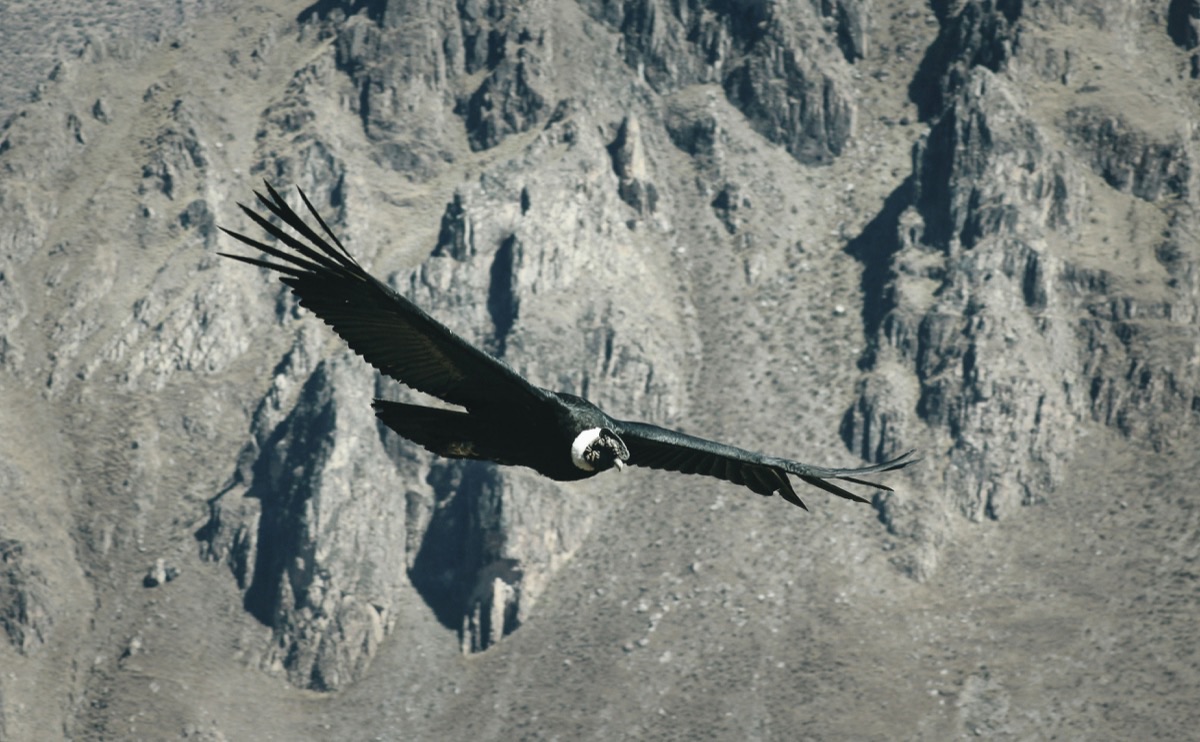
Standing at Cruz del Condor before 9:00am, the canyon drops away into near-invisible depths while Andean condors rise from the abyss on columns of warm air. The birds pass close enough to hear feathers adjusting against the wind. With a wingspan of 3.2 metres and a body weight of up to 15 kilograms, the Andean condor is the largest flying land bird on earth — and Colca Canyon is one of the most reliable places on the planet to watch them at close range.
Cruz del Condor Viewpoint
Cruz del Condor (GPS: -15.6167, -71.8569, altitude 3,287m) sits on the southern rim of the canyon approximately 45 kilometres west of Chivay. The viewpoint is named for the small cross planted at the rim. A paved path runs along the canyon edge, giving several observation angles as the condors work the thermals below and beside you.
Entry to the Colca Canyon reserve costs approximately 70 PEN (around 19 USD as of 2026) for the boleto turistico, which covers Cruz del Condor and other canyon sites. Confirm current fees on arrival in Chivay, where tour operators display updated pricing.
The viewpoint is accessible all year, though the dry season (April through November) gives the most reliable sightings and the clearest morning skies.
When Condors Fly
Andean condors are thermal soaring birds. They wait in the canyon overnight and ride the first warm air currents of the morning upward once the sun heats the canyon walls. The window between 8:00am and 10:00am is when condors appear most reliably at rim height — close enough to photograph without a telephoto lens.
By 10:30am, the thermals become erratic and condors move away from the viewpoint. Arriving at Cruz del Condor before 8:00am and staying through 10:00am gives you the full window. Most guided tours from Arequipa are timed to arrive around 7:30-8:00am for this reason.
Condors can appear any month, but April through November delivers the most consistent sightings. The wet season (December through March) brings afternoon cloud and morning mist that can obscure the condors even when they are flying.
Getting to Cruz del Condor from Arequipa
Guided Tour (Recommended for First-Time Visitors)
The most straightforward option is a guided tour from Arequipa. Tours depart the city at around 3:00am (for a sunrise viewpoint arrival) or 8:00am (for a longer canyon sightseeing circuit). The drive from Arequipa to Cruz del Condor takes approximately three hours along a paved road that climbs over the Patapampa pass (4,910m) before descending into the canyon.
Standard day tour prices run from approximately 30 to 50 USD as of 2026, including transport, guide, and lunch in Chivay. More comprehensive two-day tours including a canyon trek and overnight in Chivay run from approximately 60 to 100 USD as of 2026. Prices vary between agencies; compare at least two or three operators in Arequipa before booking.
Independent Travel via Bus and Combi
Public buses depart Arequipa’s Terminal Terrestre for Chivay from around 3:00am and 8:00am (among other times), taking three to four hours. The fare is approximately 5 to 8 USD as of 2026. From Chivay, shared combis run to Cruz del Condor from around 6:00am; the journey takes approximately one hour and costs around 5 to 10 USD per person as of 2026. This approach adds coordination time but is significantly cheaper than a guided day tour.
Where to Stay in Chivay
Spending a night in Chivay before the condor viewpoint visit serves two purposes: it lets your body acclimatise to altitude (Chivay sits at 3,620m, roughly 1,300m higher than Arequipa), and it means you can reach Cruz del Condor in an hour rather than three.
Budget
Casa Andina Classic Chivay offers clean en-suite rooms with heating from approximately 40 to 60 USD per night as of 2026. It is one of the more reliable mid-budget options in the town. Hostal Colca Inn and Hostal Rumi Wasi both have simple private rooms with breakfast from approximately 20 to 35 USD per night as of 2026. Expect intermittent hot water at lower price points.
Mid-Range
Aranwa Colca and Las Casitas del Colca are the canyon’s better-known mid-range properties, with rooms from approximately 80 to 150 USD per night as of 2026. Both are outside Chivay proper, set in the canyon landscape with mountain views. Book ahead during June through August when canyon visitor numbers peak.
La Calera hot springs, a short taxi ride from Chivay, are worth an evening visit after a long day of driving and altitude adjustment. Entrance costs approximately 15 PEN as of 2026.
Trekking Beyond the Viewpoint
Cruz del Condor is only the beginning. The canyon is threaded with trekking routes that most day-trippers never see.
The most popular circuit descends from the canyon rim near Cabanaconde (a village 20 minutes past Cruz del Condor) down to the oasis village of Sangalle at the canyon floor, approximately 1,200m below. The descent takes two to four hours; the ascent back to the rim takes three to five hours and is strenuous. Most trekkers spend a night in Sangalle, where basic accommodation with hammocks and a small pool is available from approximately 15 to 25 USD per night as of 2026.
The Cabanaconde-to-Sangalle route is manageable for fit hikers without a guide, though the trails are not always well-signed. Hiring a local arriero (mule guide) for the ascent is an option if knees are a concern. Several Arequipa operators run guided two-day canyon treks.
What to Bring
The combination of altitude, strong Andean sun, and cold morning temperatures catches many visitors underprepared.
- Warm base layer, fleece, and wind-proof outer jacket for the viewpoint
- Sunscreen SPF 50+ and sunglasses (UV intensity at 3,287m is significantly higher than at sea level)
- Altitude sickness medication if prescribed by your doctor — acetazolamide (Diamox) taken the day before arrival reduces symptoms for most people
- Coca leaves or coca tea, available cheaply in Chivay — a traditional Andean altitude remedy
- 1.5 litres of water minimum for the viewpoint visit; more if you plan to trek
- Trekking poles if descending into the canyon
- Small daypack; large bags are unnecessary and cumbersome on the canyon paths
If you are coming from Arequipa on a day tour, the drive alone crosses the 4,910m Patapampa pass. Altitude headaches can start as early as this crossing. Eating lightly and staying hydrated before the tour departs reduces the impact.
Practical Notes
The Colca Canyon area has limited ATMs — Chivay has one or two, but they can run out of cash during peak season. Bring enough soles from Arequipa to cover entry fees, meals, and tips.
Mobile signal is sparse outside Chivay. Download offline maps (Maps.me or Google Maps offline) before departing Arequipa.
Tour operators in Arequipa cluster along Jerusalem Street and Santa Catalina Street. Quality varies; check recent reviews before booking rather than selecting on price alone.