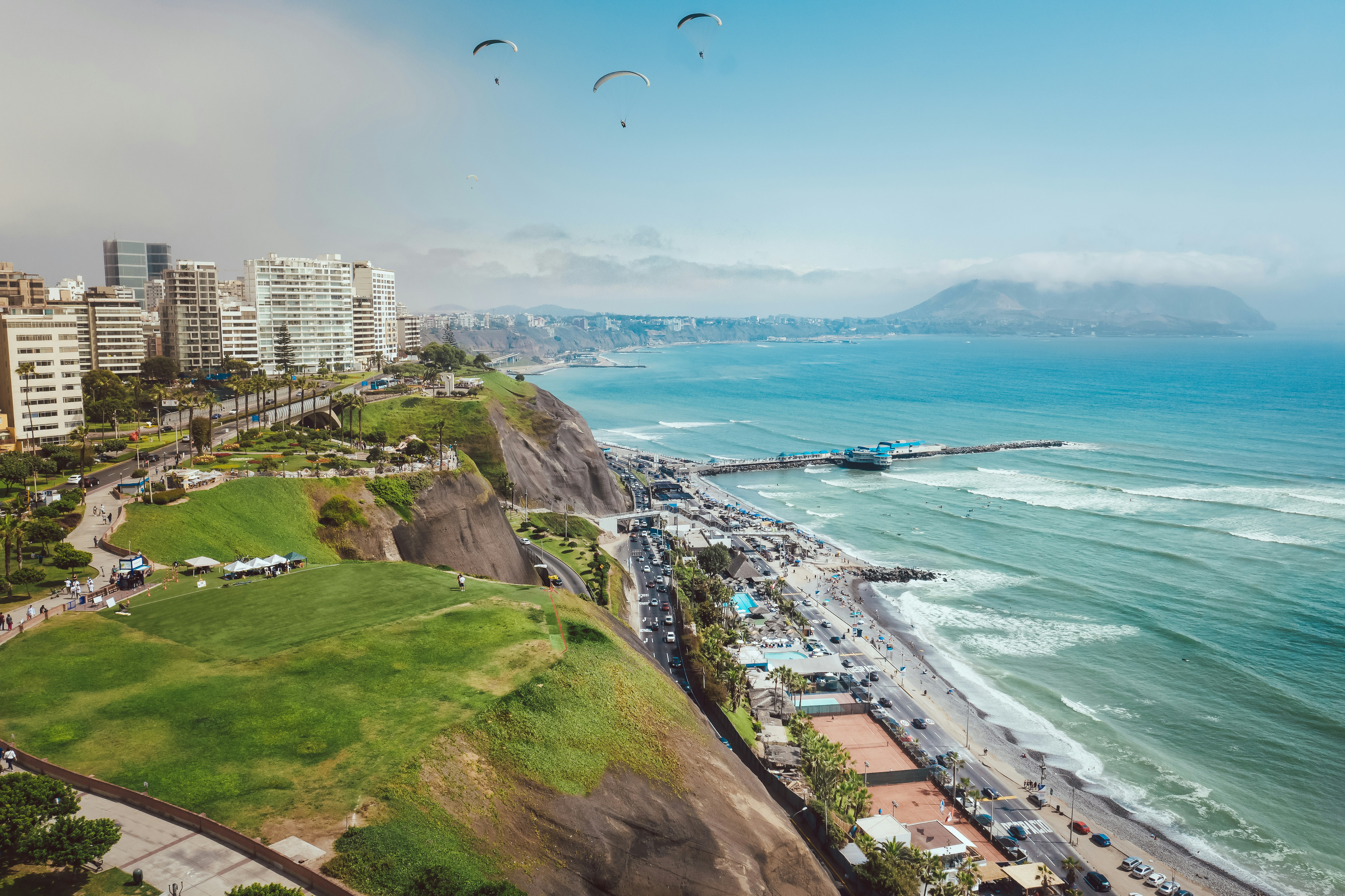
Lima and Arequipa are Peru’s two largest cities and they sit at opposite ends of the country’s geography and character. Lima is the coastal capital - a sprawling megacity of 11 million people, world-class restaurants, and colonial architecture on the Pacific. Arequipa is the Andean city - 2,335 m elevation, colonial white volcanic stone buildings, and the gateway to Colca Canyon.
For most international travellers, Lima is an arrival and departure point rather than a destination in itself. Arequipa, by contrast, rewards slower travel. Here’s a full breakdown.
Overview
Lima divides into several distinct zones. The tourist-friendly areas - Miraflores, Barranco, San Isidro - are safe, walkable, and full of restaurants, bars, and galleries perched on the Pacific cliffs. the Historic Centre (Centro Histórico) is a UNESCO World Heritage Site with some of Latin America’s finest colonial architecture, though it’s a different, grittier experience than the southern suburbs. Lima’s climate is mild (15–22°C year-round) but famously grey - the coastal mist (garúa) keeps the sky overcast from May to November.
Arequipa is called “La Ciudad Blanca” for its buildings constructed from white volcanic sillar stone. The Plaza de Armas, Santa Catalina Monastery, and a string of colonial churches form the core of the historic centre. At 2,335 m, Arequipa is in the Andes but at a manageable altitude - far more accessible than Cusco’s 3,400 m. The sky here is reliably blue, and the Misti, Chachani, and Pichu Pichu volcanoes form a dramatic backdrop.
Getting There
Lima to Arequipa by air: 1 hour 25 minutes. LATAM, Sky Airline, and JetSmart fly the route frequently. Fares run approximately USD 40–110 one-way booked in advance.
Lima to Arequipa by bus: Cruz del Sur and Oltursa run nightly departures - approximately 10–12 hours, fares from PEN 100–200 (USD 26–52). The luxury VIP tier on Cruz del Sur (fully reclining seats) costs approximately PEN 180–230 (USD 47–60) and makes the overnight trip genuinely comfortable.
Within Lima: The Metropolitano bus network covers main corridors; Uber and taxis are reliable. Miraflores to Centro Histórico runs approximately USD 5–10 by Uber.
Within Arequipa: The historic centre is compact and walkable. Taxis cost approximately PEN 8–15 (USD 2–4) for most in-city trips; remises (private cabs) slightly more for airport runs.
Things to Do
Lima rewards 2–3 days. The Larco Museum (Museo Larco, approximately USD 15 entry) holds one of the finest pre-Columbian collections in the world - allow 3–4 hours. The Monastery of San Francisco and its catacombs (approximately PEN 30 / USD 8) in Centro Histórico is unmissable. Huaca Pucllana, an adobe pyramid in the middle of Miraflores (approximately PEN 20 / USD 5), is surprising in context. Barranco has galleries, the Bridge of Sighs, and street art worth a full afternoon.
Arequipa also rewards 2–3 days. The Santa Catalina Monastery (approximately PEN 55 / USD 14, open daily 9:00–17:00) is the city’s headline attraction - a self-contained colonial city within a city. The Cathedral Museum on the Plaza de Armas (approximately PEN 10 / USD 2.60) is worth an hour. The Juanita Mummy Museum (approximately PEN 30 / USD 8) is one of the most important Inca archaeological discoveries on display anywhere.
Outside the city, Colca Canyon is a 3.5-hour drive from Arequipa. Most visitors do a 2-day tour (approximately USD 40–70 including accommodation and guide) to reach the Cruz del Cóndor viewpoint, where Andean condors circle in the morning thermals. Arequipa tours include guided Colca Canyon excursions and city walking tours.
See our Arequipa things to do guide for full site listings.
Food and Drink
Lima is the food city. Full stop. Central, Maido, and Astrid & Gastón consistently appear in global top-50 lists. Lima tours include cooking classes and guided market visits for those wanting to go deeper into the food scene. Central’s tasting menus run USD 200+ per person; Maido starts from approximately USD 120. For non-tasting-menu dining: La Mar cevichería in Miraflores charges approximately PEN 80–150 per person (USD 20–40). El Mercado (Miraflores) is excellent for ceviche and tiradito at similar prices. A market almuerzo (set lunch) in the Centro runs PEN 12–20 (USD 3–5).
See our Lima food guide for detailed recommendations.
Arequipa has the strongest regional cuisine outside Lima. Rocoto relleno (stuffed rocoto pepper), chupe de camarones (shrimp chowder), and adobo (pork stew) are the dishes to seek out. La Trattoria del Monastero near Santa Catalina is the reliable upscale option (approximately PEN 50–80 / USD 13–21 per person). Zig Zag restaurant on Zela street (international-Andean fusion, approximately PEN 60–90 / USD 15–23 per person) is popular with travellers. The Mercado San Camilo handles cheap eats - breakfast and lunch menus from PEN 8–15 (USD 2–4).
Where to Stay
Lima options centre on Miraflores and Barranco. Casa Andina Select Miraflores runs approximately USD 90–130/night. JW Marriott Lima (Miraflores oceanfront) goes from USD 200–350/night. Mid-range boutiques in Barranco like Second Home run approximately USD 80–130/night. Budget dorms start at USD 15–20/night in Miraflores.
Arequipa is generally cheaper. Casa Andina Select Arequipa runs approximately USD 70–110/night. La Gruta Hotel, a colonial boutique near Santa Catalina, charges approximately USD 60–90/night. Budget options in the historic centre start at USD 9–14 for dorms, USD 30–50 for private rooms.
Budget
Lima runs approximately USD 50–90/day for mid-range travel. Budget is achievable at USD 25–40/day eating at markets and staying in hostels. Lima’s fine dining can push a single dinner to USD 150+ per person.
Arequipa is slightly more affordable: approximately USD 45–75/day at mid-range. The Colca Canyon tour (if you do it) adds USD 40–70 for a 2-day excursion.
The Verdict
Choose Lima if: food, urban culture, and pre-Columbian history are your priorities. Lima is Peru’s most cosmopolitan experience and has the best restaurant scene on the continent.
Choose Arequipa if: you want Andean atmosphere at a forgiving altitude, excellent regional food, and access to Colca Canyon. Arequipa is quieter and more compact than Lima, easier to feel oriented in a single day.
The practical reality: most international itineraries pass through Lima twice (arrival and departure). Arequipa fits naturally as a 2–3 day stop on the southern Peru loop before Puno and Cusco. The two cities aren’t really in competition - they serve different functions on the same journey.
Further Reading
- Lima Travel Guide - Full city guide including Miraflores, Barranco, museums, and day trips.
- Arequipa Travel Guide - The White City: Santa Catalina Monastery, Colca Canyon access, and regional cuisine.
- 2-Week Peru Itinerary - How Lima and Arequipa fit into a complete Peru circuit.
- Colca Canyon Tours from Arequipa - The main reason most visitors extend their Arequipa stay.
- Where to Stay in Lima - Lima neighbourhood guide for Miraflores versus Barranco.