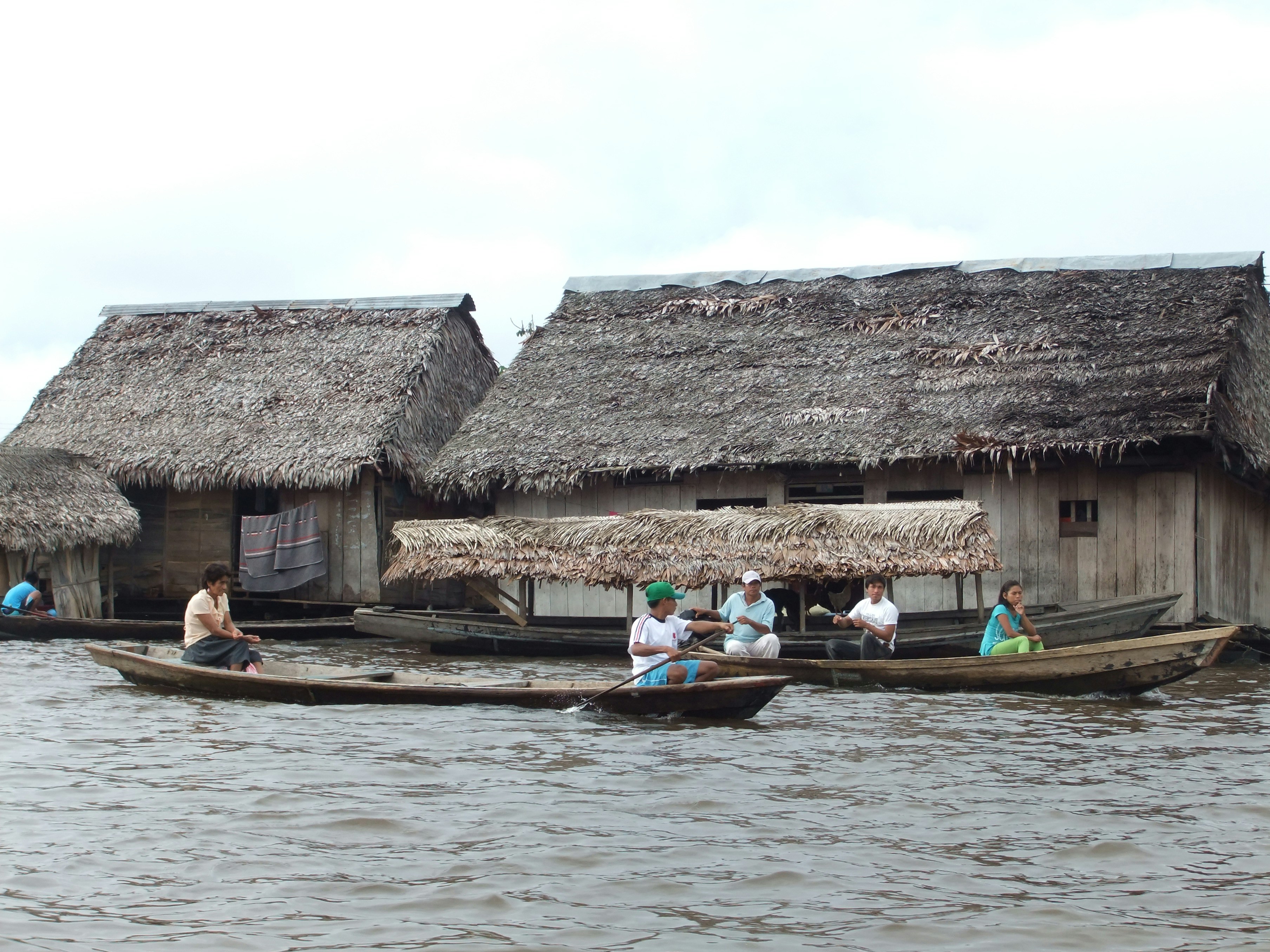
Iquitos is the largest city on Earth with no road connection to the outside world. It sits at the confluence of three Amazon tributaries - the Nanay, Itaya, and Amazon rivers - and functions as the gateway to Peru’s vast northern jungle. Everything interesting here is defined by water: the floating barrio of Belén rises and falls with the river level, the markets trade in jungle produce and Amazonian fish, and every meaningful excursion leaves by boat.
The city itself is compact and walkable along the waterfront. Most visitors use Iquitos as a base for lodge stays and river trips, but the urban attractions alone justify a full day or two before heading deeper into the jungle.
Belén Floating Market
Belén is the most viscerally alive part of Iquitos - a neighbourhood of wooden stilt houses and floating platforms that rises and falls with the Amazon river, which can vary by 10 metres between wet and dry seasons. During high water (roughly December–May), many homes float; in low water (June–November), they sit on stilts above the mud.
The Belén market at the edge of the neighbourhood is one of the most extraordinary markets in South America. Vendors sell live turtles, jungle herbs used in traditional medicine, sachavacas (tapirs), river fish including the enormous paiche, exotic fruits like camu camu and aguaje, and products that would be unavailable anywhere else in Peru. Entry is free. Open daily approximately 06:00–14:00, busiest in the morning.
Go with a local guide if possible - the deeper sections of the market can be confusing to navigate and a guide provides context for what you’re seeing. Guides can be arranged through most Iquitos hotels from approximately S/50–S/80 per person as of 2026. Keep valuables secured and do not bring expensive cameras into the interior of the market.
Casa de Fierro (Iron House)
The Casa de Fierro on the Plaza de Armas is one of the most photographed buildings in Iquitos. Constructed entirely from metal sheets and bolts, it was allegedly designed by Gustave Eiffel (though historians debate the attribution) and shipped to Iquitos piece by piece during the rubber boom era. Today it houses a pharmacy on the ground floor and an upstairs café with views over the plaza.
Entry to see the exterior is free. The Plaza de Armas itself is the social hub of the city - lined with colonial buildings, open-air cafés serving jungle fruit juices, and mototaxis weaving between pedestrians. The plaza is particularly lively in the evenings when locals gather and street food vendors set up along the surrounding streets.
Manatee Rescue Centre (CREA)
The Centro de Rescate Amazónico (CREA) houses rescued Amazonian manatees - a critically endangered species that is frequently orphaned when adults are hunted or killed by boat propellers. The centre raises the young manatees in pools before releasing them back into the wild.
Entry costs approximately S/10 as of 2026. Open daily, approximately 09:00–16:00. The manatees are enormous and gentle; feeding sessions are typically at set times and watching one surface to be hand-fed is genuinely remarkable. The centre is located about 20 minutes from central Iquitos by mototaxi. Donations support the release programme.
Pilpintuwasi Butterfly Farm
The Pilpintuwasi Amazon Animal Orphanage is approximately 30 minutes from Iquitos by boat to the village of Padre Cocha, then a short walk. The centre focuses on rehabilitating rescued jungle animals - giant river otters, tapirs, peccaries, monkeys - alongside a working butterfly breeding operation with over 40 native species in flight cages.
Entry costs approximately S/35–S/40 per person as of 2026. The boat crossing from Puerto de Bellavista costs approximately S/5 return. Allow 2–3 hours. Arrive in the morning when animals are most active. The founder, Austrian-born Gudrun Sperrer, has run the centre since 2000 and has detailed knowledge of each resident animal. Note: the centre receives significant visitor numbers; go on a weekday to avoid the crowds.
Amazon Rescue Centres and Wildlife Sanctuaries
Several other rescue and research centres operate around Iquitos:
Refugio Amazónico operates a wildlife rescue station accessible via a 45-minute boat trip. Night jungle walks with a guide reveal caimans, tree frogs, and insects that are invisible during the day. Tours from approximately USD 40–USD 80 per person as of 2026 including transport.
The Iquitos Zoo (Parque Zoológico) near the city centre houses Amazonian species including ocelots, anacondas, and river turtles. Entry approximately S/5. More useful for understanding what wildlife exists in the region than as a wildlife experience in itself.
Boras Community Visits
The Boras are an indigenous community living approximately 1–2 hours by boat from Iquitos, near the community of Padre Cocha. Organised visits include traditional dance performances, demonstrations of blowgun hunting, crafts for sale (textiles and ceramics using traditional pigments), and the opportunity to try chicha (fermented manioc drink).
Tours from Iquitos cost approximately S/80–S/150 per person as of 2026 including boat transport, entrance fee paid directly to the community, and guide. Visits last approximately 3–4 hours. Book through reputable Iquitos tour operators - Indigenous community visits generate direct income for residents. Iquitos tours can be browsed online to compare community visit packages and day-trip combinations.
The Malecón Tarapacá
The waterfront boulevard running above the Amazon is Iquitos’s most pleasant strolling area. The Malecón Tarapacá stretches for several blocks with views over the river, benches, and a string of bars and restaurants that come alive in the late afternoon. At sunset the sky turns extraordinary colours above the Amazon basin.
The Malecón is also where most river boat departures are located for day trips and jungle excursions. The famous Boulevard Abelardo Quiñones - the main street inland from the Malecón - is lined with bars, budget restaurants, and travel agencies selling jungle tours.
When to Visit
The Amazon has two seasons, not four. High water (roughly December–May) floods the jungle floor, making it possible to paddle a canoe through the treetops and spot wildlife at eye level. Low water (June–November) exposes beaches, concentrates wildlife around water sources, and makes trekking easier. Most visitors consider June–November the better season for wildlife sightings, though both have specific advantages.
See the full Iquitos city guide for transport, accommodation, and getting around by mototaxi and boat. Search hotels in Iquitos on Booking.com
Iquitos: More Resources
- Iquitos Travel Guide - How to fly in, getting around by mototaxi and river taxi, and city overview.
- Iquitos Food Guide - Where to eat Amazonian food: paiche, tacacho, and jungle-fruit cocktails.
- Iquitos Day Trips - Pacaya-Samiria Reserve, Boras indigenous community, and jungle lodge stays.
- Amazon Jungle Tours - Choosing between river cruise, jungle lodge, and day-tour options for the Peruvian Amazon.
- 2-Week Peru Itinerary - How to include Iquitos in a longer Peru trip.
- First Time in Peru - Essential pre-departure reading including health precautions for jungle travel.