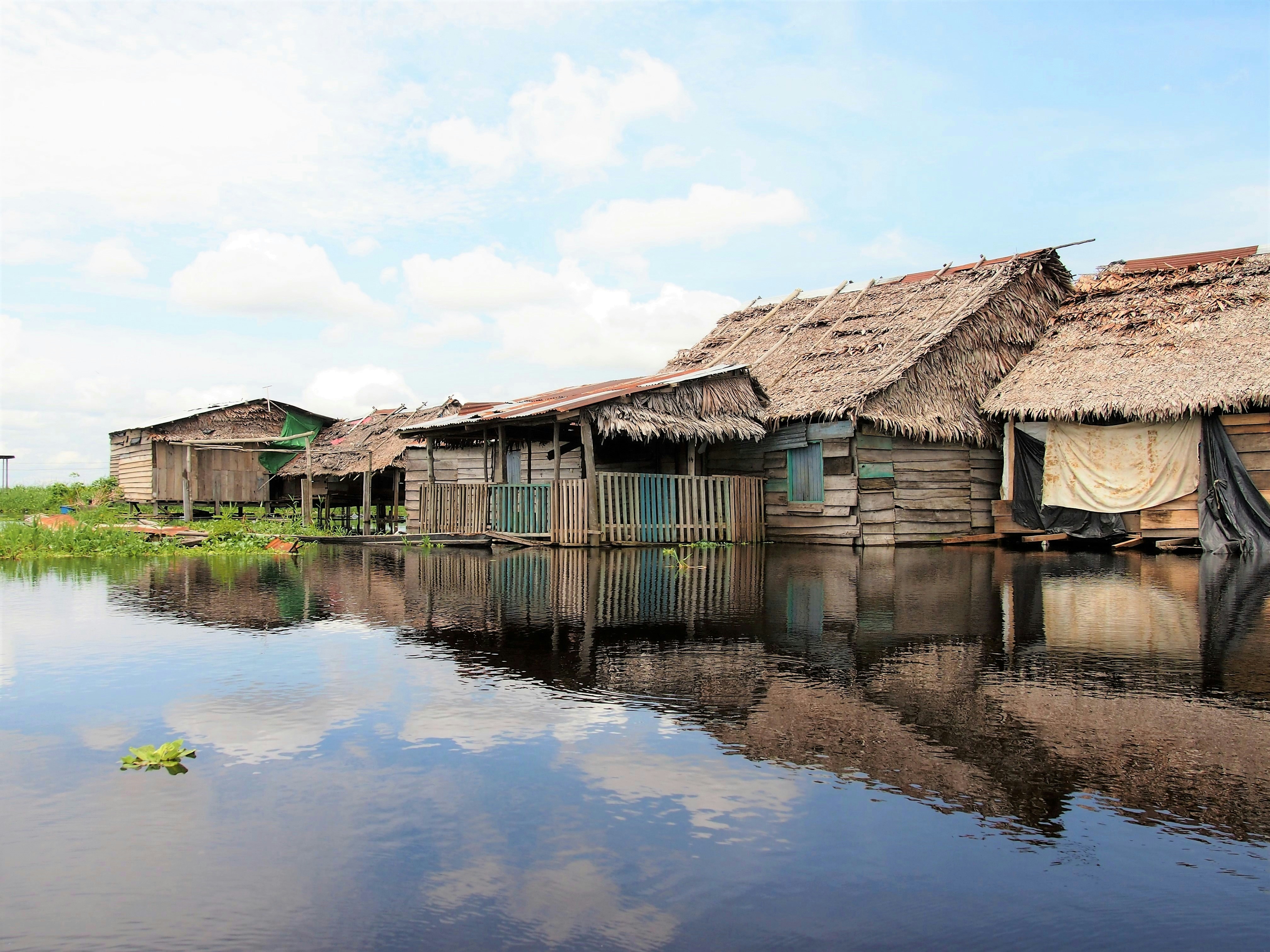
Amazonian food is nothing like highland Peruvian cuisine. Where Cusco and Lima emphasise potato, corn, and tuber, Iquitos builds its cooking around the extraordinary biodiversity of the jungle: paiche (a prehistoric river fish that can reach 2 metres), the aguaje palm fruit, jungle plantains, cecina (smoked jungle meat), and flavourings from plants that exist nowhere else on Earth. This is a genuinely distinct cuisine, and Iquitos is the best place in Peru to eat it properly.
What to Order - Amazonian Dishes
Juane is the defining dish of the Peruvian Amazon. Rice is cooked with chicken, spices, olives, hard-boiled egg, and sometimes cuy or fish, then wrapped tightly in bijao leaves and steamed. Unwrapping a juane at the table releases a cloud of fragrant steam - the bijao leaf perfumes the rice with a green, slightly resinous note. A good juane costs approximately S/18–S/28 as of 2026.
Tacacho con cecina is the other great Amazonian classic. Tacacho is roasted green plantain mashed with lard and shaped into balls; cecina is thin sheets of pork or deer meat, heavily salted and smoked over woodfire. Served together with chorizo, it is rich, smoky, and filling. Approximately S/20–S/35 at a sit-down restaurant.
Paiche is the largest freshwater fish in South America and a speciality of Amazonian cooking. The flesh is dense and white, similar in texture to cod but with a richer flavour. It is typically fried, grilled, or served in a soup called inchicapi. Paiche is now farmed sustainably in the Iquitos region, making it more widely available than it was when wild stocks were under pressure. A paiche plate costs approximately S/25–S/45.
Inchicapi is a thick soup made from chicken or paiche, ground peanuts, yuca, and coriander. It is deeply savoury with a nutty base - one of the most distinctive soups in Peruvian cooking. Available at most traditional restaurants for approximately S/12–S/18.
Camu camu juice is worth trying at every meal. Camu camu is a small Amazonian berry with the highest vitamin C content of any fruit in the world - approximately 60 times more than an orange. The juice is tart and intensely flavoured; most restaurants serve it diluted with water and sweetened. Look also for aguaje (a palm fruit with an unusual sweet-sharp taste), cocona, and maracuyá at juice stalls around the Belén market and along the Malecón.
Where to Eat on the Malecón
The Malecón Tarapacá waterfront has several mid-range to upscale restaurants with river views:
Fitzcarraldo Restaurant (Malecón Tarapacá 100) is one of the most well-regarded restaurants in Iquitos for traditional Amazonian cuisine. The menu leans into regional specialities - juane, paiche preparations, cecina - with attentive service and a pleasant outdoor terrace above the river. Mains approximately S/30–S/55 as of 2026. Open daily for lunch and dinner.
Amazon Bistró on the Malecón offers a more contemporary take on Amazonian ingredients, with cocktails made from jungle fruits and native spirits. Popular with travellers and a good spot for watching the Amazon at dusk. Prices slightly higher than most local restaurants - mains approximately S/40–S/65.
El Huasaí (Malecón Tarapacá, near the waterfront) is a well-established option for traditional Iquiteño food at reasonable prices. The tacacho con cecina here is consistently recommended. Mains approximately S/18–S/35.
Boulevard Abelardo Quiñones
The Boulevard (running parallel to the waterfront) has a higher density of budget restaurants and bars:
La Noche is a popular open-air restaurant-bar on the Boulevard known for its jungle cocktails - try the chuchuhuasi sour, made from a jungle tree bark bark-steeped rum that is credited with medicinal properties locally. Food is secondary here but the plantain dishes and ceviches are solid. From approximately S/20–S/40 for food, cocktails from S/15.
Restaurant Dawn on the Amazon (associated with the well-known Amazon river cruise operator) serves a broad menu of Amazonian and international dishes. A reliable choice for visitors who want a full meal with English-speaking staff. Mains approximately S/30–S/55.
Local Menú Restaurants
Away from the tourist waterfront, dozens of local restaurants around Iquitos serve a menú del día (set lunch) of two to three courses for approximately S/10–S/15. These typically include a soup (often inchicapi or a simple vegetable soup), a main plate of fish or chicken with rice and yuca, and a juice. The food is honest, filling, and gives you the best value in the city.
Look for restaurants on Jiron Próspero and the streets surrounding the Belén market. The quality varies, but any place with a busy local lunch crowd is a safe bet. Bring cash - most do not accept cards.
Jungle Cocktail Bars
Iquitos has developed a small but growing craft cocktail scene using native ingredients:
Ayahuasca (the bar, not the ceremony) on the Malecón area uses Amazonian botanicals to create distinctive cocktails alongside the chuchuhuasi rum preparations found throughout the city. Mapacho (a jungle-cured tobacco) is sometimes used as a flavouring agent in smoked cocktails. A cocktail here costs approximately S/18–S/30 as of 2026.
For more on Iquitos including how to get here and where to stay, see the Iquitos city guide. For day trips from Iquitos into the jungle reserves, see our Iquitos day trips guide. To combine a meal with a guided jungle excursion, browse Iquitos tours for half-day and full-day Amazon options departing the city.
Iquitos: More Resources
- Iquitos Travel Guide - Getting there, getting around, and what to know before arriving in the Amazon.
- Things to Do in Iquitos - Belén market, Pilpintuwasi butterfly farm, river sunsets, and the Malecón.
- Iquitos Day Trips - Pacaya-Samiria Reserve, Boras community visits, and jungle lodge options.
- Amazon Jungle Tours - Full comparison of jungle lodge vs river cruise options from Iquitos and Puerto Maldonado.
- 2-Week Peru Itinerary - Where Iquitos fits in a longer Peru loop.
- First Time in Peru - Pre-trip prep including Amazon health requirements.
Plan Your Visit to Iquitos
- Iquitos Amazon food & jungle tours — river market visits, cooking with Amazonian ingredients, and multi-day jungle lodge packages
- Travel insurance for Peru — covers Amazon activities and remote medical evacuation
- Peru eSIM — data from Lima’s airport before the Iquitos flight; no local SIM required