Northern Peru’s most celebrated street festival, the Festival de la Primavera in Trujillo, runs in the final week of September each year — and the spirit of the event carries well into early October as the city celebrates the arrival of southern hemisphere spring. It’s one of the best reasons to visit Trujillo, Peru’s third-largest city and the archaeological and cultural capital of the north.
What the Festival Is
The Festival de la Primavera has been held in Trujillo for over 70 years. It centres on the Marinera Norteña — a coastal dance that originated in the La Libertad region and is considered one of Peru’s national dances. The festival includes:
- National Marinera competition: teams from across Peru compete in front of stands packed with thousands of spectators
- Cabalgata de la Marinera: a horseback parade through the city centre featuring paso fino horses — a breed developed in the region for their distinctive smooth gait
- Street parades and performances: cuadrillas of dancers, musicians, and costumed groups wind through Trujillo’s colonial plazas and avenues
- Food and artisan markets: vendors from across La Libertad and neighbouring regions set up in the Plaza de Armas and surrounding streets
The overall mood is one of civic pride — Trujillo takes the Marinera more seriously than anywhere else in Peru, and the festival reflects that.
Why Trujillo Deserves More Attention
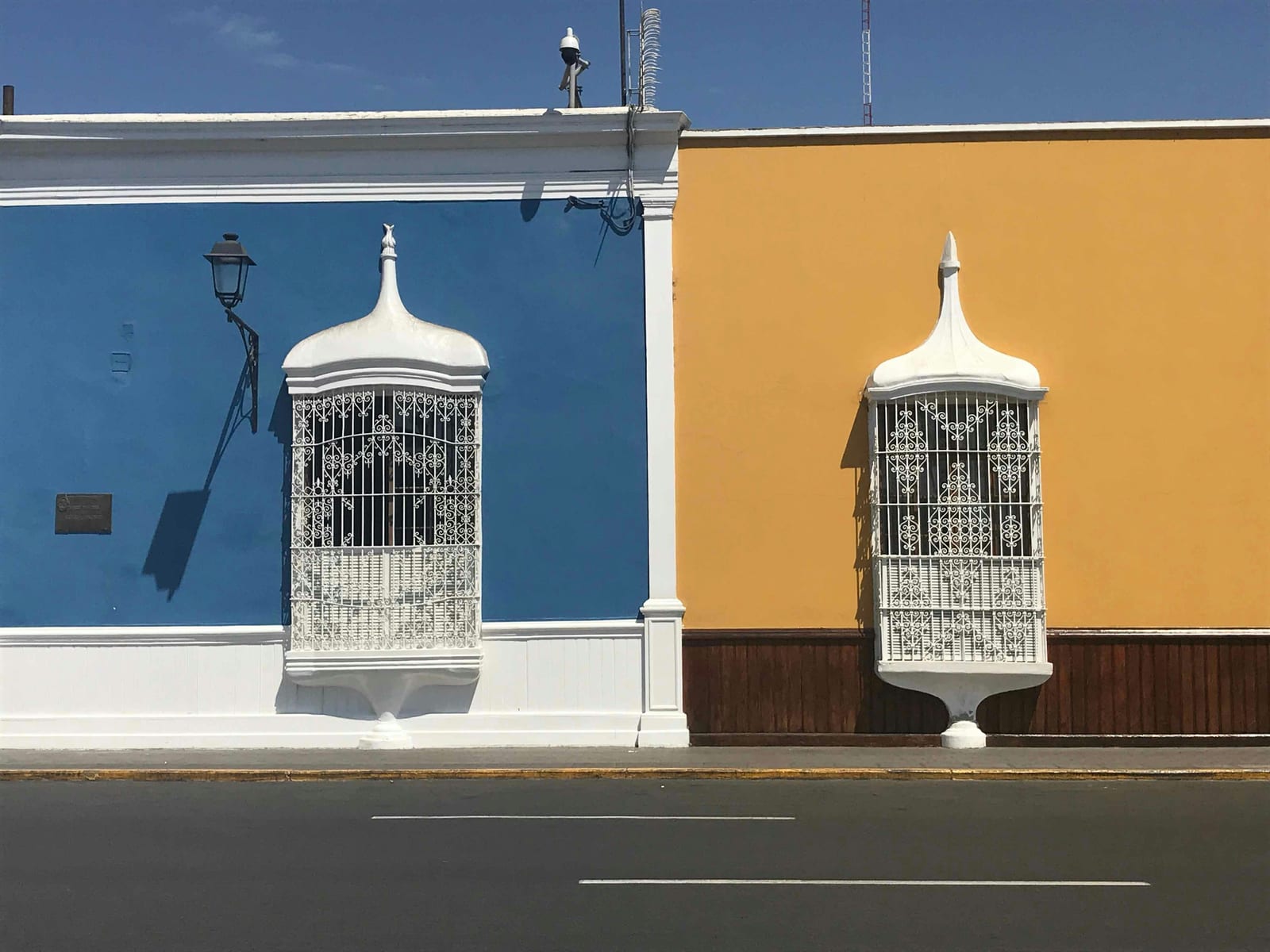
Most visitors to northern Peru pass through Trujillo briefly on the way to Chan Chan or Huanchaco. That’s a mistake. The city’s colonial centre — Plaza de Armas, Iglesia de La Merced, and the painted façades along Jirón de la Unión — is one of the best-preserved in Peru, and the surrounding region holds an extraordinary concentration of pre-Inca ruins.
Chan Chan, the largest pre-Columbian city in the Americas and a UNESCO World Heritage site, is 5 km from the city centre. Huacas del Sol y de la Luna — two Moche pyramids occupied for over 700 years — are a further 8 km south. Both are easily reached by taxi or combi from central Trujillo.
The coastal village of Huanchaco, 12 km west of the city, is one of Peru’s few places where fishermen still use traditional caballitos de totora (reed fishing rafts) — a tradition dating back at least 3,000 years and visible most mornings from the pier.
Getting to Trujillo
Trujillo’s Capitán FAP Carlos Martínez de Pinillos Airport (TRU) has multiple daily flights from Lima (1 hour 15 minutes) with LATAM, Sky Airline, and Viva Air. Overland buses from Lima take 8–9 hours on the Panamericana Norte highway; Cruz del Sur and Oltursa run comfortable overnight services.
For full planning, our Trujillo guide covers accommodation, archaeology, and practical logistics. Our things to do in Peru section covers activities across the country, and our Peru practical guide has transport, visas, and costs.