Huacachina: Peru's Desert Oasis - Complete Guide
Huacachina sits at 368m - no altitude sickness risk. Sandboard towering 100m dunes and ride a dune buggy at sunset, 4 hours south of Lima.
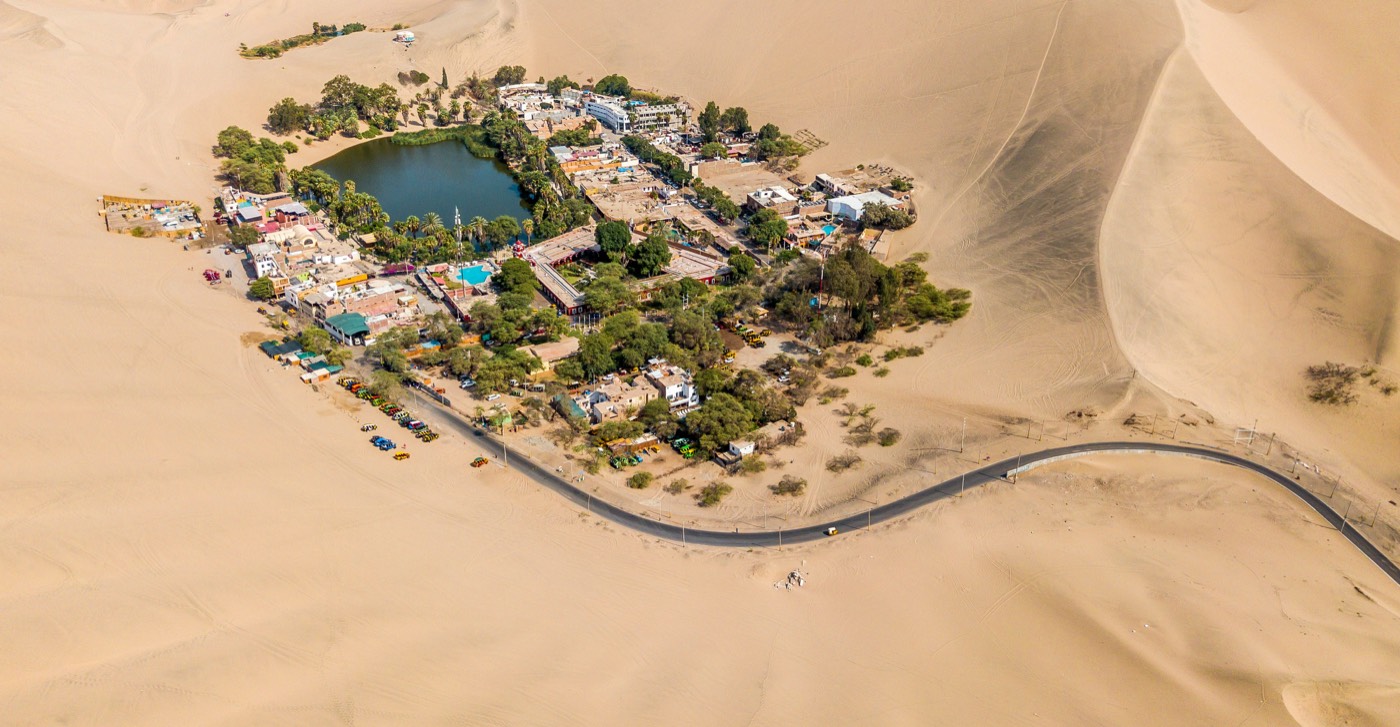
Huacachina is a natural oasis surrounded by sand dunes that reach up to 100 metres high, located 5km from the city of Ica on Peru’s south coast. The lagoon itself is small - roughly 300 metres across - and the settlement around it amounts to a few streets of hostels, restaurants, and sandboarding operators. What it offers is one of the more unusual landscapes in South America: genuine towering desert dunes immediately accessible from a lagoon-side path, with dune buggy excursions running multiple times daily. Most travellers stay one night, which is enough.
Altitude at Huacachina
Huacachina sits at approximately 368 metres above sea level — essentially coastal desert altitude. There is no altitude sickness risk at Huacachina, which makes it one of the most accessible stops in any Peru itinerary. This is the first question many visitors ask, particularly those who are nervous about the altitude at Cusco (3,400m) or Puno (3,825m) later in their trip.
For comparison, here is how Huacachina’s elevation stacks up against Peru’s other main destinations:
| Destination | Altitude | Altitude Risk |
|---|---|---|
| Huacachina | 368m | None |
| Lima | 15m | None |
| Paracas | 3m | None |
| Machu Picchu | 2,430m | Mild to moderate |
| Arequipa | 2,335m | Mild for most visitors |
| Cusco | 3,400m | Acclimatisation essential (2 days minimum) |
| Huaraz | 3,090m | Moderate — acclimatise first |
| Puno | 3,825m | High — arrive via Cusco recommended |
Itinerary note: Travellers who fly directly from a sea-level city into Cusco often experience acute mountain sickness (AMS). A proven strategy is to spend the first several days of a Peru trip at coastal altitude before ascending to the Andes. Huacachina fits naturally into this sequence: Lima (arrive, 1 night) → Paracas (1 night, optional) → Huacachina (1–2 nights at 368m) → fly or bus to Arequipa or Cusco. Three or four nights at or near sea level before ascending to 3,400m significantly reduces AMS risk.
For the dune activities, Huacachina sandboarding and dune buggy tours can be booked in advance to lock in the evening sunset slot, which fills quickly during peak season (June–August).
Getting There
From Lima: Long-distance buses to Ica depart from Lima’s main bus terminals (Javier Prado corridor). The journey takes approximately 4 hours on the Panamericana Sur highway. Main operators include Cruz del Sur, Oltursa, and Flores Hermanos; fares approximately S/30–S/60 one way as of 2026 depending on seat class. Book online or at the terminal.
From Ica’s main bus terminal, Huacachina is 5km west. A taxi takes approximately 10 minutes and costs approximately S/8–S/12 as of 2026. Mototaxis (three-wheeled tuk-tuks) are also available for approximately S/5.
Direct from Nazca: Shared minibuses connect Nazca and Ica throughout the day (approximately 2 hours, approximately S/15–S/20 as of 2026). From Ica, take a taxi to Huacachina.
Day trip from Lima: Several Lima-based operators offer one-day tours to Huacachina. These work logistically but leave you with only 2–3 hours at the oasis - enough for one dune buggy session but no time to explore at your own pace. Staying overnight gives a much better experience.
Sandboarding and Dune Buggy Tours
The main activity at Huacachina is a combined dune buggy and sandboarding excursion. Operators use modified open-frame buggies that carry 8–12 passengers, driven by experienced local drivers who navigate the dune ridge lines at speed. The course typically runs for 2 hours, stopping at 4–6 different dune positions where you board down on rented boards (lying or standing).
Cost: approximately S/60–S/80 per person as of 2026, including board hire. Most operators are clustered along the oasis lakeshore - prices are similar across the board. Ask what time the tour departs and how long it runs before paying. You can also book a Huacachina dune buggy tour in advance if you want to guarantee a spot on the popular evening sunset run.
Evening tours (15:00–16:00 departure) are the most popular for good reason: the afternoon light turns the dunes gold, temperatures are lower than midday, and the return coincides with sunset over the lagoon. Morning tours (08:00 departure) have better light from the east but more heat by mid-tour.
Sandboarding technique: Standing is harder than it looks on steep dunes - most first-timers start lying on the board. The sand is fine and fast; velocities of 50–70km/h are typical on the steepest runs. Wrist guards are not provided - bring them if you have them, or accept that falling is part of the experience.
The Oasis and Lagoon
The Huacachina lagoon is fed by underground water and is surrounded by palms and reeds, which give the oasis its characteristic appearance. The full perimeter walk takes approximately 20 minutes at a slow pace. Pedalboats and kayaks are available for hire at approximately S/20–S/30 per hour as of 2026.
The water is not safe for swimming. Water levels have dropped significantly over the past 30 years due to agricultural extraction in the surrounding area; the lagoon’s ecology is now fragile. Treat it as a scenic backdrop rather than a swimming destination.
The lakeshore path has restaurants, bars, and hostels facing the water. In the evenings the atmosphere is sociable, particularly with backpacker hostels running happy hours from around 18:00. It is a small and genuinely relaxed place - no traffic, no commercial noise beyond the buggy engines heading out to the dunes.
Where to Stay
Huacachina has a mix of backpacker hostels and basic guesthouses around the oasis perimeter. There are no luxury hotels; this is a backpacker destination.
Desert Nights - One of the better-regarded hostels, with a swimming pool and social areas. Dorm beds approximately USD 8–USD 14 per night, private rooms approximately USD 25–USD 40 as of 2026. The pool is a practical advantage in the heat. Located on the south side of the lagoon.
Huacachina Backpackers - Popular with the young traveller crowd. Dorm and private rooms, rooftop terrace with dune views, in-house tour booking for sandboarding. Dorms approximately USD 7–USD 12, private rooms approximately USD 20–USD 35 as of 2026.
Hostería Suiza - The most established hotel at the oasis, operating since 1942. More traditional accommodation, gardens, and a quieter atmosphere than the backpacker hostels. Double rooms approximately USD 50–USD 80 as of 2026. The main option if you prefer something away from hostel common rooms.
Casa de Arena - Mid-range guesthouse with clean rooms and a good location opposite the lagoon. Approximately USD 35–USD 60 per night for a double as of 2026.
What to Eat and Drink
Restaurants around the oasis serve standard Peruvian and international traveller food. Standout options:
El Huacachino - One of the lakeshore restaurants with consistent reviews. Ceviche, lomo saltado, and grilled fish. Mains approximately S/25–S/50 as of 2026.
Moroni - Sandwiches, wraps, and smoothies; popular for breakfast before morning tours. Approximately S/15–S/30 per person as of 2026.
For a full meal, Ica city (5km, S/8–S/12 taxi) has a wider range of restaurants than the oasis itself. The Ica market and main plaza area has significantly cheaper options than the tourist-facing oasis restaurants.
The Pisco Route
The Ica region produces most of Peru’s pisco (grape brandy) and wine. The main bodegas are located between Ica city and Huacachina:
Vista Alegre - One of the largest commercial producers. Daily tours and tastings, approximately S/15–S/25 per person as of 2026. Basic tour covers the distillation process and includes 3–4 pisco samples.
Tacama - A more historic estate, established in the colonial period. More polished tour experience. Approximately S/30–S/50 for a guided visit including tasting as of 2026. Located approximately 12km from Huacachina by taxi.
El Catador - Smaller producer with a rustic feel; popular with backpackers for its atmosphere. Near the oasis, approximately S/10–S/20 for a tour as of 2026.
A half-day combining a bodega visit with the evening dune buggy tour is the standard Huacachina day structure.
For operator comparisons, what’s included, and which circuit gives the best sunset views, see our dedicated Huacachina dune buggy tours guide.
Practical Notes
- Altitude: Huacachina is at approximately 368 metres above sea level - essentially sea level compared to Cusco. No altitude issues here.
- Heat: The desert climate means temperatures of 25–35°C are normal year-round. Midday in summer (December–March) can exceed 38°C. Carry water and sunscreen.
- ATMs: There is one ATM near the oasis entrance; it frequently runs out of cash on weekends. Withdraw in Ica before arriving.
- Size: Huacachina is genuinely small. One main loop road around the lagoon, one entrance to the dunes, a handful of streets. You will not need a map.
- Duration: One night is enough for most travellers. It fits cleanly into a Lima–Huacachina–Nazca–Cusco overland route. From Nazca, the Nazca Lines are the obvious next stop, and the Ballestas Islands near Paracas make a worthwhile addition to the coastal leg.
Book an experience
Top experiences in Huacachina
Explore the best tours and activities in Huacachina , with instant confirmation and free cancellation on most bookings.