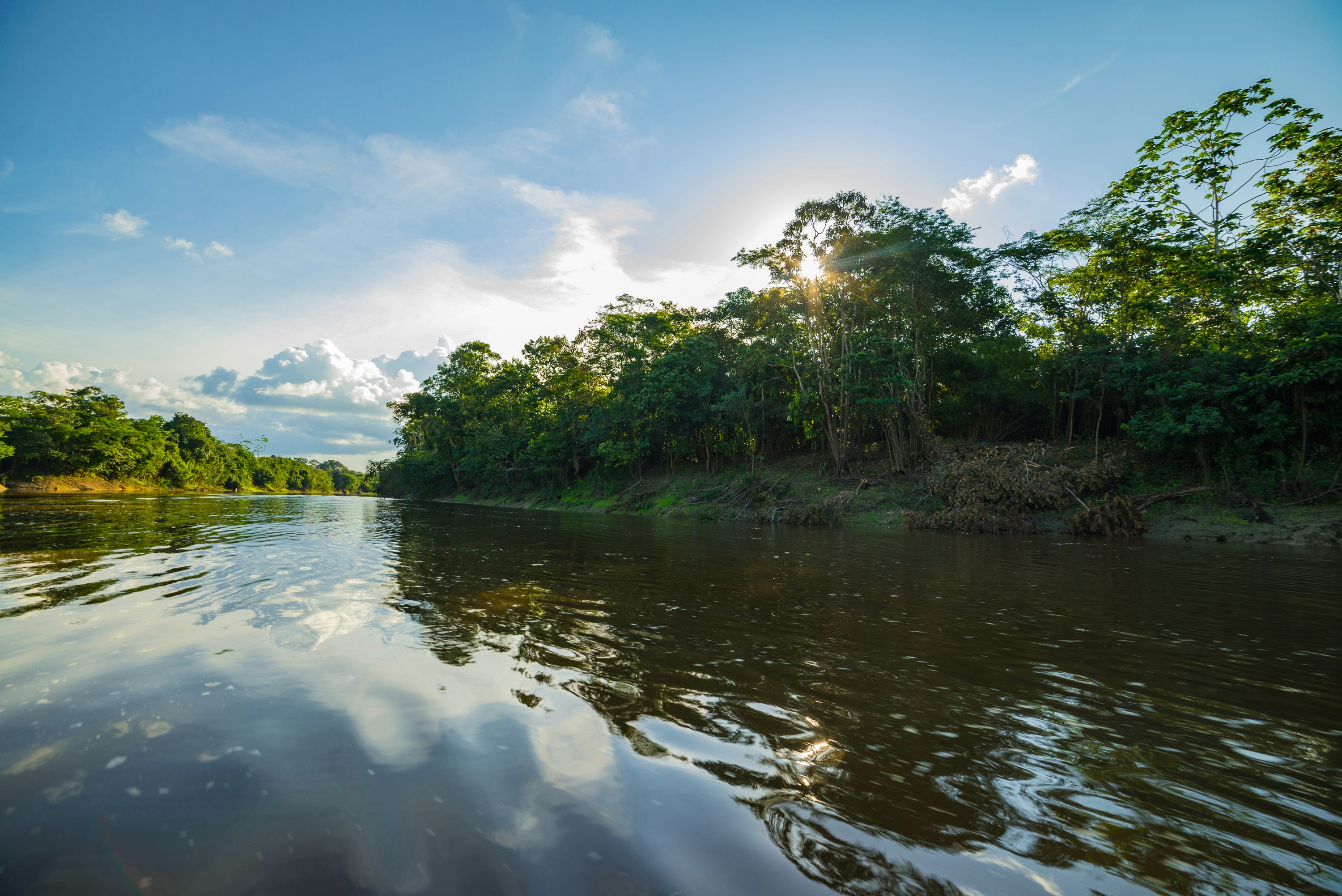
Pucallpa and Lake Yarinacocha: Peru's Overlooked Amazon City
Lake Yarinacocha outside Pucallpa offers pink dolphin boat trips, Shipibo-Conibo community visits, and jungle lodges accessible without the Iquitos crowds.
Pucallpa is the capital of Peru’s Ucayali region and sits on the banks of the Ucayali river, one of the two rivers that form the Amazon. It is a working port city - hot, flat, and commercial - but most of its interest for travellers lies 10km to the northwest at Lake Yarinacocha, an oxbow lake with Shipibo-Conibo indigenous communities, pink river dolphins, and a string of waterfront lodges and restaurants. Compared to Iquitos or Puerto Maldonado, Pucallpa sees few international visitors. This makes it genuinely interesting for travellers who want Amazon immersion without established tourist infrastructure - but it does mean expectations need to be adjusted accordingly.
Getting There
From Lima by air: The most practical route. Capitán FAP David Abensur Rengifo Airport (PCL) is approximately 5km from the city centre. Star Peru and LATAM fly from Lima daily; journey time approximately 1 hour. Fares from approximately S/130–S/250 one-way as of 2026. Taxis from the airport to the city centre or Yarinacocha cost approximately S/15–S/25.
From Lima by bus: Cruz del Sur and other operators connect Lima to Pucallpa via Huánuco on the Carretera Central. Journey time approximately 18–22 hours depending on the service. Fares approximately S/60–S/120 for executive class as of 2026. The route crosses the Andes and descends into the Amazon basin - dramatic scenery, but a very long journey.
From Tingo María: Approximately 5 hours by bus heading east on the Carretera Federico Basadre. This is part of the Lima–Pucallpa overland route and is the most scenic section, passing through cloud forest and along the Huallaga river valley.
River access: Pucallpa is a major river port. Cargo and passenger boats connect the city to Iquitos along the Ucayali and Amazon rivers - a journey of approximately 5–7 days depending on the vessel and water level. This is not a tourist route but a working river service; hammock-class travel costs approximately S/80–S/120 with meals as of 2026. A rough but memorable journey for travellers with flexibility.
Lake Yarinacocha
Yarinacocha is the reason to come to this area. The oxbow lake is approximately 30km long and backed by secondary forest that is gradually giving way to agriculture in some areas. The main access point is Puerto Callao, a small waterfront settlement where boat hire, restaurants, and most accommodation are concentrated. Motorised canoe hire at the dock for a self-guided trip costs approximately S/40–S/70 per boat per hour as of 2026; guided tours (strongly recommended for visiting communities) are arranged through lodges or operators at the dock.
Shipibo-Conibo community visits - The main cultural experience at Yarinacocha. The communities of San Francisco de Yarinacocha and Santa Clara de Yarinacocha are both accessible by boat from Puerto Callao (approximately 20–40 minutes). Visits typically include meeting artisans who produce the culture’s distinctive geometric-pattern textiles and ceramics, and may include a demonstration of traditional plant-medicine preparation. Entry donations are requested (approximately S/10–S/20 per person); purchasing directly from artisans is the most meaningful contribution. Arrange with a guide or through your lodge rather than arriving independently - unannounced visits are not welcomed by all community members.
Pink river dolphins (boto) - Amazon river dolphins are present year-round but most reliably spotted in the dry season (June–October). Boat tours from Puerto Callao include dolphin-watching as a standard stop. A shared boat excursion on the lake (approximately 2–3 hours) costs approximately S/30–S/60 as of 2026. The dolphins are genuinely wild - they approach boats out of curiosity rather than training. For more options in the Amazon region, browse Pucallpa Amazon tours for day and multi-day itineraries.
Moroti-Shobo Crafts Centre - A cooperative craft market at Puerto Callao selling Shipibo-Conibo textiles, jewellery, and ceramics. A good place to buy fairly if you prefer not to visit communities directly. Open most mornings.
Guided Tours from Pucallpa
Pucallpa has fewer professional guide operators than Iquitos or Puerto Maldonado, but options exist for day tours, multi-day jungle excursions, and community visits. Most operators are based at Puerto Callao on Lake Yarinacocha.
Day tours from Puerto Callao: The standard offering combines a lake boat trip (pink dolphin spotting), a visit to a Shipibo-Conibo community (San Francisco or Santa Clara de Yarinacocha), and a stop at the Moroti-Shobo craft cooperative. Most tours run approximately 3–4 hours and cost approximately S/40–S/70 per person as of 2026 for a group shared tour, or approximately S/120–S/180 for a private canoe and guide. Operators at the Puerto Callao dock include Yarinacocha Tours and Amazon Discovery Tours; negotiate directly at the waterfront rather than through city-centre hotels, which add a significant commission.
Multi-day jungle lodges: For travellers wanting more than a day trip, several lodges on the eastern shore of Yarinacocha include guided jungle walks, nocturnal animal spotting, and fishing excursions in their packages:
- La Perla del Lago (see accommodation section below) offers 2-night packages from approximately USD 130–180 per person including meals and guided activities as of 2026.
- Amazon Retreat Pucallpa — a smaller operation with bungalows approximately 30 minutes by boat from Puerto Callao. 2-night jungle immersion packages from approximately USD 100–150 per person including meals and guided walks.
What to expect on a community visit: Shipibo-Conibo community visits are not performances — they are working villages where artisans create textiles, ceramics, and jewellery using traditional geometric designs. Visits typically include a short welcome, an opportunity to watch artisans at work, and the option to purchase directly (prices start from approximately S/20–S/60 for small textiles; larger pieces S/100+). Entry donations of approximately S/10–S/20 per person are standard. Visiting via a guide is strongly preferred over arriving independently.
Fishing tours: The Ucayali river and Yarinacocha lake are productive fishing environments. Local guides offer half-day fishing excursions targeting paiche (arapaima — one of the world’s largest freshwater fish), gamitana, and tucunaré. Cost approximately S/50–S/80 per person for a shared boat as of 2026. Early morning departures (05:00–06:00) give the best results.
For a broader view of Amazon gateway options, compare Pucallpa Amazon tours with those from Iquitos and Puerto Maldonado before booking.
Where to Stay
Most useful accommodation is at Lake Yarinacocha, not in Pucallpa city. If you must stay in the city (for an early flight or late arrival), options include:
In Pucallpa city:
Hotel Sol del Oriente - The best hotel in Pucallpa city, centrally located near the market. Swimming pool (a genuine relief in the heat), restaurant, and reliable air conditioning. Rooms from approximately USD 60–USD 85 per night as of 2026.
Gran Hotel Mercedes - Mid-range city hotel near the main commercial district. Rooms from approximately USD 35–USD 55 per night as of 2026. Clean, functional, no frills.
At Lake Yarinacocha:
La Perla del Lago - Waterfront lodge on the Yarinacocha shore, approximately 10 minutes by boat from Puerto Callao. Comfortable bungalows with hammock terraces, good meals included, and guided boat excursions available. Rooms from approximately USD 55–USD 85 per night as of 2026, meals included.
El Pescador Lodge - Simpler lodge directly at Puerto Callao, walking distance from the dock. Rooms from approximately USD 25–USD 45 per night as of 2026. Budget travellers’ first choice; basic but functional with a waterfront terrace.
Amazon Hostel - Basic hostel accommodation at Puerto Callao. Dorm beds from approximately USD 8–USD 14; private rooms from approximately USD 20–USD 30 as of 2026.
Where to Eat
Camu Camu - Waterfront restaurant at Puerto Callao serving river fish (paiche, gamitana, boquichico), patarashca, and local fruit juices including the vitamin-C-rich camu camu. Mains approximately S/25–S/45 per person as of 2026. One of the better places to eat at the lake.
El Rincón del Pescador - Another reliable waterfront restaurant at Puerto Callao. River fish preparations - fried, grilled, and in soups. Approximately S/20–S/40 per person as of 2026. Open for lunch and early evening.
Market eating in Pucallpa - The Mercado Central on Jirón Tarapacá serves set lunches (menú del día) for approximately S/8–S/12 as of 2026. The market is also the best place to buy local jungle fruit: aguaje, copoazú, and camu camu.
Tacacho stalls - Street food stalls near the Puerto Callao dock sell tacacho con cecina (fried plantain and dried salted pork) from early morning - the standard Amazon breakfast, approximately S/6–S/10 per serve as of 2026.
Practical Information
Honest assessment: Pucallpa and Yarinacocha are less polished than Peru’s other Amazon destinations. There are fewer professional guides, English is less widely spoken, and logistics require more initiative. The reward is an Amazon experience that feels genuinely local - the communities at Yarinacocha are less accustomed to tourist visits than those near Iquitos, prices are lower, and the city functions as a real port town rather than a tourism hub. For travellers who want a more independent, less infrastructure-dependent Amazon stay, this is the right choice. Compare options with Puerto Maldonado and our overview of Amazon jungle tours in Peru to decide which region best suits your itinerary.
Climate: Hot and humid year-round. Maximum temperatures regularly reach 35°C. The dry season (June–October) has less rain and lower river levels; the wet season (November–May) brings heavy daily rainfall. Year-round temperature varies little.
Getting around: Mototaxis within Pucallpa city cost approximately S/3–S/7 as of 2026. Taxis to Yarinacocha cost approximately S/15–S/20. From Puerto Callao, all lake transport is by motorised canoe.
Currency: Soles (S/). ATMs in Pucallpa city centre (BCP on Jirón 7 de Junio). Cash is essential at Yarinacocha - there are no ATMs at the lake.
Health: Yellow fever vaccination is recommended for this region. Mosquito repellent is essential from dusk. Water from the lake and tap should be treated or bottled.
Pucallpa and the Amazon: Related Guides
- Iquitos: Amazon Capital - Peru’s other Amazon gateway. Iquitos sees more visitors and has better lodge infrastructure; Pucallpa offers a more authentic, less commercial experience.
- Puerto Maldonado - The southern Amazon option near Cusco, with the best wildlife lodges in the Tambopata National Reserve.
- Amazon Jungle Tours in Peru - Comparison of all three Amazon gateways (Iquitos, Puerto Maldonado, Pucallpa) to help you choose the right region for your trip.
- 2-Week Peru Itinerary - How to fit an Amazon stay into a broader Peru circuit with Cusco and Machu Picchu.
- What to Pack for Peru - Amazon packing list: insect repellent, quick-dry clothing, rubber boots, and mosquito net considerations.
Book an experience
Top experiences in Pucallpa
Explore the best tours and activities in Pucallpa , with instant confirmation and free cancellation on most bookings.