Ica is a desert city 300km south of Lima best known as the gateway to Huacachina — a natural lagoon oasis in the middle of towering sand dunes — and to Peru’s main pisco-producing region. The Ica Regional Museum holds one of Peru’s most important pre-Columbian collections. And from here, the Nazca Lines are 140km south: close enough for a day trip, far enough to justify a slower pace.
Most travellers pass through too quickly. Two nights makes the difference between a rushed tick and a proper desert experience.
Dune Buggying and Sandboarding at Huacachina
The main event for most visitors. Huacachina oasis sits five kilometres west of Ica city centre, surrounded on all sides by dunes that reach 150–180 metres in height. Dune buggy operators run shared tours from the lagoon edge into the surrounding dune field, stopping five or six times for sandboarding.
Tours cost approximately S/40–S/70 per person as of 2026 for a standard shared buggy — compare prices and vehicle conditions at operators around the lagoon rather than booking with whoever approaches you first. Look for buggies with roll cages and seatbelts; reject any vehicle that lacks these. Huacachina Expeditions and Sandboard Ica are well-established operators; your hostel or hotel can arrange bookings. Alternatively, browse Huacachina dune buggy and sandboard tours to book with verified operators before you arrive.
The sunset tour (departing approximately 16:00, returning after dark) is the most atmospheric. The light catches the dunes at an angle that changes colour from gold to orange to deep red in the final 20 minutes before the sun drops. Bring a headlamp for the return in darkness.
For sandboarding: you can hire boards by the hour (approximately S/10–S/15) separately from the buggy tours and hike up any accessible dune independently. The west face of the largest dune behind the village offers the steepest run. Prone (lying flat on the board) is faster and more forgiving for beginners than standing — instructors on the tour will demonstrate both.
Sandboards are foot-strapped rather than binding-mounted, making standing considerably harder than ski-resort snowboarding. Expect to fall, especially on steeper sections.
Pisco Route: Bodega Tours and Tastings
The Ica valley produces approximately 75% of Peru’s pisco, and the bodegas around the city range from small artisan operations to large industrial producers. A half-day visiting two or three offers an excellent introduction to the spirit and its production.
Bodega Tacama (approximately 11km east of Ica on the road to Huancavelica) is the oldest continuously operating winery in Peru, established in 1540. They produce both pisco and wine. Tours cost approximately S/25–S/40 per person as of 2026 and include the vineyard, the aging cellars, and a tasting of three or four expressions. The estate grounds are attractive; the pisco is reliably good. Book by phone or at the bodega gate — tours typically run at 10:00, 12:00, and 15:00.
El Catador (5km south of Ica on Subtanjalla road) is smaller and more informal — a family bodega that still uses a hand-carved palo de noche (hardwood beam press) for grape crushing, one of the last in operation in the region. Tours cost approximately S/15–S/20 and feel more like a visit to a working farm than a commercial attraction. The pisco here is rougher and more characterful than the big producers.
Viña Ocucaje (approximately 34km south of Ica in the Ocucaje desert) is the furthest out but arguably the most interesting — the winery sits in an area of fossil deposits, and the estate runs a small palaeontology museum with whale and shark fossils found on the property. Allow a half-day for this trip; a taxi from Ica costs approximately S/60–S/80 return and the driver will wait.
Arrange private taxis for the Pisco Route rather than trying to navigate independently — most bodegas are on rural roads and the walking distances between them are impractical. Expect to pay approximately S/80–S/120 for a half-day taxi circuit covering two or three bodegas.
Museo Regional de Ica
One of Peru’s most academically significant regional museums, holding the largest collection of Paracas and Nazca artefacts outside Lima. The Paracas section includes mummies with intact hair and skin (naturally mummified by the desert climate), woven mantles in colours that remain vivid after 2,000 years, and elongated skulls from the Paracas Cavernas culture — evidence of deliberate cranial deformation practiced by Paracas elites.
The Nazca section contains ceramics, trophy heads, and grave goods. The displays are dense with artefacts but poorly interpreted in English — hiring a guide at the entrance (approximately S/30–S/50 for a 1.5-hour tour) adds considerable context. Entry costs approximately S/10 as of 2026; open Monday–Saturday approximately 08:00–19:00, Sunday 09:00–18:00. Allow 1.5–2 hours.
Location: on the Prolongación Ayabaca, approximately 2km east of the main plaza. Taxis from Huacachina cost approximately S/10–S/15.
Nazca Lines Day Trip
The Nazca Lines — a collection of massive geoglyphs scratched into the desert plateau between Nazca and Palpa — are 140km south of Ica, approximately 1.5–2 hours by bus (approximately S/15–S/25, buses from the main terminal) or 1 hour by private taxi (approximately S/120–S/160 round trip). Most travellers combine a morning drive to Nazca with a 30-minute overflight of the lines by light aircraft.
Overflight bookings can be made in Ica (agencies on the main plaza and in Huacachina offer packages including transport) or in Nazca on arrival. For a combined day trip from Ica covering transport and the overflight, browse Nazca Lines tours to compare packages. Prices for the overflight itself run approximately USD 80–USD 130 per person as of 2026 depending on flight duration and operator; the standard 30-minute flight covers the most recognisable figures (the Hummingbird, the Condor, the Astronaut, the Hands, the Spider). Book through Aero Paracas, AeroCóndor, or Air Service — all operate from the small Nazca airstrip. Flights are weather-dependent and can be delayed by morning low cloud; clear skies are most reliable between 09:00 and 13:00.
Those who want a ground-level view can climb the Mirador de las Líneas viewing tower (approximately 19km north of Nazca on the Panamericana, entry approximately S/2) which overlooks the Tree and Hands geoglyphs. The tower view gives the scale but not the full-picture clarity of the overflight.
Reserva Nacional de Paracas (Day Trip)
In the opposite direction from Nazca, the Paracas National Reserve is 70km northwest of Ica — approximately 45 minutes by bus (Cruz del Sur runs Ica–Pisco–Paracas, approximately S/15) or 35 minutes by taxi (approximately S/60–S/80 one-way). The reserve covers 335,000 hectares of desert coastline, red-sand beaches, and offshore islands rich in marine life.
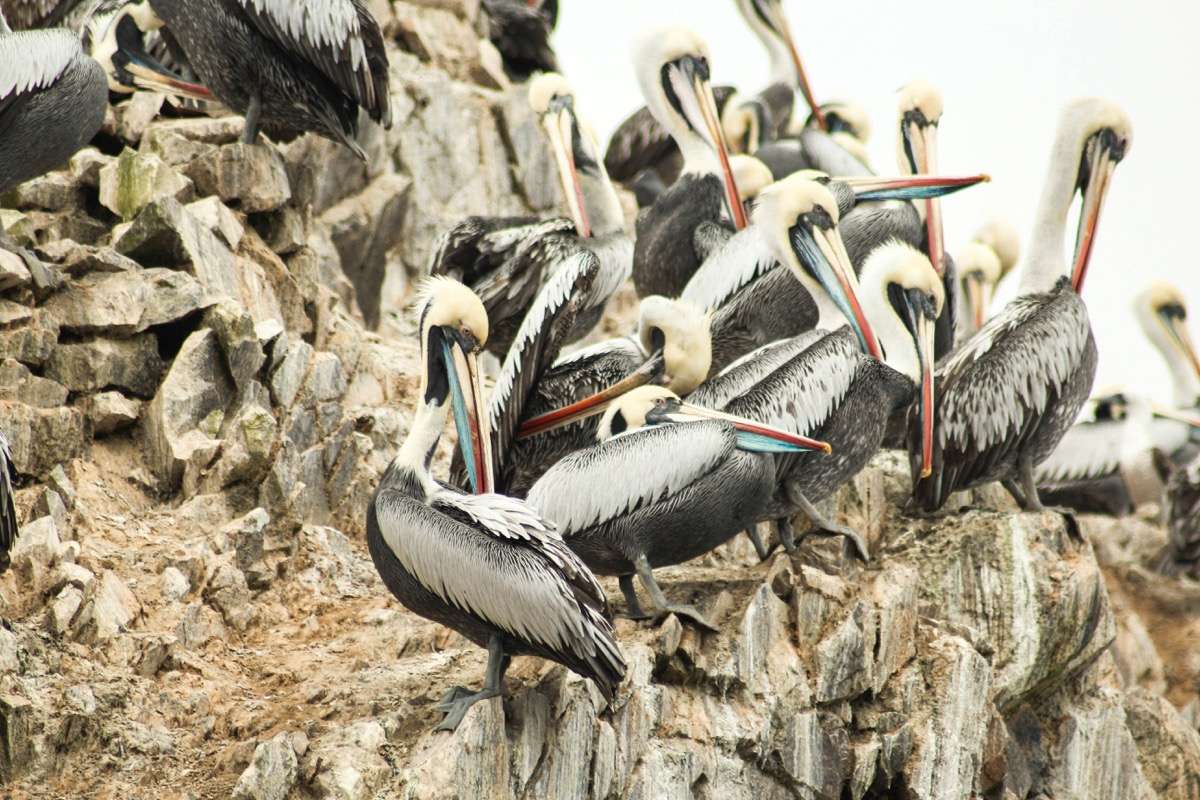
The Ballestas Islands tour (departing from Paracas town, approximately S/40–S/60 per person, 2 hours) passes colonies of Humboldt penguins, sea lions, Peruvian boobies, and Inca terns. The Candelabra geoglyph — a 181-metre figure carved into a clifftop — is visible from the boats. This is a worthwhile half-day addition to an Ica stay, particularly if the Nazca Lines overflight is beyond budget.
Practical Notes
Staying in Ica vs Huacachina: Huacachina is the better base — the dune views, the lagoon, and the sunset atmosphere are the main draw, and walking to operators is easier. Ica city is quieter and slightly cheaper but lacks atmosphere. Several hostels and mid-range hotels line the Huacachina lagoon; Desert Nights Hotel and Hostería Suiza are consistently well-reviewed, with rooms from approximately S/90–S/180 per night as of 2026.
Getting there: Regular bus services from Lima (Javier Prado and Plaza Lima Norte terminals) run to Ica in approximately 4 hours. Cruz del Sur, Oltursa, and Soyuz all serve the route; fares approximately S/25–S/45 standard, S/45–S/80 cama (flat-seat) as of 2026.
Getting from Ica to Huacachina: Mototaxis from Ica city centre to Huacachina cost approximately S/5–S/8 and take 10 minutes.
Water and heat: Ica city temperatures regularly exceed 35°C in summer (December–March). Carry water at all times. Sunscreen and a wide-brimmed hat are essential on the dunes — sand reflects UV at high intensity and burns are common even in overcast conditions.